
Tagged: Nonfiction
My Fight / Your Fight
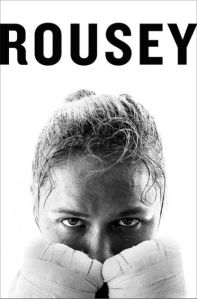 My Fight / Your Fight by Ronda Rousey with Maria Burns Ortiz, 3/5
I’ve never been much of a Rousey fan, but there’s an undeniably voyeuristic appeal to this first-hand account of the rise of the first woman to make it big in MMA. Rousey’s work ethic, mental strength and accomplishments are inspiring and her prose is tolerable. However, written before her only two losses, the book feels premature and some of the warrior rhetoric rings a bit hollow in light of her subsequent complete disappearance from the martial arts scene.
Why I read it: A guy from the gym brought his copy in for me.
Opera Anecdotes
 Opera Anecdotes by Ethan Mordden, 2/5
This collection of short stories connected to opera just barely managed to keep my attention as I read a little bit before bed every night (more for its soporific effect than for any entertainment value). It didn’t help that the connecting prose between anecdotes was awkwardly written to a peculiar degree, and I recognized very few of the featured singers and impresarios.
Why I read it: the title caught my eye while I was browsing books in the thrift store.
The Five Love Languages
 The Five Love Languages: How to Express Heartfelt Commitment to Your Mate by Gary Chapman, 5/5
It took an effort to get past the cringe-worthy cover and subtitle, but this book is well-written and explores concepts that can apply to a variety of relationships besides marriage (such as between friends, family members, or people who are dating). Using common sense and many examples from his years of experience as a marriage counselor, Gary Chapman proposes that, while everyone needs to feel loved, each individual tends to recognize and express love in primarily one of five ways: words of affirmation, quality time, receiving gifts, acts of service and physical touch. Two people with loving intentions who speak different “languages” can be left each feeling uncared for and confused as to why their expressions of love aren’t accepted as such. Chapman encourages people in relationships to notice which of the five categories their partner might belong to and adjust their own behavior accordingly. It seems to me that this could be a bit forced and awkward in some cases, especially if the other person knows you very well and notices that you start acting out of character. I think it makes more sense for everyone to learn each other’s love languages, not so that they can necessarily speak them, but so that they can appreciate love in its different forms. For example, if someone prefers to hear affirming words, they should learn to appreciate the love of a person who makes time for them or quietly does helpful things. Or if a person wants their partner to show they care by giving them gifts, they should also realize that a kind word or touch can be equally meaningful and heartfelt expressions of love.
Why I read it: One of my sisters said it was interesting and it is important to me that the people I care about feel loved.
Twilight of the Idols
 Twilight of the Idols, or, How to Philosophize with a Hammer by Friedrich Nietzsche, 1/5
Nietzsche’s opinions are as monstrous as his ego and as depressing as his life. With supreme self-confidence, he makes sweeping statements about human nature, existence, and philosophy, while generally avoiding any in-depth analysis or reasoning that might substantiate his sensational claims. His writing is so bizarre and baseless that I felt compelled to look him up on Wikipedia and try to figure out why on earth he gained so much credibility in the philosophy world. The exercise was unreassuring. It seems that Nietzsche’s primary life experiences were academic, he was socially isolated, addicted to drugs, extremely resentful of his religious upbringing and was actually residing in a mental institute when this book was published. Not exactly the sort of person you’d want to turn to for theories about life, the universe and everything. Usually, I’d try to write more specifically about the contents of this book so that I could remember it, but in this case, I’d be more than happy to forget that this particular collection of ravings even exists.
Why I read it: Recognized the title while browsing in the thrift store.
Basic Ridercourse
 Basic Ridercourse by the Motorcycle Safety Foundation, 5/5
This handbook has a straightforward, yet appealing layout and presents a lot of basic information about operating a motorcycle. I appreciated how it focused on safety without being patronizing about it.
Why I read it: Lent to me by friends who ride.
The Total Dirt Rider Manual
 The Total Dirt Rider Manual by Pete Peterson and the editors of Dirt Rider, 5/5
Well-illustrated and written with a healthy dose of humor, this book seems about as helpful as it is possible for a book about something like dirt biking to be.
Why I read it: Lent me by a friend who rides, doubtless as an elaborate set-up for asking if I forgot to read the part about “not falling off the bike” when I wipe out for the first time.
Antonio Stradivari
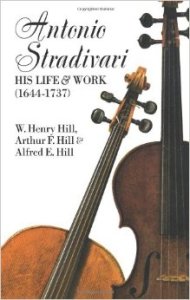 Antonio Stradivari: His Life & Work (1644-1737) by W. Henry Hill, Arthur F. Hill and Alfred E. Hill, 3/5
This reprint of a 1902 book contains more information than the average person would ever want to know about Stradivari and his instruments. The writing style is very dry and technical–I wish there was a glossary and more pictures (especially in color) of the instruments they describe. I did enjoy witnessing the eye for detail and nuance that the authors displayed as they discussed specific instruments, pointing out tiny differences between violins that looked identical to me. All in all, a great reference book, but not a particularly enjoyable or memorable read.
Why I read it: Dover accidentally included it in a package of other books my mom ordered and said to just keep it.
Scary Close
 Scary Close: Dropping the Act and Finding True Intimacy by Donald Miller, 3/5
Miller is an entertaining writer, but not a very convincing psychologist. While it is fun to read the story of how he developed a healthier approach to relationships and gradually found love at a relatively late age, I felt like he spent a lot of time answering easy questions I didn’t have while skirting around the most important, mysterious, confusing aspects of the topic. He claims to want to teach that “love is worth what it costs,” but the focus of the book is much more on how to pay the cost than the worth. For me, the real question isn’t what caused his previous relationships to fail and his current one to succeed (that is fairly obvious–turns out that authenticity and vulnerability make a better foundation than insecurity and manipulation), the big question is why did he suddenly feel compelled to make it work with someone in particular? Now that I’m thinking about it, this is the exact issue I had with the previous book on relationships I read. Perhaps one day, I’ll find a book that focuses on the why, not the how, but until then I guess I’ll just hope they are as entertaining as this one.
Why I read it: a family member recommended it to me.
Miracles
 Miracles: A Preliminary Study by C.S. Lewis, 5/5
It’s like no one told C.S. Lewis that you can’t prove the existence of God, so he just does. And that is merely to lay the foundation for his main topic, which I actually found much less interesting and convincing than the preliminary discussions–the man does not shirk an intellectual challenge. Though I have occasionally sensed some antagonism from him towards science, in this book he cheerfully tackles both the known and unknown with the grace, focus and rigorous logic that make me sometimes fear that I tend to put more faith in him than in God. Of course, no matter how hard one tries to be open-minded and logical, it cannot be too difficult a task to convince someone of something they already believe. With that in mind, I would love to know how this book is perceived by people with different backgrounds and beliefs than me.
Why I read it: C.S. Lewis is one of my favourite authors and thankfully, every time I think I’ve read all his books I come across a new one.
Film Directing
 Film Directing Shot by Shot: Visualizing from Concept to Screen by Steven D. Katz, 4/5
This book offers a fascinating glimpse behind the scenes of the film director’s craft, laying out the many tools, visualisation strategies, camera angles, movements and stagings that are available to the person intent on transferring a story from script to film. The book format is obviously not ideal for the topic and it is up to the reader to imagine how a shot might flow between the still images that are provided, but the author is a clear communicator and most of the concepts are not difficult to understand.
Why I read it: I came across it while browsing through books at the thrift store and thought it looked interesting.

