
Category: Book Reviews
It
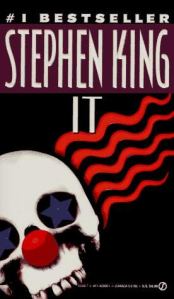 It by Stephen King, 2/5
Stephen King is more than a popular writer, he’s a respected one, so I was excited to read one of his most famous books despite hating the 2017 film it inspired. Initially, I was impressed by the length and density of the plot, which caused me to forget characters’ names and refer back to previous chapters with an urgency not felt since I read War and Peace. However, after a while all the details and increasingly gross events lost their novelty and the thread of the story felt more like a patchwork of cliches. That same scattered aesthetic and uneven tone is what put me off the 2017 film version, which felt like 2 hours and 15 minutes of movie trailers for every horror film made in the last 40 years. I didn’t really experience any feelings of “horror” until near the end of the book, when I encountered King’s casual description of ritual group sex between children. At that point, I lost respect for the author and will likely not read anything else by him.
Why I read it: I was looking for something entertaining to read on the plane during our Scotland trip and while browsing in Half Price Books, realized I’d never read anything by Stephen King before.
The Field Guide
 The Field Guide: The Art, History and Philosophy of Crop Circle Making by Rob Irving and John Lundberg, edited by Mark Pilkington, 2/5
This book, bizarrely, seems to affirm the mystic nature of crop circles (in the process, condoning the associated pseudo-science and quackery of self-styled “experts” in the field) while completely denying crop circles’ otherworldly origins so blatantly as to give instructions for their creation and to interview the men credited with starting the whole phenomenon back in the 1980s. At least, that’s what I understood from the rambling, incomplete sentences in this confused and cluttery little book, which is so deficient as to lack even good photographs of the patterns it describes. The only redeeming feature of this little disaster is the informative interviews with crop circle makers at the end.
Why I read it: the title caught my eye in a used bookstore.
Complete Poems 1904-1962
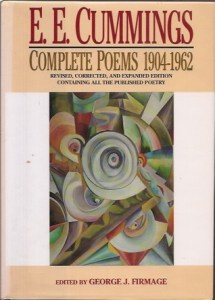 Complete Poems 1904-1962 by E.E. Cummings, edited by George J. Firmage, 5/5
By turns beautiful and baffling, these poems seem less made to be read than absorbed. Many passages that stoutly resisted my best attempts at analysis revealed their meaning at a careless second glance, like stepping back from a painting far enough for the brushstrokes to blend together. Brushing aside petty rules of grammatical convention, Cummings covers the whole spectrum of poetic possibility, from grotesque to delicate, brutal to erotic (sometimes both at the same time–no judgment here), simple to incomprehensible.
Here’s one of my favorites that captures most of the things I love about Cummings:
the great advantage of being alive
(instead of undying)is not so much
that mind no more can disprove than prove
what heart may feel and soul may touch
–the great(my darling)happens to be
that love are in we,that love are in we
and here is a secret they never will share
for whom create is less than have
or one times one than when times where–
that we are in love,that we are in love:
with us they’ve nothing times nothing to do
(for love are in we am in i are in you)
this world(as timorous itsters all
to call their cowardice quite agree)
shall never discover our touch and feel
–for love are in we are in love are in we;
for you are and i am and we are(above
and under all possible worlds)in love
a billion brains may coax undeath
from fancied fact and spaceful time–
no heart can leap,no soul can breathe
but by the sizeless truth of a dream
whose sleep is the sky and the earth and the sea.
For love are in you am in i are in we
Why I read it: I hoped to find more poems like his famous “i carry your heart with me,” which I did! The following poem reminded me of it most because of its sweetness and simplicity:
skies may be blue;yes
(when gone are hail and sleet and snow)
but bluer than my darling’s eyes,
spring skies are no
hearts may be true;yes
(by night or day in joy or woe)
but truer than your lover’s is,
hearts do not grow
nows may be new;yes
(as new as april’s first hello)
but new as this our thousandth kiss,
no now is so
Start with Why
 Start with Why: How Great Leaders Inspire Everyone to Take Action by Simon Sinek, 2/5
Sinek poses an interesting premise: companies wishing to develop an extremely loyal customer base and have the greatest influence on society and industry must let a clear sense of why they do what they do influence all decisions about what and how. By communicating a sense of purpose and how this purpose fits into the bigger picture of life, a business can ostensibly attract similarly-minded, passionate customers and ultimately have the freedom to be more innovative and influential than the faceless corporations trapped in “features” battles with each other, desperate to manipulate buyers with endless “deals” and minute spec improvements. Sinek basically argues that companies should function like good people, with strong character, ethics and a sense of higher purpose, instead of being focused solely on the bottom line. In fact, he goes so far as to say that “The goal of business should not be to do business with anyone who simply wants what you have. It should be to focus on the people who believe what you believe. When we are selective about doing business only with those who believe in our WHY, trust emerges” (80).
While Sinek’s approach is thought-provoking, I see a clear conflict between it and a society that is rife with lawsuits against businesses who refuse to provide services, based on religious beliefs. I wish the author had addressed this issue instead of beating one simple idea to death with a tedious, repetitive writing style and relentless references to Apple Inc. Perhaps he also could have supplemented his few cherry-picked examples, by explaining why numerous industry-leading companies have achieved great success while clearly not following his why-centered philosophy. He also does not adequately address the connection between authenticity and advertising–couldn’t it be argued that the only difference between companies appearing to have a strong “why” and all the others is merely superior advertising strategies (not necessarily fundamental differences in philosophy and operation)?
Why I read it: My brother recommended it under circumstances I have since forgotten (I procrastinated on writing this review for far too long!).
Another Roadside Attraction
 Another Roadside Attraction by Tom Robbins, 3/5
I really wanted to like this book (given to me by a friend to whom it means a lot) and for about two-thirds of it, I succeeded more or less. I’ve never been a fan of the hippy aesthetic, but Robbins’ writing style is humorously bizarre, featuring inventive descriptions and colorful characters, set in familiar Pacific Northwest locations. I found the non-linear narrative style to be stressful at first, but ultimately rewarding, and was interested in the unique plot and development of the theme–how best should human spirituality express itself in a post-Christian world?
However, I eventually became irked by the novel’s increasing preachiness. What starts as a quirky, raunchy story gradually turns into a hippy manifesto that preaches a muddled pop-paganism full of weed-infused platitudes while tearing apart a weak version of Christianity created by the author only to be destroyed. I dislike being preached at, especially by philosophical novels, where practically any point can be “proven” in the highly-controlled universe of an author’s creation. The temptation to commit the straw man fallacy generally proves too strong to resist in these cases and the level of intellectual integrity required for useful discussion of philosophical matters is difficult to attain amidst distractions of story and style. Perhaps someone from a less religious background than I could easily get past these concerns, but I found them distracting enough in this case to mar my enjoyment of the book.
Why I read it: A thoughtful Christmas present from a friend.
All My Puny Sorrows
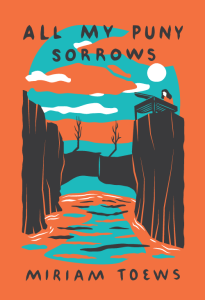 All My Puny Sorrows by Miriam Toews, 5/5
All my words are insufficient to convey how exquisite this semi-autobiographical novel is; I am reduced to a string of mere adjectives…raw, beautiful, funny, insightful, uplifting, bittersweet…none of which can fully capture this story of two sisters, one a struggling writer with a history of failed relationships and the other a beautiful concert pianist who possesses everything happiness requires…except the will to live. Intensely personal, defiantly human, undeniably humorous, this book is a masterpiece and a privilege to read.
Why I read it: The first chapter is in McSweeney’s No. 48.
The Songlines
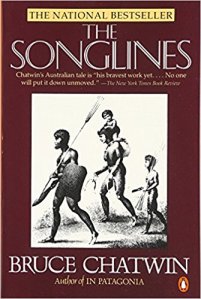 The Songlines by Bruce Chatwin, 4/5
A semi-fictitious scholar named Bruce (who, in sharing the author’s name, not-so-clearly provides literary license) explores the concept of “Songlines” or “Dreaming-tracks,” a musical interpretation of geography by which Aboriginal Australians understand the creation of the world and their place in it. Vivid characters and landscapes, described in short paragraphs with Chatwin’s succinct prose, have the power to transport the reader almost as surely as any vehicle to foreign lands.
Why I read it: I recognized the title in the thriftstore from reading Chatwin’s In Patagonia.
Architecture in Photographs
 Architecture in Photographs by Gordon Baldwin, 4/5
I enjoyed this little book, which contains a nice selection of photographs from the J. Paul Getty Museum along with a not-overwhelming amount of text about architectural photography’s venerable history. While a couple of the photographs left me shaking my head, completely unable to discern any artistic merit in them, the majority were inspiring and obviously captured with skill and care. In my experience, looking at good art is the easiest way to educate your eye as a photographer and this book provides plenty of inspiration. After reading it, I feel especially motivated to experiment with black and white photography, while not obsessing so much over cropping choices, lens distortion and making everything perfectly level.
Why I read it: I came across it while browsing in the library for light reading material to keep me entertained while cutting weight for an MMA fight two months ago.
Outliers
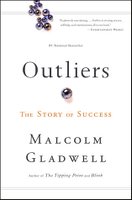 Outliers: The Story of Success by Malcolm Gladwell, 2/5
Holy cherry-picked data, Batman! At least it’s hand-picked, I guess? That is about the nicest thing I can say for this book, which, though entertaining, smells like bad science. I can’t quite put my finger on it, but I think I’ve been exposed to enough good research and logical reasoning (thank you Daniel Kahneman and David Hackett Fisher) to recognize the sketchy stuff. The thesis is all over the place, ending with a laughable call to action that sounds great on the surface (let’s give everyone the same opportunities in life so they can all achieve success) but is idiotic in context (let’s wave our enlightened magic fairy wand and give everyone identical backgrounds, community, family legacy, historical timing, interests and skills, so everyone can be super successful genius millionaires). Frustratingly, this book’s popularity was inevitable–who doesn’t like to read a good success story AND be told that it isn’t all due to talent, you unluckily ordinary human being with untold potential, you.
Why I read it: Heard about it from my Dad, who thought it would be fun if I read it (I’ve been avoiding Gladwell for years).
McSweeney’s No. 48
 McSweeney’s No. 48, 4/5
I tend to have a difficult time enjoying modern literature, but this curated collection of writings was just light and varied enough to be interesting. Sure, there were the dark, unsettling, claustrophobic stories and the bafflingly artistic tales that I am apparently not smart enough to understand, and the gross story by the enlightened author who thinks writing about sex is soooo avant-garde. Thankfully, though, there were also a selection of entertaining, skillfully written pieces that kept me interested and appreciative.
Why I read it: Stumbled across it in the library and recognized the name from their website, where I remembered reading some funny open letters.
 OmniRambles