
Tagged: Nonfiction
Positive Parenting with a Plan
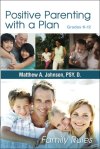
Positive Parenting with a Plan (Grades K-12): FAMILY Rules by Matthew A. Johnson, 2/5
At first, I was put off by the author’s cocksure tone, cringey attempts at humor, and brazen assertion that common sense and anecdotal evidence are perfectly reasonable substitutes for scientific research with regard to his scheme of essentially gamifying family life. However, after reading a few of the aforementioned anecdotes, I learned that there is a level of family dysfunction that I simply was not even aware existed and might credibly justify the extreme approach that this book lays out. Call me naive, but I didn’t know that many children are so out of control that the only threat parents can effectively use is to literally send them away to live with other family members or at one of the numerous long-term treatment facilities that apparently are a thing that exists! In a situation in which, God forbid, my child was physically assaulting me, committing crimes, doing drugs, and causing thousands of dollars of property damage, I guess I would try anything, no matter how contrived, extreme, and unsupported by scientific research it might feel.
Why I read it: it was in a box of hand-me-down books from a friend.
Discipline Equals Freedom

Discipline Equals Freedom: Field Manual MK1-MOD1 (expanded edition) by Jocko Willink, 2/5
Reading this book is certainly more convenient than buying 200 motivational posters and sitting in a dark room while someone shouts their slogans in your ear and smacks you with the cardboard tubes they were shipped in.
Why I read it: my husband bought it.
The Code. The Evaluation. The Protocols.

The Code. The Evaluation. The Protocols. Striving to Become an Eminently Qualified Human by Jocko Willink, with Dave Berke and Sarah Armstrong, 1/5
I have a ton of respect for Jocko Willink…BUT…this book is so absolutely ridiculous that I’m not even sure if his advice to “Set physical goals like running a 5K or deadlifting 8000 pounds” (2.4) is a typo or not. Overlooking the trademark typewriter font (which is borderline unbearable), awkward formatting, and repetitive language, I still cannot imagine many scenarios in which a rigorous, score-based method of evaluating one’s progress towards godhood would be necessary or useful. The “Protocols” are a one-size-fits-all series of steps for addressing each of life’s little problems (such as death, trauma, and addiction) in a style that can only be described as bizarrely confident and obliviously motivational.
Why I read it: my husband bought several of Jocko’s books.
Adult Children of Emotionally Immature Parents
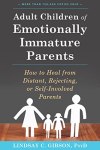
Adult Children of Emotionally Immature Parents: How to Heal from Distant, Rejecting, or Self-Involved Parents by Lindsay C. Gibson, 2/5
This book is shallow as a parking lot puddle, full of cringey anecdotes and generic advice. The reader is encouraged, regardless of their own psychological state, to assess problematic people in their life using criteria so broad and subjective that a diagnosis of “emotionally immature” is practically guaranteed. Once their problems have predictably been blamed on childhood and upbringing, the inevitable advice to “awaken your True Self” by finding your inner child ensues. If the author is correct that who you were before fourth grade is key, then I guess my True Self is a horse?
Why I read it: Lent to me (but pointedly not recommended) by a family member who evidently knows me extremely well.
History of American Painting

History of American Painting, Volume Two: The Light of Distant Skies (1760-1835) by James Thomas Flexner, 2/5
This second volume is less combative in tone than the first, but is still illustrated by depressingly low-quality, black and white reproductions of historic paintings. Flexner’s writing style is not unpleasant, but an overall lack of cohesiveness makes it difficult to place the info in context and I finished the book feeling that I had absorbed practically nothing (which was also the case with the first book in the series).
Why I read it: an old library sale find.
The Houses We Live In

The Houses We Live In: An Identification Guide to the History and Style of American Domestic Architecture, edited by Jeffery Howe, 3/5
Either architectural styles are not as clear-cut as I expected, or the info in this unwieldy book was not presented in the most logical way. Long blocks of text, multiple writers, and occasionally unhelpful photo captions made for a somewhat overwhelming reading experience, but I did appreciate the thorough glossary and informative line art. Learning to spot some of the historical features characteristic of different time periods and styles was fun and makes every house I drive by that much more interesting.
Why I read it: If my memory is correct, I convinced my parents many years ago to let me buy this book from a thrift store in Hawaii and bring it home in our luggage despite its considerable size.
History of American Painting

History of American Painting, Volume One: First Flowers of Our Wilderness (The Colonial Period) by James Thomas Flexner, 2/5
In my experience, it’s unusual to encounter a book that has become outdated due, not to the information it contains, but to the technology used in its production. Unfortunately, that is the case with this book due to its high-contrast, black and white illustrations that bear very little resemblance to the historic paintings they represent. Additionally, individual illustrations are not specifically referenced in the text, nor are they always adjacent to relevant passages, so one is constantly flipping around in annoyance.
Having realized the pictures would be of little use, I tried to focus on the text, but was put off by the author’s highly opinionated tone (particularly combined with his lack of formal expertise on the topic). Flexner writes with a chip on his shoulder, simultaneously making it seem like he is the first to shed light on the early history of American painting, while also finding more bones to pick with other academics than you would expect if that were the case. While I didn’t appreciate his pettiness and have no idea how his mid-twentieth-century scholarship has held up, it was interesting to read about the evolution of painting from trade to Art, and develop an appreciation for details that might otherwise go unobserved.
Why I read it: I bought it from a library sale many years ago and it’s been sitting on my shelf ever since.
“Cause Unknown”
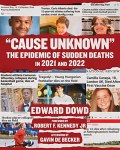
“Cause Unknown:” The Epidemic of Sudden Deaths in 2021 and 2022 by Edward Dowd, 1/5
This is the type of publication (I can’t even bring myself to call it a “book”) that gives conspiracy theorists a bad reputation and rewards critical analysis with an avalanche of cascading shortcomings. Under the guise of objectivity, Dowd boldly refuses to forge a more than coincidental connection between COVID vaccines and the excess deaths he charts so exhaustively. Ironically, despite his data-centered approach, he ultimately relies on confirmation bias and emotional appeals to encourage the reader in making the final jump to an inadequately-supported conclusion.
Why I read it: I think RFK Jr. might have mentioned it in an interview.
The Body Keeps the Score

The Body Keeps the Score: Mind, brain and body in the transformation of trauma by Bessel van der Kolk, 3/5
This disturbing and rather lengthy book was not as self-help oriented as I expected it to be. The author expresses a career’s worth of frustration with the medical establishment’s over-reliance on DSM-facilitated symptom labeling and prescription medication. He makes an impassioned case for a more holistic approach to understanding trauma and its varied effects, particularly with regard to brain function, but I felt that he relied heavily on anecdotal evidence, demonstrated an oversimplified understanding of neurobiology, and was perhaps more interested in finding research and studies with favorable outcomes than in assessing their quality.
As far as treatment is concerned, the author is all over the place, telling stories about clients who had success with EMDR, internal family systems, yoga, theater, HRV training, neurofeedback, journaling, massage, and more. Most of the cases he presents are very extreme and I felt like my own experiences didn’t even register on that scale.
Why I read it: a midwife suggested that it might help me process a traumatic birth experience.
The Real Anthony Fauci
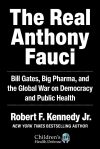
The Real Anthony Fauci: Bill Gates, Big Pharma, and the Global War on Democracy and Public Health by Robert F. Kennedy Jr., 5/5
There is no denying that this is a controversial book on controversial topics, written by a controversial author, and it wasn’t particularly difficult to spot some inadequately substantiated claims, outlandish hypotheses, less-than-impressive sources, and questionable interpretations of data. That said, one would have to be willfully naive and ignorant of human nature to ignore the preponderance of inarguable, factual evidence the author provides that some of our most respected institutions, scientists, politicians, businessmen/women, and philanthropists have sold their souls and woven a pervasive web of deceit, corruption, avarice, censorship and moral bankruptcy. Even with its failings, this book is a necessary and fearless testament to the enduring wisdom of 1 Timothy 6:10: “For the love of money is a root of all kinds of evils” (ESV).
Additionally, The Real Anthony Fauci is a tour de force in terms of seamlessly and meticulously incorporating technology into a traditional reading experience; the chapter endnotes link via a QR code to RFK Jr.’s website, where one can easily click through to the actual sources for most of the 2,194 citations contained in this formidable exposé.
Why I read it: Originally, I had no intention of reading this because, judging solely from its cover, it appeared to be little more than a hit-piece full of conspiracies, written by a crackpot. However, RFK Jr.’s interview on The Joe Rogan Experience left me with a more favorable impression of the author, as well as many unanswered questions about his claims.
 OmniRambles