
Tagged: Nonfiction
Thames Mudlarking

Thames Mudlarking: Searching for London’s Lost Treasures by Jason Sandy and Nick Stevens, 3/5
I appreciated the abundant, high-quality photographs in this slim book, but the text was dry and uninspiring.
Why I read it: Amazon threw this gift for my mother-in-law into a box of other purchases, completely devoid of any wrapping, to be tumbled around like a river rock on its journey to my door. It arrived predictably battered around the edges, but the silver lining was that I was able to take advantage of the exchange window to read it for myself.
All That the Rain Promises and More…
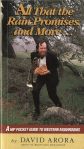
All That the Rain Promises and More: A Hip Pocket Guide to Western Mushrooms by David Arora, 5/5
Don’t be fooled by the frankly insane cover photo and title–this helpful book is packed with color photographs and well-organized descriptions of the most common mushrooms found in the western United States, interspersed with additional info, poetry, recipes, and anecdotes collected from the mycophile community. Yes, it’s a little silly at times, but the author is deeply knowledgeable about the topic and I appreciate the sense of humor and passion that are reflected in this conveniently-sized book. I found the closing essay to be particularly compelling on the topic of over-regulation of hunting/gathering activities:
“In other words, the largely urban-suburban vision of nature as a beautiful, peaceful refuge from the stresses and conflicts of civilization, is in fundamental conflict with the rural or less “civilized” perception of nature as a provider of sustenance and wealth. Therein lies a great irony: it is the cities that suck food, energy, and resources from the landscape, yet there is a long and tragic history of industrial and agricultural peoples persecuting “savage” outsiders (in the most literal sense of the word) who hunt and gather (253).”
…
“No doubt the admonition to “take only photographs, leave only footprints,” is desirable in certain sensitive or pristine areas. But it is inappropriate in most situations because it is a fundamental denial of who we are: creatures of the earth whose most ancient heritage (or birthright, if you will) is foraging for food in the forest.
This enforced separation of human being from the natural world can only undermine support for the public acquisition and protection of habitat. The more we view the forests and fields as a resource […] the more likely we are to cherish that resource (254).”Why I read it: I find mushrooms fascinating and love to spot them around the yard.
My Favorite Intermissions

My Favorite Intermissions: Lives of the Musical Greats and Other Facts You Never Knew You Were Missing by Victor Borge and Robert Sherman, 5/5
I half-expected this collection of loosely opera-themed musical anecdotes to be outdated and cringey, but I was so wrong. The passage of time and changing tastes have not dampened Borge’s trademark hilarity.
Why I read it: I loved watching Victor Borge on VHS as a child and this book was a welcome thrift store find.
Tomorrowmind
Tomorrowmind: Thriving at Work with Resilience, Creativity, and Connection–Now and in an Uncertain Future by Gabriella Rosen Kellerman and Martin Seligman, 1/5
This book not only represents everything that is classically hateable about pop psychology and the self-help genre, it plumbs new depths of dystopian deception. To be fair, there were warning signs, starting with the point in the introduction at which the authors straight-facedly suggest PRISM as a “handy (if out of order) acronym” to remember the concepts of resilience and cognitive agility (R), meaning and mattering (M), rapid rapport to build social support (S), prospection (P), and creativity and innovation (I). That peculiarly unhelpful scrambled egg of an acronym should have been my clue to close the covers and move on down my to-read list. Unfortunately, I decided to wade through a repetitive, half-baked, jargon-laden mess that ultimately morphed into a sales pitch for BetterUp, written by its chief product officer (Kellerman) and, as a little further research quickly revealed, the namesake of BetterUp’s foray into artificial intelligence–MartyAI.

How dark is that? Not only does Tomorrowmind fail to provide anything of value to readers struggling to cope with the stress of an increasingly volatile, technology-driven, future-oriented work environment, the authors actually manage to leverage that same audience in support of their own contribution to the dystopian future they pretend to address–offering the life coaching services of a lifeless, ai-powered chatbot. Ironically, Kellerman and Seligman have achieved more success by pivoting their psychology careers to address modern times than many of the people they use as positive examples in their book. Needless to say, their success hasn’t come from subscribing to life coaching services, buying self-help books, or applying the muddled concepts on view in this embarrassment of a contribution to literature.
Why I read it: The topic sounded interesting and I had respect for Seligman based on his book Learned Optimism.
We Who Wrestle with God

We Who Wrestle with God: Perceptions of the Divine by Jordan B. Peterson, 4/5
A good indicator of Truth with a capital T is that the insights it produces expand the mind and effortlessly illuminate even the darkest corners of a topic, where lesser conceptions fear to tread. There are not many corners more dark than the blood-soaked, primal tales of the Old Testament around which Peterson’s bold and wide-ranging existential exploration occurs. More than just an in-depth character study of God, as revealed through crucial episodes of the Old Testament, this substantial work explores our relationship with the intangible realities of existence on both an individual and societal level, and the codification of these eternal truths into our oldest and most meaningful stories.
Free of the timeworn arguments and vocabulary of Christian apologetics, Peterson’s approach is sure to earn him a “straight to hell” label from many (and not just fundamentalists). I will admit to feeling an uneasy chill, that only others with a religious background would likely understand, at the language of the last couple paragraphs in particular. I won’t go into detail, though, because given the context of the previous 500+ pages, I believe the issue is merely evidence of the author’s tendency to follow a train of thought wherever it may lead, even if it means committing the sin of entering new, unexplored territory in what is supposed to be concluding material. Speaking of sins, I must comment on the astounding number of typos and errors this book contains–by far the most I have ever encountered in a published work. Hopefully these will be rectified in future editions.
Lest I end this review on a sour note, let me re-iterate how amazed I am that a work so broad in scope could be, at the same time, incredibly nuanced. There is something inspired about Peterson’s perspective, which allows him to dissect the most challenging and abstract aspects of the human experience without killing its joy and mystery.
Why I read it: I was curious about Peterson’s theological beliefs, and trusted that he would have an interesting and intellectual approach to the topic.
12 Rules for Life
12 Rules for Life: An Antidote to Chaos by Jordan B. Peterson, 4/5
Jordan Peterson is, in my opinion, one of the most brilliant thinkers and lecturers of the 21st-century in his field and, if he were a more intentional writer, I believe he would deserve a place with the immortal greats of philosophy. Unfortunately, instead of utilizing the writing process to distill and clarify his ideas, he settles for more or less transferring his thought processes straight onto the page. The result is very uneven in tone, bouncing wildly between folksy storytelling and esoteric musings that challenged even my well-trained attention span (exhibit A: Ornithology: An Introduction). It took three tries for me to make it through this book, but I was rewarded by Peterson’s fearless acceptance of the most terrible aspects of human existence and the deeply satisfying integration of that chaos into a perspective that ennobles the common man and makes one want to pick up a sword and fight dragons.
Rule 1: Stand up straight with your shoulders back.
Rule 2: Treat yourself like someone you are responsible for helping.
Rule 3: Make friends with people who want the best for you.
Rule 4: Compare yourself to who you were yesterday, not to who someone else is today.
Rule 5: Do not let your children do anything that makes you dislike them.
Rule 6: Set your house in perfect order before you criticize the world.
Rule 7: Pursue what is meaningful (not what is expedient).
Rule 8: Tell the truth–or, at least, don’t lie.
Rule 9: Assume that the person you are listening to might know something you don’t.
Rule 10: Be precise in your speech.
Rule 11: Do not bother children when they are skateboarding.
Rule 12: Pet a cat when you encounter one on the street.
Why I read it: I became familiar with Peterson when he achieved viral popularity a few years ago.
Of Men and Mountains

Of Men and Mountains by William O. Douglas, 3/5
This simple, wholesome memoir is a love letter to Washington state’s Cascade mountains and the character-building, spirit-refreshing experiences while exploring them that had a profound effect on Supreme Court justice William O. Douglas throughout his life.
Why I read it: I snagged it from my mother-in-law’s donation pile and read it at night to combat pregnancy-induced insomnia.
Birth Skills
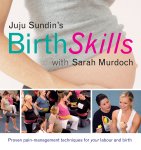
Birth Skills: Proven Pain-Management Techniques for Your Labour and Birth by Juju Sundin with Sarah Murdoch, 5/5
Juju’s approach to natural birth differs from most in that she does not encourage idealistic expectations or a skeptical view of modern medical interventions. Her focus is not on helping women achieve an unmedicated birth, per se, but on empowering them to understand the process and cope with pain the best they can, regardless of final outcomes. I believe this healthy approach might help those with perfectionist and control freak tendencies (like myself) to avoid some of the mental anguish and trauma associated with “unnatural” birth experiences that may fall far short of their expectations.
These birth skills were originally meant to be imparted through a multi-week, interactive, in-person class, so the fact that I speed-read the book shortly before my baby’s due date was clearly not ideal. However, thanks to the author’s straightforward style and intentional use of repetition, I felt like I had a decent understanding of the main principles and hoped to avoid an epidural by using movement, breathwork, mantras, visualization, and a birthing comb. Perhaps I have a very low pain tolerance or was not fully invested in the techniques–I certainly was not well-practiced–but I did not end up coping well with the pain of active labor. Vomiting from contractions that felt like being stabbed in the abdomen with a red hot poker, I was thankful for even the temporary relief a faulty epidural provided. The fact that I absolutely crumbled under what felt like unbearable and excruciating pain is humbling, but just because I literally cannot imagine how it would have been possible to endure the experience unmedicated is no reflection on this book and the positive effect it has had on numerous women’s labor and birth experiences.
Why I read it: a recommendation from an Instagram comment.
Ornithology: An Introduction
Ornithology: An Introduction by Austin L. Rand, 2/5
On the surface, this 1960s paperback about bird science meets every criteria for Most Boring Book Ever Written. Despite finding it to be surprisingly readable (no doubt because birds are intrinsically bizarre), it is difficult for me to imagine that anyone else in the entire world has read this book in the last twenty years.
Why I read it: The comically boring title caught my eye in the thrift store and I bought it specifically to send me off to sleep on difficult nights. It worked perfectly.
How to Win Friends & Influence People
How to Win Friends & Influence People: The Only Book You Need to Lead You to Success by Dale Carnegie, 3/5
In today’s saturated self-help market, it takes a little imagination to understand just how novel and influential this first-of-its-kind work must have been, back in 1936. Carnegie’s “principles” are practical and based on a commonsense understanding of psychology that, though now well-worn, have stood the test of time. Charming anecdotes illustrate the following principles:
Three Fundamental Techniques in Handling People
Principle 1: Don’t criticize, condemn or complain.
Principle 2: Give honest and sincere appreciation.
Principle 3: Arouse in the other person an eager want.
Six Ways to Make People Like You
Principle 1: Become genuinely interested in other people.
Principle 2: Smile
Principle 3: Remember that a person’s name is to that person the sweetest and most important sound in any language.
Principle 4: Be a good listener. Encourage others to talk about themselves.
Principle 5: Talk in terms of the other person’s interests.
Principle 6: Make the other person feel important–and do it sincerely.
Win People to Your Way of Thinking
Principle 1: The only way to get the best of an argument is to avoid it.
Principle 2: Show respect for the other person’s opinions. Never say, “You’re wrong.”
Principle 3: If you are wrong, admit it quickly and emphatically.
Principle 4: Begin in a friendly way.
Principle 5: Get the other person saying “yes, yes” immediately.
Principle 6: Let the other person do a great deal of the talking.
Principle 7: Let the other person feel that the idea is his or hers.
Principle 8: Try honestly to see things from the other person’s point of view.
Principle 9: Be sympathetic with the other person’s ideas and desires.
Principle 10: Appeal to the nobler motives.
Principle 11: Dramatize your ideas.
Principle 12: Throw down a challenge.
Be a Leader
Principle 1: Begin with praise and honest appreciation.
Principle 2: Call attention to people’s mistakes indirectly.
Principle 3: Talk about your own mistakes before criticizing the other person.
Principle 4: Ask questions instead of giving direct orders.
Principle 5: Let the other person save face.
Principle 6: Praise the slightest improvement and praise every improvement. Be “hearty in your approbation and lavish in your praise.”
Principle 7: Give the other person a fine reputation to live up to.
Principle 8: Use encouragement. Make the fault seem easy to correct.
Principle 9: Make the other person happy about doing the thing you suggest.
Why I read it: a recommendation from my sister.

