
Tagged: Nonfiction
Ornithology: An Introduction
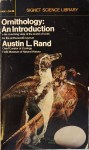
Ornithology: An Introduction by Austin L. Rand, 2/5
On the surface, this 1960s paperback about bird science meets every criteria for Most Boring Book Ever Written. Despite finding it to be surprisingly readable (no doubt because birds are intrinsically bizarre), it is difficult for me to imagine that anyone else in the entire world has read this book in the last twenty years.
Why I read it: The comically boring title caught my eye in the thrift store and I bought it specifically to send me off to sleep on difficult nights. It worked perfectly.
How to Win Friends & Influence People
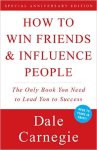
How to Win Friends & Influence People: The Only Book You Need to Lead You to Success by Dale Carnegie, 3/5
In today’s saturated self-help market, it takes a little imagination to understand just how novel and influential this first-of-its-kind work must have been, back in 1936. Carnegie’s “principles” are practical and based on a commonsense understanding of psychology that, though now well-worn, have stood the test of time. Charming anecdotes illustrate the following principles:
Three Fundamental Techniques in Handling People
Principle 1: Don’t criticize, condemn or complain.
Principle 2: Give honest and sincere appreciation.
Principle 3: Arouse in the other person an eager want.
Six Ways to Make People Like You
Principle 1: Become genuinely interested in other people.
Principle 2: Smile
Principle 3: Remember that a person’s name is to that person the sweetest and most important sound in any language.
Principle 4: Be a good listener. Encourage others to talk about themselves.
Principle 5: Talk in terms of the other person’s interests.
Principle 6: Make the other person feel important–and do it sincerely.
Win People to Your Way of Thinking
Principle 1: The only way to get the best of an argument is to avoid it.
Principle 2: Show respect for the other person’s opinions. Never say, “You’re wrong.”
Principle 3: If you are wrong, admit it quickly and emphatically.
Principle 4: Begin in a friendly way.
Principle 5: Get the other person saying “yes, yes” immediately.
Principle 6: Let the other person do a great deal of the talking.
Principle 7: Let the other person feel that the idea is his or hers.
Principle 8: Try honestly to see things from the other person’s point of view.
Principle 9: Be sympathetic with the other person’s ideas and desires.
Principle 10: Appeal to the nobler motives.
Principle 11: Dramatize your ideas.
Principle 12: Throw down a challenge.
Be a Leader
Principle 1: Begin with praise and honest appreciation.
Principle 2: Call attention to people’s mistakes indirectly.
Principle 3: Talk about your own mistakes before criticizing the other person.
Principle 4: Ask questions instead of giving direct orders.
Principle 5: Let the other person save face.
Principle 6: Praise the slightest improvement and praise every improvement. Be “hearty in your approbation and lavish in your praise.”
Principle 7: Give the other person a fine reputation to live up to.
Principle 8: Use encouragement. Make the fault seem easy to correct.
Principle 9: Make the other person happy about doing the thing you suggest.
Why I read it: a recommendation from my sister.
Education for Absolute Pitch

Education for Absolute Pitch: A New Way to Learn Piano by Naoyuki and Ruth Taneda, translated by Christopher Aruffo, 5/5
For several years, I sang in a choir with a tenor who had perfect pitch and, while I might have mentally referred to him by the not-awe-inspiring moniker “the human pitch pipe,” there was something undeniably god-like and enviable about his ability to pull any note out of thin air. I was very surprised to learn, many years later, that children between the ages of 3 and 4.5 years old can actually be taught this magical ability! What at first sounds “too good to be true” is soon clarified by this handbook, which lays out the intense, consistent, and long-term practice required in the pursuit of absolute pitch.
The German We Hear and Play method that this book outlines combines ear training (via “games” played with stuffed animals and colored balls) and rhythmic training with a meticulous piano curriculum. As a piano teacher with more than 20 years of experience, I do not find this method’s highly structured, color coordinated and extremely slow-moving approach to be very appealing. However, I am used to starting students at 6 years old and without focusing on ear training, so it makes sense that some concessions must be made for much younger children acquiring the skill of perfect pitch in conjunction with piano skills. I am cautiously optimistic about trying this method with my own toddler!
Why I read it: I believe I encountered the We Hear and Play method on translator Christopher Aruffo’s website, while looking for software that would teach perfect pitch to adults. The We Hear and Play website does not appear to have been updated recently, but I did reach out to Aruffo, who assured me immediately that it is still very much functional, while kindly offering additional help and resources.
Shadow Divers

Shadow Divers: The True Adventure of Two Americans Who Risked Everything to Solve One of the Last Mysteries of World War II by Robert Kurson, 5/5
When a group of shipwreck divers discover a German WWII U-boat sunken just 60 miles off the coast of New Jersey, it sparks a 6-year saga of danger, drama, research, speculation and discovery. Kurson’s prose is beautifully written and guides the reader effortlessly through the biographical backstories, technical diving information, and historical events that combine to form the context for a real-life adventure story so intriguing that I stayed up until 2am to finish it in one day. Though less mythical in topic than the author’s other diving book, Pirate Hunters, this one is equally interesting, has a more satisfying conclusion, and contains more photos.
Why I read it: I enjoyed Pirate Hunters and wanted to check out more by this author.
Gilbert and Sullivan

Gilbert and Sullivan: Lost Chords and Discords by Caryl Brahms, 3/5
Even if the introduction did not acknowledge that the lives and careers of famous musical duo Gilbert and Sullivan was already a well-covered subject, the fact would be pretty obvious from the author’s incessant quotations and references to previously existing research. This college-research-paper approach is never the most appealing, and I was additionally put-off by the author’s many personal opinions throughout, grating self-references to “the present writer,” and comments that were difficult to understand (whether due to the passage of almost 50 years since the time of writing, or incorrect assumptions about the readers’ preexisting knowledge, is unclear).
Shortcomings aside, the book is generously illustrated and it was fascinating to read about the tumultuous, on-again-off-again relationship between an irascible lyricist and sickly composer, whose serious, classical works, though critically-acclaimed at the time, were soon eclipsed by the comic operas he considered beneath him.
Why I read it: a library reject that I bought from a book sale many years ago.
Pirate Hunters

Pirate Hunters: Treasure, Obsession, and the Search for a Legendary Pirate Ship by Robert Kurson, 5/5
This is one of those rare real-life stories that is crazier than fiction. The author does a great job of weaving in historical and biographical information about all the main characters, without losing momentum. I read the whole book in one day and stayed up until 2am to find out how it ended. Ultimately, I thought the ending was a bit anti-climactic, due in part to the photo insert (which felt inadequate, while also providing spoilers), but also due to the interventions of human nature and bureaucracy in an otherwise fantastical tale. However, I had no hesitation recommending the audio book to my husband and have ordered Kurson’s Shadow Divers, which is referenced in this book, from the library.
Why I read it: I salvaged it from my mother-in-law’s thrift store donation pile.
How Do I Do That In Lightroom Classic?

How Do I Do That In Lightroom Classic?: The Quickest Ways to Do the Things You Want to Do, Right Now! by Scott Kelby, 5/5
This slim reference book for Adobe Lightroom Classic is surprisingly readable and, though I’ve used Lightroom for many years, I did still pick up on a few interesting hints for further exploration.
Why I read it: While getting rid of a couple outdated Lightroom books I owned, it crossed my mind to check the library for some more recent offerings (not realizing this second edition was already a few years old).
Game Shows FAQ

Game Shows FAQ: All That’s Left to Know About the Pioneers, the Scandals, the Hosts, and the Jackpots by Adam Nedeff, 3/5
This is an interesting book about TV game shows, providing info on historical popularity trends, how shows were made, which ones survived and which ones failed, and a bit of fun, behind-the-scenes gossip. I felt that the author lost some steam as the book progressed and there were a completely unacceptable number of typos, but overall, it was a decent read on a pretty random topic.
Why I read it: on a shelf of staff picks at my local library.
Fast Like a Girl

Fast Like a Girl: A Woman’s Guide to Using the Healing Power of Fasting to Burn Fat, Boost Energy, and Balance Hormones by Dr. Mindy Pelz, 3/5
It is refreshing to read a diet book written specifically for women. This is the clearest layout of the female hormone cycle I’ve ever encountered, accompanied by easily understandable nutritional guidelines for each stage–a welcome break from the one-size-fits-all approach of most programs. The author makes an impassioned and compelling argument for the “miraculous” healing power of fasting but, unfortunately, relies heavily on anecdotal evidence from her own practice. Like many questionable health gurus, Pelz has a doctorate in chiropractics and her main source of credibility seems to be a few celebrity clients and the following she has built by posting hundreds of YouTube videos on topics for which she has zero formal education. Much of what she states without reservation seems to reside in that twilight zone of science where it may be correct, but has yet to be satisfactorily proven.
Now, I am not a blind believer in mainstream medicine–I feel there is an air of undeserved infallibility about it, closed-mindedness, and conflicts of interest that slow progress unnecessarily. However, even a little research into Dr. Mindy and her fasting regimen rings warning bells. She has built an entire program and community around her ideas, yet there is not a single Doctor of Medicine on her 24-person team. Dietician Abby Langer has written an excellent review of Fast Like a Girl that points out the cult-like aspects of Pelz’s program and is able to put her finger on some of the over-confident language in this book that made me uncomfortable without quite knowing why. Curious, I did just a little further research on the much-vaunted concept of fast-induced autophagy, finding that Pelz not only fails to mention the potential negative effects of autophagy, but also bases her 17-72 hour fast guidelines on a study of baby mice that cannot be extrapolated to human subjects and neither supports her recommendation, nor even the actual statement in the book to which the endnote is appended (32).
Another issue I have with Pelz is her attempt to discredit calorie-restriction diets by employing the straw man fallacy (5). As someone who has personally achieved substantial, long-term, transformative weight loss through calorie counting, I found her depiction of calorie-restriction diets to be either ignorant or downright deceptive (depending on how generous you want to be about her motives). She cites a study from the 1960s called the “Minnesota Starvation Experiment” in an attempt to discount an approach to weight loss that is completely reasonable, commonsense, accessible, and has worked for many, many people. I achieved metabolic health, according to her own definition, through calorie counting and exercise. Sure, there are many times I have slept in and had a very late breakfast…does the fact that I went 15 hours between dinner and breakfast mean that I fasted? According to Pelz, yes, and I can expect health miracles if I continue do this a lot. According to commonsense, no!
The author’s attempt to demonize calorie-restriction diets becomes even more ridiculous when you get past the fasting section of the book and reach her actual “30-Day Fasting Reset,” which involves two diet plans (ketobiotic and hormone feasting), along with a bunch of complicated and gross-sounding recipes. It feels like a total bait-and-switch to be told that, in addition to fasting, one should also adhere to a diet that is much like any other diet that people routinely fail to stick with. We’re told to avoid bad oils, refined flours and sugar, toxic chemical ingredients, and alcohol, while adding in specific healthy foods (all organic, non-GMO, hormone-free, obviously). Duh! How is this different from other diets? How is someone who fails at traditional diets going to have success trying to eliminate processed foods, sweetener in your coffee, breads, pastas, crackers, and desserts? How is this better than counting calories and experiencing for yourself the value of choosing nutrient dense foods over empty calories? I honestly cannot comprehend how anyone who is struggling with weight loss would be able to stick with this diet plan over others. So, what we are left with is some very cliched diet recommendations, six different fasts (all under-researched), and some information about what types of foods might support female hormones at different times of the month (no citations given).
One might be justified for wondering why I would give a book that I perceive to have so many issues a decent, 3/5 rating. The reason is this: I respect the author’s exploration at the cutting edge of nutrition and medicine, and appreciate her focus on the female experience. Just because the scientific research on fasting doesn’t yet justify specific guidelines doesn’t mean it’s not a concept of value, worth experimenting with (especially for people who have tried literally everything else).
Why I read it: my dad sent me a podcast featuring Dr. Mindy, but I would rather read a book than listen to a podcast any day.
Storey’s Illustrated Breed Guide to Sheep, Goats, Cattle, and Pigs

Storey’s Illustrated Breed Guide to Sheep, Goats, Cattle, and Pigs by Carol Ekarius, 5/5
High-quality photographs accompany informative text about 163 different livestock breeds in this excellent reference book. It provides a good jumping-off point for further research into specific breeds and I appreciated the extra information the author provides about the history of livestock domestication and the science of breed development.
Why I read it: Still on a quest to identify every cow I pass by.
 OmniRambles