
Tagged: art
Charles Harper’s Birds & Words
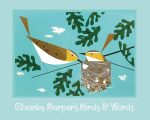
Charles Harper’s Birds & Words, 5/5
Charming bird portraits in Harper’s trademark “minimal realism” style combine with witty text to create a feast for both the eyes and the nature-loving mind.
Why I read it: A Christmas gift from my sister-in-law.
How to Display 1000 Cranes (Senbazuru)
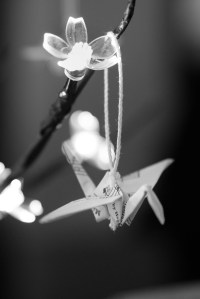
I was surprised to discover that folding one thousand origami cranes (senbazuru) for a wedding backdrop is easy, compared to trying to figure out a good way to display them after the event. The backdrop turned out beautifully, featuring 1000 cranes folded from hymn book paper and knotted onto bamboo strings of two lengths, interspersed with curtain lights, and topped with artificial greenery on a $30 white metal wedding stand from Hobby Lobby. Sure, it was a little flimsy, but nothing that white duct tape, zip ties, and artfully draped fabric couldn’t handle.
For several years afterward, the backdrop stood in front of a window in my son’s bedroom, serving as a much-loved night light. Eventually, the lights stopped working, but even stripped of its greenery and dusty fabric, bolted to the wall, with duct tape and zip ties on full display, I still loved the way the morning sun shone through the cranes. However, this clearly wasn’t a long-term display solution.
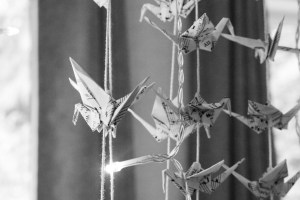
After some thought and research over the years, I identified several options, none of which I really liked that much: Solution 1: Move the paper cranes onto a higher-quality backdrop stand and place against an empty wall.
Objection: We live in a small house and don’t have any spare walls.Solution 2: Hang the cranes off a decorative branch.
Objection: The branch would have to be very large and I would have to untie and re-string all of the cranes in shorter lengths, which would be a lot of work (if it didn’t ruin them completely in the process). Also, I didn’t have any good wall space for the project.Solution 3: The most common display method, where the origami cranes are stacked tightly on top of each other in thick strands.
Objection: This makes them look chunky and unappealing, in my opinion, and kills the magical effect of seeing them floating gently as the air moves. Solution 4: Cutting the cranes off the strings and piling them in a shadow box or glass container.
Objection: Once again, this kills the magic and the container would have to be quite large.Solution 5: Hang them across a doorway.
Objection: While this would look amazing, I believe they would not last long due to wear-and-tear on the paper.
What to do? I present to you, the spiral hanger!

I stumbled upon the spiral hanger (2 pack for $16.99) while browsing on Amazon and instantly knew I’d found the perfect solution to my crane problem. Originally designed to air dry large blankets or sheets, these spiral hangers provide an attractive, tangle-free, and space-efficient way to display 1000 paper cranes. They can even be easily pushed aside for access to the bookshelf behind them. It was definitely worth it to spray paint the hanger white and I would love to eventually add some lights and figure out a way to decorate the top (perhaps with faux cherry blossoms or greenery). If I ever have more space, I would even consider splitting the cranes in half to make two matching pillars.

These flash phone photos are not great due to the poor lighting in the room. In person, the cranes appear to float delicately in an appealing pillar that invites the eye and catches the light well. I wanted to share this display idea for any one else who might need a little inspiration, especially since I haven’t seen anything else like it online. If you’ve folded one thousand origami cranes and come up with a unique way to display your senbazuru, I would love to hear about it!
The Perfect Guide to Sumo
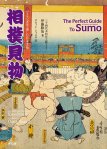
The Perfect Guide to Sumo in Japanese and English by Katsuharu Ito, translated by David Shapiro, 4/5
This small book on a large topic is packed with minuscule text and beautiful, historic artwork. I wish it were available in a larger, better edited format that would do justice to the informative dual-language text and generous illustrations.
Why I read it: my husband and I are fans of sumo.
Adulthood is a Gift!

Adulthood is a Myth Gift! A Celebration of “Sarah’s Scribbles” by Sarah Andersen, 3/5
This fifth book in the “Sarah Scribbles” collection contains some fun comics and fifteen illustrated, short essays of varying interest. I enjoyed learning about the process behind Andersen’s trademark style, even if it did steal a bit of the “magic.”
Why I read it: I visit sarahcandersen.com once in a while to catch up and saw that I was behind a couple books.
History of American Painting

History of American Painting, Volume Two: The Light of Distant Skies (1760-1835) by James Thomas Flexner, 2/5
This second volume is less combative in tone than the first, but is still illustrated by depressingly low-quality, black and white reproductions of historic paintings. Flexner’s writing style is not unpleasant, but an overall lack of cohesiveness makes it difficult to place the info in context and I finished the book feeling that I had absorbed practically nothing (which was also the case with the first book in the series).
Why I read it: an old library sale find.
History of American Painting

History of American Painting, Volume One: First Flowers of Our Wilderness (The Colonial Period) by James Thomas Flexner, 2/5
In my experience, it’s unusual to encounter a book that has become outdated due, not to the information it contains, but to the technology used in its production. Unfortunately, that is the case with this book due to its high-contrast, black and white illustrations that bear very little resemblance to the historic paintings they represent. Additionally, individual illustrations are not specifically referenced in the text, nor are they always adjacent to relevant passages, so one is constantly flipping around in annoyance.
Having realized the pictures would be of little use, I tried to focus on the text, but was put off by the author’s highly opinionated tone (particularly combined with his lack of formal expertise on the topic). Flexner writes with a chip on his shoulder, simultaneously making it seem like he is the first to shed light on the early history of American painting, while also finding more bones to pick with other academics than you would expect if that were the case. While I didn’t appreciate his pettiness and have no idea how his mid-twentieth-century scholarship has held up, it was interesting to read about the evolution of painting from trade to Art, and develop an appreciation for details that might otherwise go unobserved.
Why I read it: I bought it from a library sale many years ago and it’s been sitting on my shelf ever since.
Botanical Art from the Golden Age of Scientific Discovery
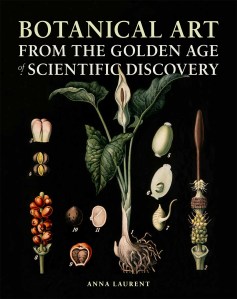
Botanical Art from the Golden Age of Scientific Discovery by Anna Laurent, 5/5
I borrowed this book from the library just to flip through the pictures, but it turned out to be an unexpectedly delightful read. The text perfectly balances with the images, providing just enough additional information to capture the reader’s interest and encourage a more in-depth examination of the many botanical wall-charts it features.
Why I read it: a brief intention to create my own botanical art lead me to order all related books from the library (there weren’t many).
Scary Stories to Tell in the Dark
 Scary Stories to Tell in the Dark, collected by Alvin Schwartz, drawings by Stephen Gammell, 3/5
It is clear that children are the target audience for this book, but the simple layout and child-friendly writing style provide a disturbing contrast with the extremely dark and gross stories it contains. I wouldn’t have wanted to read such terrifying things as a kid and certainly wouldn’t want my own children to be exposed to these ideas at a young age. As an adult, I found the stories to be entertaining, if a bit simplistically retold, and the artwork in particular is outstanding.
Why I read it: a thrift store find. I’ve always been interested in fairy tales and myths, so paranormal stories are not that much of a stretch.
Tapisserie de Bayeux
 Tapisserie de Bayeux: Photos and Captions of Bayeux Tapestry, published by Éditions Artaud Frères, 5/5
This high-quality souvenir book contains photos of the complete 11th-century Bayeux Tapestry and terse captions in six languages, outlining events leading up to the Norman conquest of England and culminating in spoilers King Harold’s death at the Battle of Hastings in 1066. The needlework is charmingly quirky, from the multi-colored horses to the occasional nude figures in the border, proudly displaying their embroidered nethers to my extreme amusement.
Why I read it: this book has been in my to-read pile for so long that I can’t remember where or when I bought it. Glad I did, though!
Steal Like An Artist
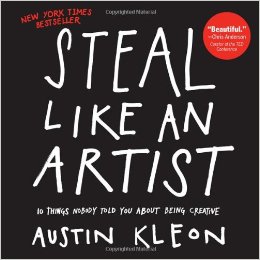 Steal Like An Artist: 10 Things Nobody Told You About Being Creative by Austin Kleon, 5/5
The 10 points about creativity that form the backbone of this little book are deceptively simple (even unimpressive) at first glance. Happily, my first impression was wrong–the author uses this list merely as a starting point for an encouraging and inspiring discussion about artistic creativity. Reading this book first normalised, then challenged, many of the negative feelings that have caused me in the past to describe myself as an uncreative person.
- Steal like an artist.
It’s refreshing to hear someone creative admit that “every new idea is just a mashup or a remix of one or more previous ideas” (9). - Don’t wait until you know who you are to get started.
- Write the book you want to read.
This is so much more inspiring than the advice to “write what you know.” - Use your hands.
- Side projects and hobbies are important.
Having a wide variety of interests can be difficult and it’s sometimes tempting to feel like a loser for not focusing on just one. Kleon doesn’t make a particularly convincing case for his advice of “don’t throw any of yourself away” (68), but I do like the idea that “what unifies your work is the fact that you made it” (72). - The secret: Do good work and share it with people.
- Geography is no longer our master.
- Be nice. (The world is a small town.)
- Be boring. (It’s the only way to get work done.)
It may not be living the dream, but having a boring day job can give you the financial freedom to pursue creative endeavors. Kleon points out that, contrary to instinct, “establishing and keeping a routine can be even more important than having a lot of time” when it comes to being creative (124). - Creativity is subtraction.
Why I read it: Imgur user morganic mentioned this book in a comment on a photography post.
 OmniRambles