Lost Mines and Treasures of the Pacific Northwest
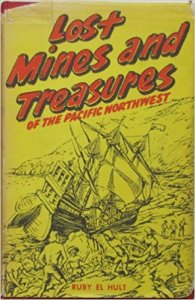
lost mines and treasures ruby el hult binfords and mort 1957Lost Mines and Treasures of the Pacific Northwest by Ruby El Hult, 3/5

This book, written in 1957 about events that largely took place in the late 1800s, occupies a strange middle ground both methodologically and temporally.  Not only was the author’s research ability limited to the pre-Information Age resources of her time, but there was the further complication of the existence of personal accounts from living people who were within a generation or two of original events (close enough to be convincing, but not close enough to be reliable).  Thus, the book is an awkward mix of fanciful hearsay and dry research that takes a few chapters to get into the spirit of.  Whether entirely true or not, these stories provide interesting insight into the early history of the Pacific Northwest and the world of pioneers, pirates and prospectors.

Why I read it: The sequel, Treasure Hunting Northwest caught my eye in a used bookstore so I thought I’d better buy the original too.

Never Stop Pushing

never stop pushing gardner schaller carroll and graf 2005Never Stop Pushing: My Life from a Wyoming Farm to the Olympic Medals Stand by Rulon Gardner with Bob Schaller, 3/5

Life is tough but Rulon Gardner is tougher.  His story proves that success does not always require a fortuitous alignment of luck, talent and circumstance–success can be the prize of those who are simply too stubborn and too strong to settle for less.  This book is certainly not going to win any literary awards, but it is an inspiring account of hard work and good character put to the test on an international stage.

Why I read it: my wrestler boyfriend got me excited about the story, showed me the famous Gardner vs Karelin gold medal match and lent me his well-worn copy of the book.

The Elements of Reasoning

elements of reasoning conway munson 2nd edition wadsworth 1997The Elements of Reasoning by David A. Conway and Ronald Munson, 2/5
This book provides an introduction to informal logic, focusing mostly on valid and invalid ways arguments can be formed, along with a brief look at common fallacies and errors in reasoning.  The argument forms seem contrived and the analysis methods limited–it is hard to imagine a use for these concepts outside of a classroom and the book is certainly not written in a way meant to smooth the transition from academic thought exercise to real life.  In fact, the whole tone of the book is very dry and dead, which is a pity because the topic is fascinating and I have seen it treated in much more interesting and lively ways.  A good teacher could bring it to life, perhaps, and also provide insight on the numerous thought exercises that the authors leave unanswered.

Why I read it: I wanted to learn about the symbols used in formal logic (only a few of which are covered in this book) and the title caught my eye at the thrift store.

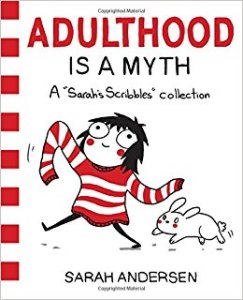
Adulthood is a Myth

Big Mushy Happy Lump

big mushy happy lump andersen andrews mcmeel publishing 2017Big Mushy Happy Lump: A “Sarah’s Scribbles” Collection by Sarah Andersen, 5/5

I love the Sarah’s Scribbles webcomic and this book is more of the same laughs.  My boyfriend looked at the first illustration, of a small girl with big eyes cozied up in a comically huge hoodie, and was like “This is written about you?”  Then he turned to the first comic, about procrastination, and was like “This is written about you!”

Why I read it: saw it advertised on the webcomic site.

Crap Taxidermy

crap taxidermy kat su ten speed press 2014Crap Taxidermy by Kat Su, 3/5

Equal parts gross, funny and WTF?  This small collection of images makes a fun novelty gift, but I think it’s more suited to its original website format: www.crappytaxidermy.com.

Why I read it: Came across it on Imgur and got a copy for my boyfriend’s dad (who does good taxidermy, not the crap kind).

Chitty-Chitty-Bang-Bang

chitty chitty bang bang fleming random house 1964Chitty-Chitty-Bang-Bang: The Magical Car by Ian Fleming, 2/5
A strange little story, with a spindly plot and uneven tone that is sometimes fanciful and sometimes much too serious for the children that are presumably its audience.  I did like the playful illustrations by John Burningham, which are quintessentially 1960s.  Surprisingly, there is very little resemblance to the 1968 film, which I love (though it turns out that what I love about it is probably Roald Dahl’s influence, not Fleming’s inspiration).

Why I read it: my sister thought I might enjoy it.

My Fight / Your Fight

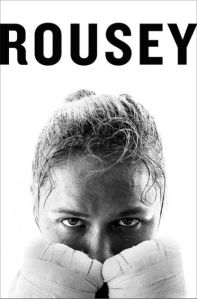
my fight / your fight rousey regan arts 2015My Fight / Your Fight by Ronda Rousey with Maria Burns Ortiz, 3/5
I’ve never been much of a Rousey fan, but there’s an undeniably voyeuristic appeal to this first-hand account of the rise of the first woman to make it big in MMA.  Rousey’s work ethic, mental strength and accomplishments are inspiring and her prose is tolerable.  However, written before her only two losses, the book feels premature and some of the warrior rhetoric rings a bit hollow in light of her subsequent complete disappearance from the martial arts scene.

Why I read it: A guy from the gym brought his copy in for me.

Opera Anecdotes

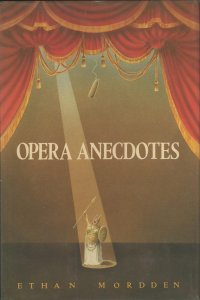
opera anecdotes mordden oxford university press 1985Opera Anecdotes by Ethan Mordden, 2/5

This collection of short stories connected to opera just barely managed to keep my attention as I read a little bit before bed every night (more for its soporific effect than for any entertainment value).  It didn’t help that the connecting prose between anecdotes was awkwardly written to a peculiar degree, and I recognized very few of the featured singers and impresarios.

Why I read it: the title caught my eye while I was browsing books in the thrift store.

The Five Love Languages

five love languages chapman northfield publishing 1995The Five Love Languages: How to Express Heartfelt Commitment to Your Mate by Gary Chapman, 5/5

It took an effort to get past the cringe-worthy cover and subtitle, but this book is well-written and explores concepts that can apply to a variety of relationships besides marriage (such as between friends, family members, or people who are dating).  Using common sense and many examples from his years of experience as a marriage counselor, Gary Chapman proposes that, while everyone needs to feel loved, each individual tends to recognize and express love in primarily one of five ways: words of affirmation, quality time, receiving gifts, acts of service and physical touch.  Two people with loving intentions who speak different “languages” can be left each feeling uncared for and confused as to why their expressions of love aren’t accepted as such.  Chapman encourages people in relationships to notice which of the five categories their partner might belong to and adjust their own behavior accordingly.  It seems to me that this could be a bit forced and awkward in some cases, especially if the other person knows you very well and notices that you start acting out of character.  I think it makes more sense for everyone to learn each other’s love languages, not so that they can necessarily speak them, but so that they can appreciate love in its different forms.  For example, if someone prefers to hear affirming words, they should learn to appreciate the love of a person who makes time for them or quietly does helpful things.  Or if a person wants their partner to show they care by giving them gifts, they should also realize that a kind word or touch can be equally meaningful and heartfelt expressions of love.

Why I read it: One of my sisters said it was interesting and it is important to me that the people I care about feel loved.