
Tagged: science
Stalking the Wild Pendulum
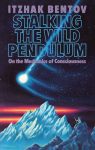
Stalking the Wild Pendulum: On the Mechanics of Consciousness by Itzhak Bentov, 3/5
It would be too easy to dismiss this book, with all its talk of holograms, vibrations, and altered states of consciousness, as mere LSD-fueled, new-age nonsense. I think it deserves a closer look, if only to appreciate the author’s admirable accomplishment of developing a comprehensive theory of life, the universe and everything.
Using clear language, helpful chapter summaries, and a reasonable progression of thought, Bentov exploits the mysterious and seemingly unnatural uncertainty that exists at the extreme ends of a pendulum-like or oscillating movement in quantum mechanics to formulate a conception of reality as “a void filled with pulsating fields” (167) that form an “interference pattern or hologram of knowledge information we can call the ‘universal mind'” (157). Into this framework neatly slot the implausible yet persistently-reported human phenomena of telepathy, clairvoyance, out-of-body experience, enlightenment, reincarnation, etc.
Based on my own summary above, this seems the exact type of book that I would mercilessly flay as worthless woo-woo garbage. So why do I think it is actually something special? For one thing, I admire the author’s humble curiosity and undeniable intellect. While acknowledging the deeply unconventional nature of his own ideas and that “few scientists will read this book to the end” (2), he is not defensively anti-science or anti-anything (which is more than can be said for many people). Adding to its appeal, for me, is the fact that this book is the product of living-room discussions with friends and published with their encouragement, not in an attempt to sell something or gain prestige. How many people do you know with whom you could discuss the shape of the universe and the meaning of existence? I, for one, am envious. Any lingering doubts I might have had about this book and its author were dispelled by reading his Wikipedia page, which I refrained from doing earlier to avoid bias. He seems to have been a truly remarkable mind and a contributor of practical value, as well as theoretical, to humanity.
Why I read it: the title caught my eye in a used bookstore, but I didn’t want to spend money without knowing if it was utter nonsense, so I got it from the library later. Now, I wish I had bought it.
Ornithology: An Introduction
Ornithology: An Introduction by Austin L. Rand, 2/5
On the surface, this 1960s paperback about bird science meets every criteria for Most Boring Book Ever Written. Despite finding it to be surprisingly readable (no doubt because birds are intrinsically bizarre), it is difficult for me to imagine that anyone else in the entire world has read this book in the last twenty years.
Why I read it: The comically boring title caught my eye in the thrift store and I bought it specifically to send me off to sleep on difficult nights. It worked perfectly.
Extreme Birds

Extreme Birds: the world’s most extraordinary and bizarre birds by Dominic Couzens, 4/5
This book delivers exactly what is promised on its front cover, packed with strange and astonishing facts that I expect would interest anyone (not just people who are into birds).
Why I read it: my husband bought it at a bookstore for some unknown reason.
A Hunter-Gatherer’s Guide to the 21st Century

A Hunter-Gatherer’s Guide to the 21st Century: Evolution and the Challenges of Modern Life by Heather Heying and Bret Weinstein, 1/5
I found this book to be profoundly and unrelentingly irritating. The authors are clearly well-educated and well-spoken, yet they seem more concerned with sounding impressive and achieving “guru” status than presenting a rational argument. Each chapter is a hodgepodge of facts, references to the work of others, opinions, and anecdotes, concluding with a short bullet point list of generic lifestyle recommendations that, in most cases, feels completely unsupported by the previous content. This would be annoying enough, but the thing that really made me furious was how the authors use a self-satisfied, scholarly tone and liberal endnote references (which somehow never supported the claims that I was actually interested in verifying) to mask under-developed theories and bad writing. Obviously, I feel under-qualified to criticize the work of two experienced academics, but it doesn’t take a PhD in Biology to recognize their consistent failure to present convincing points in a logical manner that supports bigger ideas.
Why I read it: a birthday present from my dad.
Hand-Taming Wild Birds At the Feeder
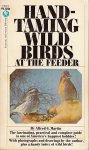
Hand-Taming Wild Birds At the Feeder by Alfred G. Martin, with photographs and drawings by the Author, 5/5
I bought this book for the charming naivete of its cover and topic, but soon became fully invested in all the feathered characters featured inside. The author provides helpful, if purely anecdotal, advice about diet preferences and taming techniques for specific species, in addition to many touching stories about birds he has known.
Why I read it: a thrift store find.
What If? 2
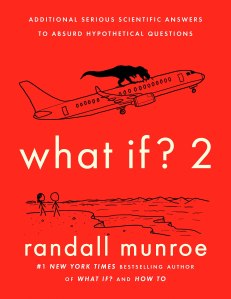
What If? 2: Additional Serious Scientific Answers to Absurd Hypothetical Questions by Randall Munroe, 5/5
He’s done it again! This sequel to What If? is laugh-out-loud funny and I enjoyed how the author used longer-running jokes throughout, as well as short-answer segments to add some [admittedly unneeded] variety.
Why I read it: I’m a fan of the author and his webcomic, xkcd.
Botanical Art from the Golden Age of Scientific Discovery
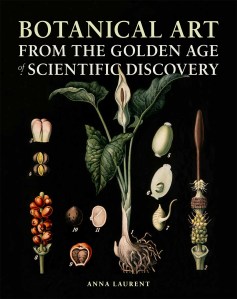
Botanical Art from the Golden Age of Scientific Discovery by Anna Laurent, 5/5
I borrowed this book from the library just to flip through the pictures, but it turned out to be an unexpectedly delightful read. The text perfectly balances with the images, providing just enough additional information to capture the reader’s interest and encourage a more in-depth examination of the many botanical wall-charts it features.
Why I read it: a brief intention to create my own botanical art lead me to order all related books from the library (there weren’t many).
Experimenting with Babies

Experimenting with Babies: 50 Amazing Science Projects You Can Perform on Your Kid by Shaun Gallagher, 5/5
This book is very good for what it is–a light-hearted and accessible collection of activities, based on scientific experiments, that highlight the nuances of a baby’s development. The presentation is not at all rigorous and might even uncharitably be considered “dumbed-down,” but does go well beyond the few common reflexes (e.g. rooting, Moro, stepping, etc.) with which parents might already be familiar. Personally, I do not feel motivated to actually perform any of the experiments with my own baby, but it was still fascinating to learn more about his fascinating progression from potato to person.
Why I read it: A friend lent it to me.
Peak

Peak: Secrets from the New Science of Expertise by Anders Ericsson and Robert Pool, 4/5
This book gave me a feeling of déjà vu since it is the third I’ve read on the same general topic, preceded by Coyle’s The Talent Code and Gladwell’s Outliers. On paper, Peak should have been my favorite of the three. Ericsson, a respected professor of psychology, is able to provide the academic backbone that was missing from Coyle’s otherwise very enjoyable take on the subject. And, as one of the researchers responsible for the original study that Gladwell later contorted into the “10,000-hour rule,” Ericsson is both qualified and motivated to debunk that incorrect (yet annoyingly memorable) interpretation of his work.
That said, I felt that Peak was rather a latecomer to the party and the authors’ efforts to transcend the genre of pop psychology relaxed in the book’s later chapters. Their painstaking attempt to distinguish between “deep practice” and mere “purposeful practice” felt contrived, and the concept of “mental representations,” so vital to Ericsson’s psychology-based perspective on the topic, was discussed in a consistently wishy-washy way. I couldn’t resist an eye roll upon encountering the section about London taxi drivers and their overdeveloped hippocampi, a study that has already been beaten to death (à la the Stanford Prison Experiment). Overall, I didn’t enjoy this book as much as I remember enjoying Coyle’s more biology-based perspective and discussion of the topic in terms of deep practice, ignition and master coaching in The Talent Code.
While it might not have lived up to my six-year-old memory of a similar book, Peak still has a lot to offer. I was very interested in the application of the science of expertise to the field of medicine, specifically surgery. No one wants their medical practitioner to be just “average,” but the old joke that goes “What do you call the medical student who graduated last in his class? … Doctor” is unsettlingly accurate. Ericsson poses a real “moneyball” moment for the medical industry by showing how studying the highest performing outliers and applying science-based teaching techniques can raise the success rates of “average” surgeons.
Why I read it: my brother piqued my interest by telling me interesting stories from it.
How To
 How To: Absurd Scientific Advice for Common Real-World Problems by Randall Munroe, 5/5
This book does not disappoint! It is filled with hilarious, ridiculous, scientifically strenuous “solutions” to problems ranging from “how to jump really high” to “how to change a light bulb.” As a piano teacher, I found the chapter on how to play the piano particularly hilarious and thought-provoking. I’ve never thought to ask questions like “how many keys would need to be added to the piano keyboard to make music for whales?” (spoiler: it’s not as many as you’d think!).
Why I read it: I love Munroe’s book What If? and his xkcd webcomic.
 OmniRambles