
Tagged: 2021
Thames Mudlarking

Thames Mudlarking: Searching for London’s Lost Treasures by Jason Sandy and Nick Stevens, 3/5
I appreciated the abundant, high-quality photographs in this slim book, but the text was dry and uninspiring.
Why I read it: Amazon threw this gift for my mother-in-law into a box of other purchases, completely devoid of any wrapping, to be tumbled around like a river rock on its journey to my door. It arrived predictably battered around the edges, but the silver lining was that I was able to take advantage of the exchange window to read it for myself.
Winterset Hollow

Winterset Hollow: A Novel by Jonathan Edward Durham, 1/5
I respect the hard work and courage required of first-time novelists, but…this was so bad. At the heart of this fantasy story is an imaginary work of poetry, supposedly written in the early 1900s and of enduring popularity and influence. Unfortunately, the poetry excerpts throughout the book are not convincing at all: for no apparent reason, the introductory verses and a handful of other snippets are in a different rhyme scheme than all the rest, and the overall effect is not consistent with the work’s era of origin. As a lover of poetry, it was hard to maintain suspension of disbelief in the face of verses like the following (21-22):
You know I love it here, said Runny, you know I am a happy bunny
But still I wish to spread my wings and fly beyond the trees
I promise you that I’ll be back, I promise I’m not lying, Flack
I promise I just need to go see what I need to see
And with those words, his shoulders dropped, and Runny hopped a might hop
And turned to face the hedgerow that he’d known for all this time
And jump, he did, as rabbits do, for this was sad for Runny too
It was no treat to go and leave his bestest frog behind
Poetry aside, the descriptive passages are self-indulgently tedious, like someone telling you every detail of a dream they had the other night. The author’s word choices are often contrived in their novelty, trampling across the line between “inventive” and “incorrect.” Words used in unexpected ways are usually a sign of excellent writing, but not when they fail to enhance the effect of the text and merely serve as a distraction. I was particularly baffled by the appearance of the word “ingrace” in three different contexts, none of which were consistent with the solitary dictionary definition (from 1913) that exists online. Adding to my annoyance were petty complaints like an increasingly repetitive use of “well” as an intensifier towards the end of the book (I guess you could say I was well annoyed by it), multiple instances of comparing things to lanterns, and more than one reference to “serendipity.” Scenes of gruesome violence and a somewhat banal plot twist work feverish overtime to cover for characters lacking in depth and development. The cover blurb by Diana Gabaldon (author of the Outlander series) describing Winterset Hollow as “astonishingly powerful and multilayered” is so ridiculous in light of the book’s crucial shortcomings that I have to assume she was treating the review as a creative writing exercise.
Why I read it: The author is absolutely hilarious on Instagram.
Oddball

Oddball by Sarah Andersen, 3/5
The fact that this collection of comics made me lol instead of rofl is a testament to how much I’ve changed as a person over the last few years. What used to be extremely relatable to me as an anxious, single, bookish introvert, has become less so as my sense of identity has shifted more towards being a wife, mother, and active member of the local martial arts community. That said, Sarah Andersen is still hilarious and the amount she can communicate with a few squiggly lines is incredibly impressive.
Why I read it: I visit sarahcandersen.com once in a while to catch up and saw that I was behind a couple books.
The Man Who Died Twice

The Man Who Died Twice: A Thursday Murder Club Mystery by Richard Osman, 3/5
Enjoyable, though a bit less witty and charming than the first book in the series and featuring a more conventional, spy thriller plot.
Why I read it: the second in a series that started out very strong.
The Real Anthony Fauci
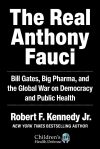
The Real Anthony Fauci: Bill Gates, Big Pharma, and the Global War on Democracy and Public Health by Robert F. Kennedy Jr., 5/5
There is no denying that this is a controversial book on controversial topics, written by a controversial author, and it wasn’t particularly difficult to spot some inadequately substantiated claims, outlandish hypotheses, less-than-impressive sources, and questionable interpretations of data. That said, one would have to be willfully naive and ignorant of human nature to ignore the preponderance of inarguable, factual evidence the author provides that some of our most respected institutions, scientists, politicians, businessmen/women, and philanthropists have sold their souls and woven a pervasive web of deceit, corruption, avarice, censorship and moral bankruptcy. Even with its failings, this book is a necessary and fearless testament to the enduring wisdom of 1 Timothy 6:10: “For the love of money is a root of all kinds of evils” (ESV).
Additionally, The Real Anthony Fauci is a tour de force in terms of seamlessly and meticulously incorporating technology into a traditional reading experience; the chapter endnotes link via a QR code to RFK Jr.’s website, where one can easily click through to the actual sources for most of the 2,194 citations contained in this formidable exposé.
Why I read it: Originally, I had no intention of reading this because, judging solely from its cover, it appeared to be little more than a hit-piece full of conspiracies, written by a crackpot. However, RFK Jr.’s interview on The Joe Rogan Experience left me with a more favorable impression of the author, as well as many unanswered questions about his claims.
A Hunter-Gatherer’s Guide to the 21st Century

A Hunter-Gatherer’s Guide to the 21st Century: Evolution and the Challenges of Modern Life by Heather Heying and Bret Weinstein, 1/5
I found this book to be profoundly and unrelentingly irritating. The authors are clearly well-educated and well-spoken, yet they seem more concerned with sounding impressive and achieving “guru” status than presenting a rational argument. Each chapter is a hodgepodge of facts, references to the work of others, opinions, and anecdotes, concluding with a short bullet point list of generic lifestyle recommendations that, in most cases, feels completely unsupported by the previous content. This would be annoying enough, but the thing that really made me furious was how the authors use a self-satisfied, scholarly tone and liberal endnote references (which somehow never supported the claims that I was actually interested in verifying) to mask under-developed theories and bad writing. Obviously, I feel under-qualified to criticize the work of two experienced academics, but it doesn’t take a PhD in Biology to recognize their consistent failure to present convincing points in a logical manner that supports bigger ideas.
Why I read it: a birthday present from my dad.
The Art of Impossible

The Art of Impossible: A Peak Performance Primer by Steven Kotler, 4/5
The author believes that the average person can achieve groundbreaking results by finding and fulfilling their life passion, a process that he attempts to reduce into a series of replicable steps through analysis of the “flow” state, the characteristics of high achievers (in whose company he firmly places himself, with less-than-convincing self-deprecation), and grossly over-simplified neuroscience.
Ironically, this book both poses and fails its own test. Kotler attempts the impossible and succeeds in writing a book that is slightly unlikable, painfully over-systematized, and, crucially, ascribes prescriptive value to what I strongly suspect are merely descriptive (if well-researched and insightful) observations. This last failing is a pervasive one in the self-help genre and, if the author had promised less, it would be easier to focus instead on the book’s many positive aspects.
While I strongly doubt that one could make long-lasting and meaningful life changes merely from following the steps in this book, it does provide some helpful ideas to fine-tune and recognize good character qualities and habits that already exist and to understand a little of the brain chemistry behind concepts like motivation, creativity, and fear.
Why I read it: a recommendation from a gym friend.
Fight Night

Fight Night: A Novel by Miriam Toews, 3/5
Since I like my dialogue to be punctuated, do not generally enjoy the coming-of-age genre, and think “girl power” is a bit cringeworthy, I shouldn’t have enjoyed this book. However, consistent with the theme of her novel, Toews infuses her writing with so much love and humor that I was challenged to look past my preconceptions and appreciate the power of love to make messy situations, damaged people, embarrassment, mistakes, death, and loss into something beautiful.
Why I read it: I was going through my old reviews to make a book shopping list when I saw Toews’ transcendent novel, All My Puny Sorrows,and realized I’d never gotten around to reading more of her work.
Magical Swimming and Flying Adventures

Magical Swimming and Flying Adventures by Elsa Fujinaka, 5/5
This little book has as many fairies and mermaids as you could possibly wish for, but my favorite character is the merfairyunicorn with two problems (don’t worry, the delightful duo on the cover are very good at solving problems). I was especially impressed by the detailed artwork, which is impressively consistent for all 16 pages and complements the story perfectly. I hope the author writes more books in the future!
Why I read it: What proud aunt could resist?
 OmniRambles