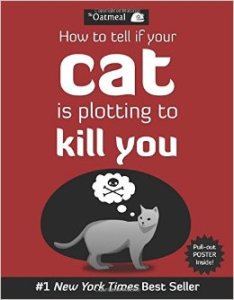
The Terrible and Wonderful Reasons Why I Run Long Distances

terrible and wonderful reasons why i run long distances inman oatmeal andrews mcmeel 2014The Terrible and Wonderful Reasons Why I Run Long Distances by Matthew Inman (aka The Oatmeal), 5/5

Inman’s reasons for running may be much more terrible and wonderful than my own (just as his conception of “long distances” is much longer), but a lot of this hilarious book resonated with me.  On a side note: I’ve never read a collection of comics containing more illustrations of Nutella.

[Why I read it: I enjoy Inman’s webcomic, The Oatmeal, and this book came up in conversation with one of Dad’s coworkers.  I’d actually almost bought it in a store just a few days previous before remembering that 5 Very Good Reasons to Punch a Dolphin in the Mouth was collecting dust on my shelf after being read just once.  I hit the library up instead, which I guess makes me a bad fan.]

The Child from the Sea

child from the sea goudge coward-mccann 1970The Child from the Sea by Elizabeth Goudge, 1/5

This tedious attempt to legitimize the relationship between King Charles II of England and Lucy Walter, one of his numerous mistresses, is painfully contrived.  The dialogue is stilted, the characters unlikeable, the romantic scenes unbearably sappy, and the whole thing suffers from a pervasive moral ambiguity that causes painful cognitive dissonance.  For example, Lucy and one of the king’s good friends have a one-night fling that results in pregnancy, but according to the author “both had the gift of a dedicated loyalty” and “were faithful to the core” (473).  I guess I’m just one of those who “would not have understood, if they could have seen it made visible, the quality of the integrity that despite their failures gave such distinction to Lucy and her lover” (473).  Integrity?!  Is this backwards day?

Despite constant attempts to make Lucy appear the victim of malicious gossip, the political climate of the times, and her own big-hearted, “Welsh” emotionalism, I felt that even the author no longer liked the main character by the end of the book.  And that was the romanticized, fictional version of her…

[Why I read it: my friend, Alison, passed it along to me, [rightly] thinking that I would enjoy the Welsh references.]

2015 Stats

In 2015 I read sixty-eight books, forty of which were nonfiction, twenty-seven fiction and one poetry.

I averaged 1.3 books a week, but the most books I read in a single month was nine (in November).

I read 2 books that were written before 0AD
1 book written in the 1400s
3 books written in the 1700s
4 books written in the 1800s
10 books written between 1900-1949
19 books written between 1950-1999
29 books written between 2000-2015

Books that I rated 1 star: 1 (~1%)
2 stars: 16 (~24%)
3 stars: 20 (~29%)
4 stars: 18 (~26%)
5 stars: 13 (~19%)

Jonathan Strange & Mr Norrell

jonathan strange and mr norrell clarke bloomsbury 2015Jonathan Strange & Mr Norrell by Susanna Clarke, 5/5

I knew that I was going to love this intimidatingly large novel as soon as I read the caption for the opening illustration (of a sour old man reading a book): “He hardly ever spoke of magic, and when he did it was like a history lesson and no one could bear to listen to him.”  Clarke somehow overcomes a contradiction in terms to tell a plausibly fantastic tale about the revival of “practical” magic in England.  The story flows well and is never boring, though it does wear thin near the end, perhaps because the author has a talent for humorous and clever descriptions but her observational style is not conducive to much psychological depth or character development.  However, I found it to be a charming read and quite possibly the best debut novel I’ve ever encountered.

[Why I read it: I saw a couple cool GIFs from the BBC miniseries version, but happily decided that I should give the book a chance first.]

Complete Stories and Poems of Edgar Allan Poe

complete stories and poems of edgar allan poe doubleday book club edition 1966Complete Stories and Poems by Edgar Allan Poe, 4/5

This book organises all of Poe’s writings into just a few convenient categories: Tales of Mystery and Horror, Humor and Satire, Flights and Fantasies, The Narrative of A. Gordon Pym of Nantucket, and The Poems.  Of these, I think the first contains the best examples of Poe’s genre-defining style, including one of the first detective stories ever written (predating the strikingly similar Sherlock Holmes stories by 46 years).  The scary tales tend to be short on plot but ooze with atmosphere–the effect is almost more pictorial than literary.  Overall, I didn’t enjoy this book very much and a lot of the stories felt pointless or tedious to read, but I respect Poe’s groundbreaking literary influence.

[Why I read it: I wanted to be familiar with more of Poe’s works than just The Raven.]

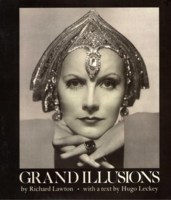
Grand Illusions

grand illusions lawton 1973 mcgraw-hillGrand Illusions by Richard Lawton, with a text by Hugo Leckey, 5/5

This collection of Hollywood portraits from the 1920s through 40s is full of mesmerisingly beautiful black and white images.  Famous actors and actresses, exquisite lighting, glamorous settings–this book is literally a feast for the eyes.

[Why I read it: it caught my eye in the thrift store.]

The Courts of the Morning

courts of the morning buchan houghton mifflin 1929The Courts of the Morning by John Buchan, 3/5

This charming novel can, broadly speaking, be included in Buchan’s Richard Hannay series since its prologue is narrated by the eponymous character; however, it mainly features the familiar faces of Archie and Janet Roylance, Sandy Arbuthnot and John Blenkiron.  These few find themselves embroiled in a revolution against a megalomaniac mining tycoon who plans to overthrow democracy around the world from his seat of power in the fictional South American country of Olifa.  Despite enjoying the book greatly, my initial enthusiasm has worn down somewhat as I consider its many faults in retrospect.  Moments of suspense and adventure are countered by sections of very dry, geographical descriptions of war tactics.  Psychological and guerrilla warfare are portrayed with a stubbornly naive romanticism that must be taken lightly or it becomes ridiculous.  Add to this that the plot isn’t the strongest and you have a book that is fun to read but ultimately not very satisfying.

[Why I read it: I think I saw it advertised in the end pages of the last Buchan book I read.  My library didn’t have it, but managed to order in a beautiful first edition from a different library.]

The Pilgrim’s Regress

pilgrim's regress c s lewis william b eerdmans 2000The Pilgrim’s Regress: An Allegorical Apology for Christianity, Reason and Romanticism by C.S. Lewis, 4/5

Motivated by a mysterious Desire, John leaves behind the lifeless religion of his hometown, Puritania, and explores both the stern, unrelenting wastes of the cerebral North and the swamps of untrammeled self-gratification in the animal South.  This journey from “‘popular realism’ to Philosophical Idealism; from Idealism to Pantheism; from Pantheism to Theism; and from Theism to Christianity” will be recognizable to those familiar with C.S. Lewis’s more biographical works (200).  Admittedly obscure, this tale is similar to George MacDonald’s Phantastes in that its value may be more in the recognition than the revelation–I suspect that if I reread it every 10 years or so, my appreciation of the truths it tells will grow in proportion with my own life-experience.

[Why I read it: a fortunate thrift store find!]

Verbal Judo

verbal judo thompson quill 1993Verbal Judo: The Gentle Art of Persuasion by George J. Thompson, Ph.D., and Jerry B. Jenkins, 4/5

This book contains some helpful, commonsense advice about communicating that I think would be especially useful for parents and other people in leadership roles.  Of course, the author is a bit full of it and there are endless acronyms and 5-steps to this and 9-stages of that, but the big emphasis is on the concept of empathy and its related technique–paraphrasing.  There is also a helpful list of “Eleven Things Never to Say to Anyone (And How to Respond If Some Idiot Says Them to You),” which includes my personal favourites: “Come here!” (usually shouted threateningly) and “Calm down!” (“BUT I AM CALM!!!”).

[Why I read it: Came across it while sorting through some of my Dad’s books.]


Fermat’s Last Theorem

fermats last theorem aczel four walls eight windows 1996Fermat’s Last Theorem: Unlocking the Secret of an Ancient Mathematical Problem by Amir D. Aczel, 2/5

In around 1637, Fermat hinted that he had “discovered a truly marvelous proof” that an + bn = cn cannot be true for n>2.  Proving this deceptively simple theory required the contributions of dozens of mathematicians over a span of some 350 years.  Unfortunately, while biographical aspects of the story are competently told, the author is unable or unwilling to explain important mathematical concepts in layman’s terms.  If the following paragraph makes sense to you, then you probably fit the target audience of this little book:

Here, a periodic function could be conceived as having a periodicity both along the real axis and along the imaginary axis.  Poincaré went even further and posited the existence of functions with a wider array of symmetries.  These were functions that remained unchanged when the complex variable z was changed according to f(z)——>f(az+b/cz+d)Here the elements a, b, c, d, arranged as a matrix, formed an algebraic group.  This means that there are infinitely many possible variations.  They all commute with each other and the function f is invariant under this group of transformations.  Poincaré called such weird functions automorphic forms (82).

If, like me, you were completely nonplussed by that description, then the only thing of value you will likely get from this book is a deeper understanding of the fact that concise ≠ comprehensible.

[Why I read it: I came across it while sorting through some of my Dad’s books.]