
Expectant Motherhood
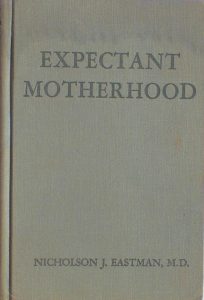 Expectant Motherhood by Nicholson J. Eastman, M.D., 3/5
In the last eight months, since I first found out that I was expecting a baby of my own, I have learned a lot about pregnancy and childbirth from a variety of sources. This vintage book from 1957 is the oldest of all, but I was delighted to discover that a surprisingly large amount of the information and advice it gives still survives, little changed, in our modern age. To me, this is encouraging proof that the process of growing and delivering a baby to the world is natural and something most women are innately empowered to accomplish.
Of course, much has changed in the field of medicine in the 60-plus years since the third edition of this book was published, leading to some fascinating insights into the past. For example, I had never thought to wonder how pregnancy tests worked before the modern “pee stick” was invented in the 1970s. I learned that the easiest and cheapest method was simply to wait until an expected menstrual cycle was at least ten days late, at which point chances were good that you were pregnant. The downside of this approach is obviously that you do not receive positive proof of pregnancy, just an ever-increasing likelihood of it. For those requiring more certainty, a much more expensive option was to wait two weeks past the missed menstrual cycle, inject a mouse or rabbit with the woman’s urine and, forty-eight to seventy-two hours later, dissect the unfortunate creature to check its ovaries for changes! The “frog test” also involved the injection of urine, but pregnancy was confirmed by the development of frog eggs in only eight to eighteen hours and the frog would happily survive. Needless to say, peeing on a stick seems much less gross and inconvenient after learning about these alternate methods of the past!
Why I read it: a gift from my sister.

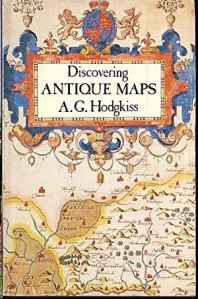 Discovering Antique Maps by A.G. Hodgkiss, 4/5
 Solutions and Other Problems by Allie Brosh, 5/5
 Annapurna: First Conquest of an 8000-meter Peak by Maurice Herzog, translated from the French by Nea Morin and Janet Adam Smith, 4/5
 Scary Stories to Tell in the Dark, collected by Alvin Schwartz, drawings by Stephen Gammell, 3/5
 Ghost Stories of Canada by Val Clery, 4/5
 Dead of Winter by Christopher Hale, 2/5
 Spiritual Midwifery by Ina May Gaskin, 4/5
 The Time of Contempt by Andrzej Sapkowski, translated by David French, 4/5
