
Tagged: philosophy
We Who Wrestle with God

We Who Wrestle with God: Perceptions of the Divine by Jordan B. Peterson, 4/5
A good indicator of Truth with a capital T is that the insights it produces expand the mind and effortlessly illuminate even the darkest corners of a topic, where lesser conceptions fear to tread. There are not many corners more dark than the blood-soaked, primal tales of the Old Testament around which Peterson’s bold and wide-ranging existential exploration occurs. More than just an in-depth character study of God, as revealed through crucial episodes of the Old Testament, this substantial work explores our relationship with the intangible realities of existence on both an individual and societal level, and the codification of these eternal truths into our oldest and most meaningful stories.
Free of the timeworn arguments and vocabulary of Christian apologetics, Peterson’s approach is sure to earn him a “straight to hell” label from many (and not just fundamentalists). I will admit to feeling an uneasy chill, that only others with a religious background would likely understand, at the language of the last couple paragraphs in particular. I won’t go into detail, though, because given the context of the previous 500+ pages, I believe the issue is merely evidence of the author’s tendency to follow a train of thought wherever it may lead, even if it means committing the sin of entering new, unexplored territory in what is supposed to be concluding material. Speaking of sins, I must comment on the astounding number of typos and errors this book contains–by far the most I have ever encountered in a published work. Hopefully these will be rectified in future editions.
Lest I end this review on a sour note, let me re-iterate how amazed I am that a work so broad in scope could be, at the same time, incredibly nuanced. There is something inspired about Peterson’s perspective, which allows him to dissect the most challenging and abstract aspects of the human experience without killing its joy and mystery.
Why I read it: I was curious about Peterson’s theological beliefs, and trusted that he would have an interesting and intellectual approach to the topic.
12 Rules for Life
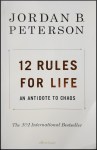
12 Rules for Life: An Antidote to Chaos by Jordan B. Peterson, 4/5
Jordan Peterson is, in my opinion, one of the most brilliant thinkers and lecturers of the 21st-century in his field and, if he were a more intentional writer, I believe he would deserve a place with the immortal greats of philosophy. Unfortunately, instead of utilizing the writing process to distill and clarify his ideas, he settles for more or less transferring his thought processes straight onto the page. The result is very uneven in tone, bouncing wildly between folksy storytelling and esoteric musings that challenged even my well-trained attention span (exhibit A: Ornithology: An Introduction). It took three tries for me to make it through this book, but I was rewarded by Peterson’s fearless acceptance of the most terrible aspects of human existence and the deeply satisfying integration of that chaos into a perspective that ennobles the common man and makes one want to pick up a sword and fight dragons.
Rule 1: Stand up straight with your shoulders back.
Rule 2: Treat yourself like someone you are responsible for helping.
Rule 3: Make friends with people who want the best for you.
Rule 4: Compare yourself to who you were yesterday, not to who someone else is today.
Rule 5: Do not let your children do anything that makes you dislike them.
Rule 6: Set your house in perfect order before you criticize the world.
Rule 7: Pursue what is meaningful (not what is expedient).
Rule 8: Tell the truth–or, at least, don’t lie.
Rule 9: Assume that the person you are listening to might know something you don’t.
Rule 10: Be precise in your speech.
Rule 11: Do not bother children when they are skateboarding.
Rule 12: Pet a cat when you encounter one on the street.
Why I read it: I became familiar with Peterson when he achieved viral popularity a few years ago.
Flatland
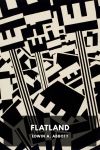
Flatland: A Romance of Many Dimensions by Edwin A. Abbott, 4/5
This bizarre little story is told from the perspective of a two-dimensional “Flatland” dweller, whose visits to one-dimensional “Lineland” and three-dimensional “Spaceland” encourage the reader to consider how very plausible it is that there exist in reality unlimited additional dimensions, of which humankind is arrogantly ignorant.
Why I read it: my dad lent it to me and I had heard of it before (I can’t remember where).
The Federalist Papers

The Federalist Papers by Alexander Hamilton, James Madison, and John Jay, 5/5
In these 85 essays, originally published in 1787-88 by New York newspapers, three Founding Fathers use the pseudonym “Publius” to argue passionately for the ratification of the newly-proposed Constitution of the United States. Blow by blow, the authors address and dismantle the most popular criticisms of the day, occasionally stooping to empty rhetoric and snide remarks, but more often establishing logical and convincing rebuttals, based on common sense, the events of history, the practices of other nations, and a clear-eyed appraisal of human nature (recognizing both its positive and negative tendencies). It was a strange and refreshing experience to encounter in-depth and nuanced arguments, presented with respect for the everyday reader’s intelligence and belief in their sincere desire to form an educated and fair-minded opinion. Almost two hundred and forty years later, it is easy to be cynical and pessimistic about the future of our country, but it is no exaggeration to say that reading this book, in combination with the actual Constitution, re-kindled my love, pride and admiration for the grand experiment that is the United States of America.
Why I read it: A free copy showed up in my mailbox, completely unsolicited. Unfortunately, I peeled the mailing label off to read the back cover and now can’t recall what organization sent it.
Love Does
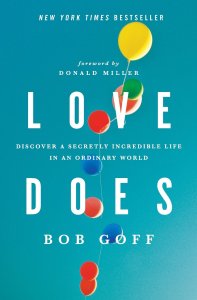 Love Does: Discover a Secretly Incredible Life in an Ordinary World by Bob Goff, 5/5
Bob Goff knows how to tell a story. His stories were almost too good; I devoured them like a kid devours a bowl of fruit loops and had to keep reminding myself to slow down and digest the bigger messages. When someone who has accumulated a lifetime’s worth of remarkable experiences takes the time to write down what they’ve learned from a broad perspective, it’s a gift–a sneak peek of a meaningful work of art when all you could see before was the close-up chaos of individual brushstrokes.
Formerly a lawyer and law professor, Goff was not a “professional Christian” when he wrote this book, so I didn’t get the uncomfortable feeling that he was trying to sell some pre-packaged, preachy, lifeless form of religion. He is very practical and realistic, using stories to transcend the cliched verbiage of encouraging people to fearlessly follow their hopes and dreams while living in God’s love.
I used to think following God required complicated formulas. I thought I needed a big stack of books, so I could figure out exactly where I was all the time. I thought if I constantly measured the distance between me and God, I’d get closer to Him. Early on, the religious people I knew explained to me all kinds of nuances for doing this sort of spiritual math. They suggested that I say certain things in my prayers, have quiet times, go to Bible studies, and memorize Bible verses. They said I needed to know how to explain to someone that God could be a person and a spirit at the same time. They urged me to know how God was going to come back someday but that some people would be here and other people would go missing because it would be a time of great tribulation. They said that for me to know God, there was a whole pile of things I’d need to know first. […] What I realized, though, is that all I really needed to know when it came down to it was the direction I was pointing and that I was somewhere inside the large circle of God’s love and forgiveness (156).
There are a lot of crazy stories and insightful life lessons packed into this easy-to-read book, but perhaps the thing that stuck with me the most a couple weeks later, was how fearlessly Goff loves other people and gets involved in their lives. If he was giving bits of himself away, he would soon be reduced to nothing, but instead his life seems immeasurably richer. It truly seems that he has an endless supply of supernatural love from which to draw. I still don’t fully understand how to live this way without getting used up by the “takers” in the world, but this book was a helpful piece of the puzzle for me and an amazing reminder that “perfect love casts out fear” (1 John 4:18).
Why I read it: My friend, Joy, recommended it to me.
Zen and the Art of Motorcycle Maintenance
 Zen and the Art of Motorcycle Maintenance: An Inquiry Into Values by Robert M. Pirsig, 2/5
Reading this philosophical novel was, for me, like trying to experience a song by simply reading the lyrics–I understood the words, but I couldn’t hear the “music.” I suspect this is due in part to my reflexive antipathy for the 1960s zeitgeist and a general shift away from academic thought in my life. However, I’d prefer to think that the fault is the author’s, for alternating arbitrarily-detailed descriptions of a motorcycle road trip with dry, preachy philosophical rants that fall into the trap described by C.S. Lewis in The Abolition of Man:
“…But you cannot go on ‘explaining away’ for ever: you will find that you have explained explanation itself away. You cannot go on ‘seeing through’ things for ever. The whole point of seeing through something is to see something through it. It is good that the window should be transparent, because the street or garden beyond it is opaque. How if you saw through the garden too? It is no use trying to ‘see through’ first principles. If you see through everything, then everything is transparent. But a wholly transparent world is an invisible world. To ‘see through’ all things is the same as not to see (81).”
In an attempt to understand my negative experience with such a popular, respected book, I read a lot of user reviews afterwards and learned more about the author. I now know that the book is highly autobiographical and wonder if my dislike of it reflects a basic personal incompatibility with the author/narrator and a recognition of how his pursuit of personal catharsis might taint the intellectual integrity of his arguments. I didn’t feel any sort of sympathy, connection or respect for the main character, suspecting that I would dislike him if I met him in person, which is certainly not a great basis on which to approach a book. With this understanding, I might re-read it in a few years and see if I can get something more out of it than I did this time.
Why I read it: I was browsing Half Price Books for reading material for a trip to Scotland and recognized the title.
Another Roadside Attraction
 Another Roadside Attraction by Tom Robbins, 3/5
I really wanted to like this book (given to me by a friend to whom it means a lot) and for about two-thirds of it, I succeeded more or less. I’ve never been a fan of the hippy aesthetic, but Robbins’ writing style is humorously bizarre, featuring inventive descriptions and colorful characters, set in familiar Pacific Northwest locations. I found the non-linear narrative style to be stressful at first, but ultimately rewarding, and was interested in the unique plot and development of the theme–how best should human spirituality express itself in a post-Christian world?
However, I eventually became irked by the novel’s increasing preachiness. What starts as a quirky, raunchy story gradually turns into a hippy manifesto that preaches a muddled pop-paganism full of weed-infused platitudes while tearing apart a weak version of Christianity created by the author only to be destroyed. I dislike being preached at, especially by philosophical novels, where practically any point can be “proven” in the highly-controlled universe of an author’s creation. The temptation to commit the straw man fallacy generally proves too strong to resist in these cases and the level of intellectual integrity required for useful discussion of philosophical matters is difficult to attain amidst distractions of story and style. Perhaps someone from a less religious background than I could easily get past these concerns, but I found them distracting enough in this case to mar my enjoyment of the book.
Why I read it: A thoughtful Christmas present from a friend.
Sophie’s World
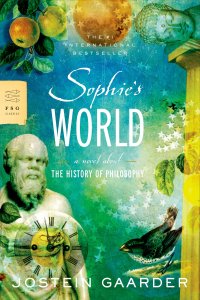 Sophie’s World: A Novel About the History of Philosophy by Jostein Gaarder, translated by Paulette Møller, 2/5
The most thought-provoking aspect of this reading experience was simply trying to understand how a book featuring such peculiarly bad writing could be published at all, much less become an “international bestseller.” Half of it consists of dialogue between two-dimensional characters, so stilted and unnatural it has to be read to be believed. The other half reads like increasingly vague course descriptions for philosophy classes taught by someone who considers Wikipedia articles to be the pinnacle of literary accomplishment through the ages. In my experience, fiction writing this bad generally relies on themes like sex, mystery or fantasy to attract readers, so I guess in a twisted way this book’s very existence is a testament to the powerful appeal of philosophical ideas and the ubiquity of existential angst.
Why I read it: recommended to me by a gym friend.
The Nicomachean Ethics of Aristotle
 The Nicomachean Ethics of Aristotle, translated by Sir David Ross, 3/5
It took several attempts over a span of many months for me to get through this short book, in which Aristotle addresses topics of timeless interest, such as happiness, virtue, and friendship. The difficulty of this book lies, for me, not so much in the complexity of the ideas but in the general lack of reasoning provided to support them. A few moments of profundity are obscured by mundane observations, personal opinions (unsupported by fact) and attempts to force nebulous concepts into various organizational schemes. At first, I felt frustrated and disappointed that the Nicomachean Ethics, similar to Plato’s Phaedo, did not meet my expectations. However, after reading the Wikipedia article and a helpful lecture on the topic, it became clearer to me that this book’s value is more in the framework it provides for discussion and thought than for any definitive claims it makes. To me, it represents just the beginnings of thought on a complicated topic, made more remarkable by its age and practical, community-centered perspective on morality. Though its broader themes are difficult to grasp, it does reward a casual reading with the always-fascinating insight that human nature has not changed over thousands of years, and occasional gems like this:
But we must not follow those who advise us, being men, to think of human things, and, being mortal, of mortal things, but must, so far as we can, make ourselves immortal, and strain every nerve to live in accordance with the best thing in us; for even if it be small in bulk, much more does it in power and worth surpass everything (265).
Why I read it: C.S. Lewis referenced it in The Abolition of Man so I recognized the title while book shopping in Wales.
Twilight of the Idols
 Twilight of the Idols, or, How to Philosophize with a Hammer by Friedrich Nietzsche, 1/5
Nietzsche’s opinions are as monstrous as his ego and as depressing as his life. With supreme self-confidence, he makes sweeping statements about human nature, existence, and philosophy, while generally avoiding any in-depth analysis or reasoning that might substantiate his sensational claims. His writing is so bizarre and baseless that I felt compelled to look him up on Wikipedia and try to figure out why on earth he gained so much credibility in the philosophy world. The exercise was unreassuring. It seems that Nietzsche’s primary life experiences were academic, he was socially isolated, addicted to drugs, extremely resentful of his religious upbringing and was actually residing in a mental institute when this book was published. Not exactly the sort of person you’d want to turn to for theories about life, the universe and everything. Usually, I’d try to write more specifically about the contents of this book so that I could remember it, but in this case, I’d be more than happy to forget that this particular collection of ravings even exists.
Why I read it: Recognized the title while browsing in the thrift store.
 OmniRambles