
Tagged: Nonfiction
The Traveling Photographer’s Manifesto
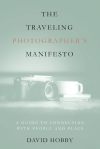
The Traveling Photographer’s Manifesto: A Guide to Connecting with People and Place by David Hobby, 5/5
When a book is written well by someone with personality who is passionate about a topic on which they have expertise, the subject becomes almost irrelevant. In these circumstances, I can and have enjoyed reading about everything from botanical art to infrastructure. But when a book checks all of these boxes and is also about two of my passions–photography and traveling–what a treat!
Though I am not (and do not aspire to be) a street photographer or photojournalist, I enjoyed absorbing the author’s practical advice, technical guidance, interesting anecdotes, and behind-the-scenes perspective. Perhaps most influential of all is the well-developed, people-first photography philosophy that permeates every page and is clearly the product of an open and enquiring mind.
I knew beforehand that this independently-published book contains no photos and, by the end, had even convinced myself that it doesn’t need any because it is so philosophical in focus. Then I came across the author’s PetaPixel article about the book, saw the accompanying photographs, and immediately changed my mind. The photos were so beautiful and, having read so much about their context, so meaningful, that I felt it was a crime that none were included in the book. Yes, there is a helpful Supplemental Visual Notes document, which the author e-mailed to me (along with a kind, personalized note) almost immediately upon request. But this book deserves to be picked up by a publisher, expanded, given a proper cover design, and filled with photographs.
Why I read it: I learned about the author through his popular website, “Strobist.”
Charles Harper’s Birds & Words
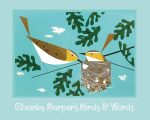
Charles Harper’s Birds & Words, 5/5
Charming bird portraits in Harper’s trademark “minimal realism” style combine with witty text to create a feast for both the eyes and the nature-loving mind.
Why I read it: A Christmas gift from my sister-in-law.
The New Oxford Annotated Apocrypha
The New Oxford Annotated Apocrypha (NRSV 5th ed.), edited by Michael D. Coogan, 5/5
The Apocrypha is one of those literary works that is impossible to approach without some pre-conceived expectation, since the very name is steeped in mystery. Raised Christian, I cannot remember ever being explicitly told to avoid these noncanonical ancient writings, however they were not included in my Bible and I had a vague conception of them as useless at best, and untrustworthy at worst. At some point in my spiritual meandering, I started to suspect that the Bible may have been compiled by a bunch of card-carrying HOA Karens and maybe the Apocrypha was simply too fun and awesome to be included. At any rate, I expected to encounter bizarre prophecies, entertaining stories about Jesus as a child, and lots of enticing, controversial ideas.
Not for the first time, my preconceptions turned out to be wildly inaccurate. I was surprised to find that most of these ancient writings fit pretty clearly and uncontroversially into the categories of history, storytelling, or praise, and, while I enjoyed reading these works, the Bible feels complete to me without them. My favorite book was Sirach, with its deeply relatable and often snarky proverbs. There were a couple quotes that I wished were in the Bible, but it was clear from context that Ben Sira had a lot of his own ideas and issues to work through. Overall, I found the Apocrypha to be a fascinating and occasionally inspiring collection of historical writings, regardless of any Biblical associations.
Why I read it: My husband was listening to the Book of Enoch and it sounded so wild that I wanted to check it out for myself. I just assumed it was in the Apocrypha and didn’t realize it wasn’t until I was about 80% done. Next stop–pseudepigrapha, I guess.
Stalking the Wild Pendulum
Stalking the Wild Pendulum: On the Mechanics of Consciousness by Itzhak Bentov, 3/5
It would be too easy to dismiss this book, with all its talk of holograms, vibrations, and altered states of consciousness, as mere LSD-fueled, new-age nonsense. I think it deserves a closer look, if only to appreciate the author’s admirable accomplishment of developing a comprehensive theory of life, the universe and everything.
Using clear language, helpful chapter summaries, and a reasonable progression of thought, Bentov exploits the mysterious and seemingly unnatural uncertainty that exists at the extreme ends of a pendulum-like or oscillating movement in quantum mechanics to formulate a conception of reality as “a void filled with pulsating fields” (167) that form an “interference pattern or hologram of knowledge information we can call the ‘universal mind'” (157). Into this framework neatly slot the implausible yet persistently-reported human phenomena of telepathy, clairvoyance, out-of-body experience, enlightenment, reincarnation, etc.
Based on my own summary above, this seems the exact type of book that I would mercilessly flay as worthless woo-woo garbage. So why do I think it is actually something special? For one thing, I admire the author’s humble curiosity and undeniable intellect. While acknowledging the deeply unconventional nature of his own ideas and that “few scientists will read this book to the end” (2), he is not defensively anti-science or anti-anything (which is more than can be said for many people). Adding to its appeal, for me, is the fact that this book is the product of living-room discussions with friends and published with their encouragement, not in an attempt to sell something or gain prestige. How many people do you know with whom you could discuss the shape of the universe and the meaning of existence? I, for one, am envious. Any lingering doubts I might have had about this book and its author were dispelled by reading his Wikipedia page, which I refrained from doing earlier to avoid bias. He seems to have been a truly remarkable mind and a contributor of practical value, as well as theoretical, to humanity.
Why I read it: the title caught my eye in a used bookstore, but I didn’t want to spend money without knowing if it was utter nonsense, so I got it from the library later. Now, I wish I had bought it.
The King of Diamonds
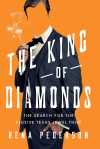
The King of Diamonds: The Search for the Elusive Texas Jewel Thief by Rena Pederson, 5/5
Pederson takes the reader on a ride-along as she investigates the most glamorous cold case imaginable: a brazen and idiosyncratic jewel thief who terrorized the fabulously wealthy of Dallas for a decade. Over seven years of research is condensed into a satisfying page-turner that weaves history, biography, and true crime together, while exploring the good, the bad and the ugly of 1950s and ’60s Dallas society, from the richest philanthropist to the shadiest gangster and everything in between.
Why I read it: I think I saw an author interview on social media and the story sounded fascinating.
Thames Mudlarking

Thames Mudlarking: Searching for London’s Lost Treasures by Jason Sandy and Nick Stevens, 3/5
I appreciated the abundant, high-quality photographs in this slim book, but the text was dry and uninspiring.
Why I read it: Amazon threw this gift for my mother-in-law into a box of other purchases, completely devoid of any wrapping, to be tumbled around like a river rock on its journey to my door. It arrived predictably battered around the edges, but the silver lining was that I was able to take advantage of the exchange window to read it for myself.
All That the Rain Promises and More…
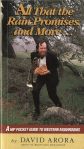
All That the Rain Promises and More: A Hip Pocket Guide to Western Mushrooms by David Arora, 5/5
Don’t be fooled by the frankly insane cover photo and title–this helpful book is packed with color photographs and well-organized descriptions of the most common mushrooms found in the western United States, interspersed with additional info, poetry, recipes, and anecdotes collected from the mycophile community. Yes, it’s a little silly at times, but the author is deeply knowledgeable about the topic and I appreciate the sense of humor and passion that are reflected in this conveniently-sized book. I found the closing essay to be particularly compelling on the topic of over-regulation of hunting/gathering activities:
“In other words, the largely urban-suburban vision of nature as a beautiful, peaceful refuge from the stresses and conflicts of civilization, is in fundamental conflict with the rural or less “civilized” perception of nature as a provider of sustenance and wealth. Therein lies a great irony: it is the cities that suck food, energy, and resources from the landscape, yet there is a long and tragic history of industrial and agricultural peoples persecuting “savage” outsiders (in the most literal sense of the word) who hunt and gather (253).”
…
“No doubt the admonition to “take only photographs, leave only footprints,” is desirable in certain sensitive or pristine areas. But it is inappropriate in most situations because it is a fundamental denial of who we are: creatures of the earth whose most ancient heritage (or birthright, if you will) is foraging for food in the forest.
This enforced separation of human being from the natural world can only undermine support for the public acquisition and protection of habitat. The more we view the forests and fields as a resource […] the more likely we are to cherish that resource (254).”Why I read it: I find mushrooms fascinating and love to spot them around the yard.
My Favorite Intermissions

My Favorite Intermissions: Lives of the Musical Greats and Other Facts You Never Knew You Were Missing by Victor Borge and Robert Sherman, 5/5
I half-expected this collection of loosely opera-themed musical anecdotes to be outdated and cringey, but I was so wrong. The passage of time and changing tastes have not dampened Borge’s trademark hilarity.
Why I read it: I loved watching Victor Borge on VHS as a child and this book was a welcome thrift store find.
Tomorrowmind
Tomorrowmind: Thriving at Work with Resilience, Creativity, and Connection–Now and in an Uncertain Future by Gabriella Rosen Kellerman and Martin Seligman, 1/5
This book not only represents everything that is classically hateable about pop psychology and the self-help genre, it plumbs new depths of dystopian deception. To be fair, there were warning signs, starting with the point in the introduction at which the authors straight-facedly suggest PRISM as a “handy (if out of order) acronym” to remember the concepts of resilience and cognitive agility (R), meaning and mattering (M), rapid rapport to build social support (S), prospection (P), and creativity and innovation (I). That peculiarly unhelpful scrambled egg of an acronym should have been my clue to close the covers and move on down my to-read list. Unfortunately, I decided to wade through a repetitive, half-baked, jargon-laden mess that ultimately morphed into a sales pitch for BetterUp, written by its chief product officer (Kellerman) and, as a little further research quickly revealed, the namesake of BetterUp’s foray into artificial intelligence–MartyAI.

How dark is that? Not only does Tomorrowmind fail to provide anything of value to readers struggling to cope with the stress of an increasingly volatile, technology-driven, future-oriented work environment, the authors actually manage to leverage that same audience in support of their own contribution to the dystopian future they pretend to address–offering the life coaching services of a lifeless, ai-powered chatbot. Ironically, Kellerman and Seligman have achieved more success by pivoting their psychology careers to address modern times than many of the people they use as positive examples in their book. Needless to say, their success hasn’t come from subscribing to life coaching services, buying self-help books, or applying the muddled concepts on view in this embarrassment of a contribution to literature.
Why I read it: The topic sounded interesting and I had respect for Seligman based on his book Learned Optimism.
We Who Wrestle with God

We Who Wrestle with God: Perceptions of the Divine by Jordan B. Peterson, 4/5
A good indicator of Truth with a capital T is that the insights it produces expand the mind and effortlessly illuminate even the darkest corners of a topic, where lesser conceptions fear to tread. There are not many corners more dark than the blood-soaked, primal tales of the Old Testament around which Peterson’s bold and wide-ranging existential exploration occurs. More than just an in-depth character study of God, as revealed through crucial episodes of the Old Testament, this substantial work explores our relationship with the intangible realities of existence on both an individual and societal level, and the codification of these eternal truths into our oldest and most meaningful stories.
Free of the timeworn arguments and vocabulary of Christian apologetics, Peterson’s approach is sure to earn him a “straight to hell” label from many (and not just fundamentalists). I will admit to feeling an uneasy chill, that only others with a religious background would likely understand, at the language of the last couple paragraphs in particular. I won’t go into detail, though, because given the context of the previous 500+ pages, I believe the issue is merely evidence of the author’s tendency to follow a train of thought wherever it may lead, even if it means committing the sin of entering new, unexplored territory in what is supposed to be concluding material. Speaking of sins, I must comment on the astounding number of typos and errors this book contains–by far the most I have ever encountered in a published work. Hopefully these will be rectified in future editions.
Lest I end this review on a sour note, let me re-iterate how amazed I am that a work so broad in scope could be, at the same time, incredibly nuanced. There is something inspired about Peterson’s perspective, which allows him to dissect the most challenging and abstract aspects of the human experience without killing its joy and mystery.
Why I read it: I was curious about Peterson’s theological beliefs, and trusted that he would have an interesting and intellectual approach to the topic.
 OmniRambles