
Tagged: 3/5
Scary Close
 Scary Close: Dropping the Act and Finding True Intimacy by Donald Miller, 3/5
Miller is an entertaining writer, but not a very convincing psychologist. While it is fun to read the story of how he developed a healthier approach to relationships and gradually found love at a relatively late age, I felt like he spent a lot of time answering easy questions I didn’t have while skirting around the most important, mysterious, confusing aspects of the topic. He claims to want to teach that “love is worth what it costs,” but the focus of the book is much more on how to pay the cost than the worth. For me, the real question isn’t what caused his previous relationships to fail and his current one to succeed (that is fairly obvious–turns out that authenticity and vulnerability make a better foundation than insecurity and manipulation), the big question is why did he suddenly feel compelled to make it work with someone in particular? Now that I’m thinking about it, this is the exact issue I had with the previous book on relationships I read. Perhaps one day, I’ll find a book that focuses on the why, not the how, but until then I guess I’ll just hope they are as entertaining as this one.
Why I read it: a family member recommended it to me.
The Essential Spider-Man
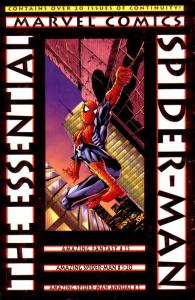 The Essential Spider-Man by Stan Lee and Steve Ditko, 3/5
Reading this collection was a fun, new experience and I loved the artwork, but the writing is atrocious–so much of it consists of characters talking to themselves so that the reader can tell what is going on, e.g. “Good thing my spider powers enable me to jump out of the way as Doctor Wombat attacks with his furry, robotic claws of death.” Perhaps this is just inherent to the medium, but I do not remember encountering a similar problem in Watchmen (the only other comic series I’ve read). Still, the corny writing and unsophisticated plots do have an undeniable charm especially, I imagine, for people who grew up reading comic books.
Why I read it: I like trying new genres of literature and my sister’s boyfriend offered to lend me his well-worn, childhood copy.
Mr. Majestyk
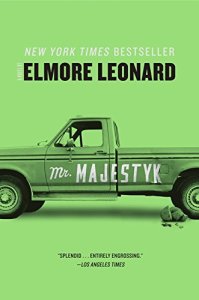 Mr. Majestyk by Elmore Leonard, 3/5
This is no literary masterpiece, but it’s got a likeable good guy, a hot girl, a selection of mean bad guys and plenty of gun play, so it seems petty to complain.
Why I read it: I needed a break from some of Leonard’s darker work and I enjoyed the Charles Bronson movie which served as inspiration for this short novel.
Subterranean Britain
 Subterranean Britain: Aspects of Underground Archaeology, edited by Harriet Crawford, 3/5
This strange collection of essays taught me more than I ever thought I wanted to know about prehistoric mining and Irish souterrains. As always, it’s humbling to read about prehistoric people knowing how to do stuff that I wouldn’t have the first clue about. Though generally interesting, readable, and accompanied by helpful illustrations and photos, many of the essays did seem a bit outdated, even to my untrained eye.
Why I read it: I feel a slight connection to the topic as a result of visiting the awe-inspiring Winspit Quarry in England and there was a $5/bag sale at the used book store.

Winspit Quarry, 2014 ©omnirambles.com
How to Solve It
 How to Solve It: A New Aspect of Mathematical Method by G. Polya, 3/5
This ambitious book tackles the fascinating topic of heuristics (practical problem-solving techniques) by focusing on a variety of naturally-occurring questions that can lead to solutions and discoveries in mathematics and other fields. Using mathematical examples that I found challenging and somewhat inaccessible despite their stated simplicity, Polya demonstrates how questions like “What is the unknown?” “Do you know a related problem?” and “Did you use all the data?” can guide a potential problem-solver toward common-sense solutions even to problems that might seem dauntingly complicated at first. Unfortunately, the book is both very dry and very confusingly organized–I never quite understood the layout and cross-references. However, it is still a good resource on a surprisingly little-addressed topic.
Confession: I didn’t even attempt to complete the problems at the back of the book–even if I was smart enough to do them, I’ve forgotten most of the math I ever learned and my main reading time is right before falling asleep, which is not really conducive to mental acuity.
Why I read it: it was mentioned in The Organized Mind.
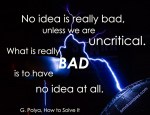
A picture quote I made:
Conversations with Casals
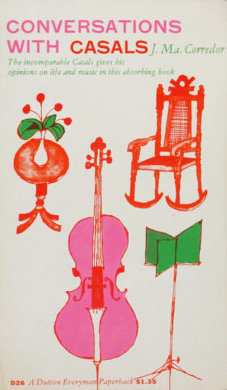 Conversations with Casals by J. Ma. Corredor, translated from the French by André Mangeot, 3/5
Because this book contains a lot of opinions but lacks a corresponding amount of supportive reasoning for said opinions, its value will directly correspond to the reader’s estimation of Casals. As someone previously unfamiliar with the famous cellist and conductor but very familiar with the appeal to authority fallacy, the aspect of the book that I enjoyed most was not the insight into Casals’ world view, but all the name dropping of other famous musicians and composers. My favourite anecdote was when, refusing to perform a Dvořák concerto with a conductor who called it “horrible music,” Casals turned to Debussy for support, who responded “Come on, if you wanted to play, you could play.” Casals was greatly pained by the response but I was greatly amused.
Why I read it: I love the following quote by Casals and when I saw a book about him, hoped to read more in the same vein.
I am perhaps the oldest musician in the world. I am an old man but in many senses a very young man. And this is what I want you to be, young, young all your life, and to say things to the world that are true.
The Book of Shrigley
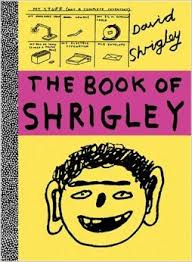 The Book of Shrigley by David Shrigley, 3/5
This collection of Shrigley’s messy, misspelled, dark and unpredictably humorous art seems less accessible than his What the Hell are You Doing? The Essential David Shrigley. “Less accessible” is a fancy way of saying that I didn’t really “get” a lot of the stuff in this book (which you might find a bit ironic if you read my last review of his work). Perhaps I also didn’t enjoy this as much because I went into it expecting to be surprised and delighted, an approach that never seems to work well for me.
Why I read it: My library only has Shrigley’s books in e-book form (which I hate), so I picked this up at Easton’s Books, hoping it would be as funny as the last thing by him that I read.
My Dog: The Paradox
 My Dog: The Paradox: A Lovable Discourse about Man’s Best Friend, by Matthew Inman (aka The Oatmeal), 3/5
This book contains only one comic, so it is more of a novelty than anything. However, it is still pretty cute and I recognise his cartoon dog’s infectious enthusiasm in my own mutt (though mine certainly uses fewer swearwords).
[Why I read it: ordered all of Inman’s stuff from the library at once, then read it in one sitting.]
Founding Mothers
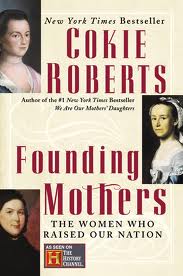 Founding Mothers: The Women Who Raised Our Nation by Cokie Roberts, 3/5
This book about the women behind the men behind the American Revolution provides an interesting historical perspective but is not very engagingly presented. Much of it felt dry and unfocused, switching dizzyingly from character to character and at times reading more like a genealogy or a college research essay than a polished product of academic research. Also, I found Roberts’ editorial interjections to be annoying and unscholarly, distracting from the main content.
Despite these issues, I was struck by two aspects of the historical period that I hadn’t considered before. One was the fact that, despite the turmoil of the times and the lack of spousal support (with husbands constantly away for business, politics and war), these women produced babies at a staggeringly high rate. You would think that people would be reluctant to bring children into lives that were so threatened by immediate violence and economic instability, but that didn’t seem to slow them down at all. The only thing more surprising than the number of children they had was the number that died – birthing and burying seemed to be the main domestic occupation.
The other aspect that almost made this book worthwhile was its portrayal of how, with independence achieved, the United States were extremely resistant to the establishment of a centralised, federal government. Many politicians of the time despaired of ever creating a stable country, much less a constitution that everyone could agree on. It seems that the extreme distrust and skepticism of the government evinced by many modern-day conservatives is a legitimate inheritance from their revolutionary forebears.
[Why I read it: passed on to me by a friend who had finished with it.]
 OmniRambles