
Tagged: 2005
Education for Absolute Pitch

Education for Absolute Pitch: A New Way to Learn Piano by Naoyuki and Ruth Taneda, translated by Christopher Aruffo, 5/5
For several years, I sang in a choir with a tenor who had perfect pitch and, while I might have mentally referred to him by the not-awe-inspiring moniker “the human pitch pipe,” there was something undeniably god-like and enviable about his ability to pull any note out of thin air. I was very surprised to learn, many years later, that children between the ages of 3 and 4.5 years old can actually be taught this magical ability! What at first sounds “too good to be true” is soon clarified by this handbook, which lays out the intense, consistent, and long-term practice required in the pursuit of absolute pitch.
The German We Hear and Play method that this book outlines combines ear training (via “games” played with stuffed animals and colored balls) and rhythmic training with a meticulous piano curriculum. As a piano teacher with more than 20 years of experience, I do not find this method’s highly structured, color coordinated and extremely slow-moving approach to be very appealing. However, I am used to starting students at 6 years old and without focusing on ear training, so it makes sense that some concessions must be made for much younger children acquiring the skill of perfect pitch in conjunction with piano skills. I am cautiously optimistic about trying this method with my own toddler!
Why I read it: I believe I encountered the We Hear and Play method on translator Christopher Aruffo’s website, while looking for software that would teach perfect pitch to adults. The We Hear and Play website does not appear to have been updated recently, but I did reach out to Aruffo, who assured me immediately that it is still very much functional, while kindly offering additional help and resources.
The Incredible Years

The Incredible Years: A Trouble-Shooting Guide for Parents of Children Aged 2-8 Years by Carolyn Webster-Stratton, 2/5
Reading this book made me feel insecure about the more traditional approach to parenting that my husband and I have employed with success for almost three years now. Having one’s ideas challenged is not a bad thing, in itself, but what made me most uncomfortable was how self-conscious I started to feel about interacting with my child. Weirdly, it was the positive interactions that were most affected; instead of feeling joy from being authentic and savoring the moment, I became focused on doing it “by the book” and adding a check mark to my mental record of parenting wins and losses. It was a gross feeling.
While I disagree with the author’s tiresome advice that, seemingly, 99% of behavioral issues are best addressed by ignoring, time-outs, or sticker reward charts, if one can glean what is useful without departing from common sense and simplicity, this book has some helpful ideas to offer. The concept of time-outs is presented in a sensibly structured way and there were good ideas for how to participate in playtime without taking over or getting frustrated (hint: imitate and describe what is happening instead of dictating). Also, since I grew up as an introverted homeschool kid, it was helpful to be reminded that integrating well with social groups is a skill that parents can help their children develop, not an inevitable byproduct of personality.
Why I read it: a hand-me-down (without a specific recommendation) from a friend.
Lifelike Drawing with Lee Hammond

Lifelike Drawing with Lee Hammond by Lee Hammond, 3/5
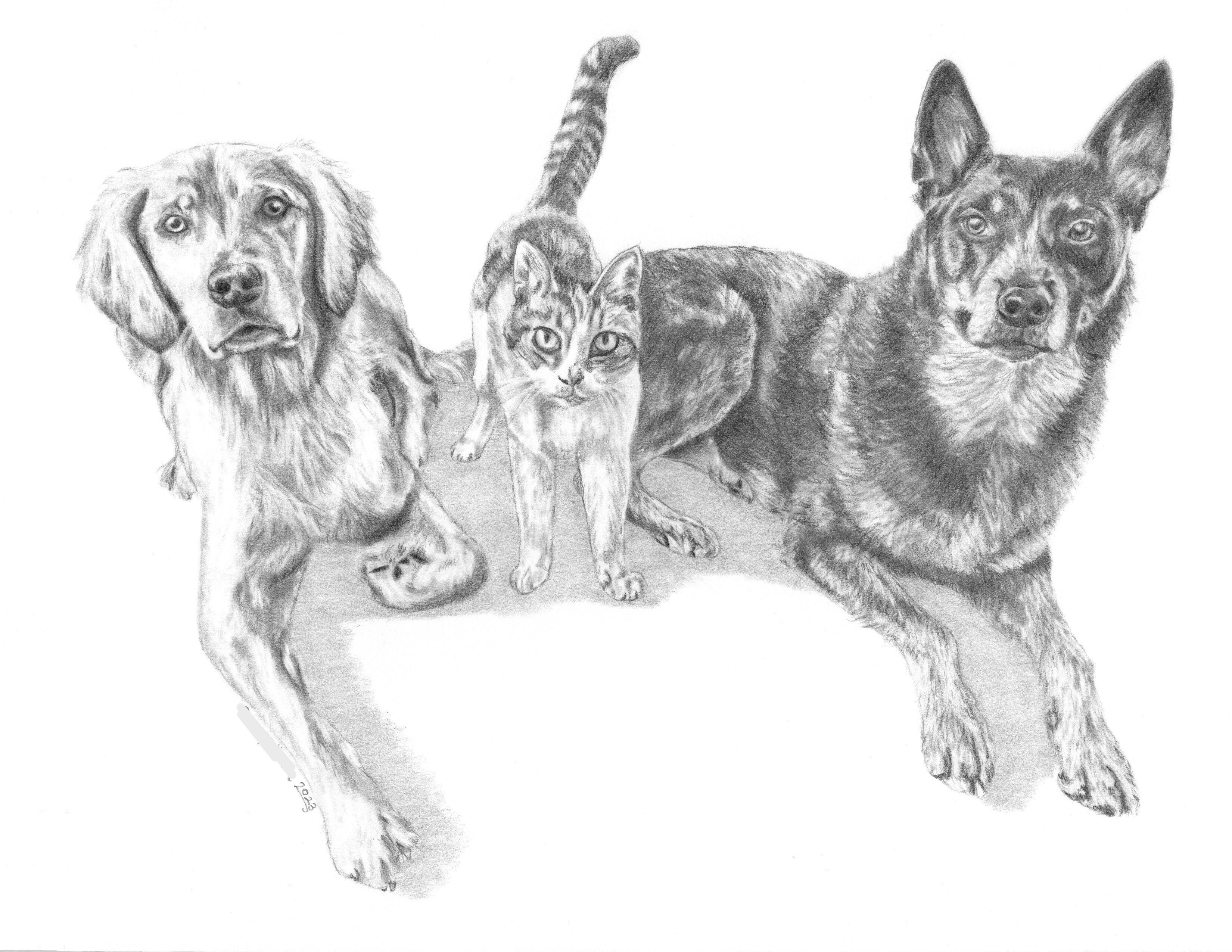
I learned how to draw realistic pencil portraits many years ago from Lee Hammond’s Draw Real Animals!, but pulled this book off the shelf for reference when struggling with the background for a recent project (see below). Realizing afterwards that I likely had never actually read this through before, I decided to do so and did glean a couple of helpful tips that either were not in her other book or I had just forgotten over the years.
Never Stop Pushing
 Never Stop Pushing: My Life from a Wyoming Farm to the Olympic Medals Stand by Rulon Gardner with Bob Schaller, 3/5
Life is tough but Rulon Gardner is tougher. His story proves that success does not always require a fortuitous alignment of luck, talent and circumstance–success can be the prize of those who are simply too stubborn and too strong to settle for less. This book is certainly not going to win any literary awards, but it is an inspiring account of hard work and good character put to the test on an international stage.
Why I read it: my wrestler boyfriend got me excited about the story, showed me the famous Gardner vs Karelin gold medal match and lent me his well-worn copy of the book.
Tarzan of the Apes
 Tarzan of the Apes by Edgar Rice Burroughs, 4/5
This is a bittersweet little story, written with the refined yet melodramatic style (and casual racism) that characterizes a lot of literature from the early 1900s. Like most people, I was already familiar with the characters and story line, but I recognized very little of pop culture Tarzan in this original tale.
The edition is noteworthy because it is printed in landscape format, supposedly making it easier to read in bed. I really enjoyed the novelty, but didn’t think it was any easier to read lying down than a normal book.
Why I read it: A lovely birthday gift from one of my brothers and his family.
Wrestling Tough
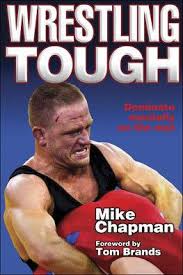 Wrestling Tough: Dominate Mentally on the Matt by Mike Chapman, 4/5
Filled with true stories of hard work, heart and the historic wins and losses of legendary wrestlers, this book helps put the small scrapes and bruises from my once-a-week wrestling class into perspective. Chapman provides an inspiring introduction to the wrestling greats and an in-depth exploration of the mental characteristics they seem to share with each other (and accomplished athletes in all sports). Probably the most useful thing I learned from this book is how important the mental game is–even someone who has put in the hard work to develop a talent can lose to a less talented person who wants it more. It’s not just about the physical moves, it’s about commitment, focus and knowing what you want.
While the book has a lot to offer, it frustratingly spends much more time describing winning qualities than explaining how to actually acquire them. Also, there is a logical weakness to the author’s approach–just because you can find examples of winners who have a certain attribute doesn’t mean that there aren’t winners who lack that attribute, or even losers who have it in buckets. In order to be truly compelling, I feel the book would have to focus not just on the characteristics of successful athletes, but how they differ from their less successful fellows.
Why I read it: Stephan Kesting mentioned it on grapplearts.com as one of his favorite sports psychology books, which put it on my radar. Trying to get in a good mental space for an upcoming BJJ tournament moved it up on my list.
Armed Response
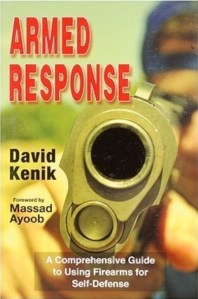 Armed Response: A Comprehensive Guide to Using Firearms for Self-Defense by David Kenik, 2/5
There is a distinctly self-published feel to this book which doesn’t really inspire confidence (call me snobby, but I think the cover text shouldn’t be more colorful than the pictures inside). However, it does provide a very basic overview of equipment and skills necessary for the responsible concealed carrier. I don’t know much about the topic, so I can’t put my finger on what exactly the book is missing, but it felt light on information–there is a disappointing lack of legal guidelines and very little advice about tactics. Also, you do have to get past the author’s gun geekery and a bit of self-importance that reminds me of some of the more embarrassing scenes from Mall Cop. Kenik swears he’s not paranoid (never a hopeful sign), but he does seem borderline. For example, he actually recommends writing “detailed notes of all relevant class lectures, videos, books and magazine articles” and mailing them to yourself so “the envelope can be opened in court to prove what knowledge you possessed at a given date” (14). Hmmmm… Or you could maybe not do that and be ok too?
Why I read it: it was a birthday present (buying a gun has been on my to-do list for years).
The Book of Shrigley
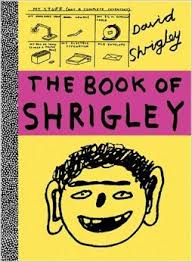 The Book of Shrigley by David Shrigley, 3/5
This collection of Shrigley’s messy, misspelled, dark and unpredictably humorous art seems less accessible than his What the Hell are You Doing? The Essential David Shrigley. “Less accessible” is a fancy way of saying that I didn’t really “get” a lot of the stuff in this book (which you might find a bit ironic if you read my last review of his work). Perhaps I also didn’t enjoy this as much because I went into it expecting to be surprised and delighted, an approach that never seems to work well for me.
Why I read it: My library only has Shrigley’s books in e-book form (which I hate), so I picked this up at Easton’s Books, hoping it would be as funny as the last thing by him that I read.
 OmniRambles