The Body Keeps the Score

The Body Keeps the Score: Mind, brain and body in the transformation of trauma by Bessel van der Kolk, 3/5

This disturbing and rather lengthy book was not as self-help oriented as I expected it to be. The author expresses a career’s worth of frustration with the medical establishment’s over-reliance on DSM-facilitated symptom labeling and prescription medication. He makes an impassioned case for a more holistic approach to understanding trauma and its varied effects, particularly with regard to brain function, but I felt that he relied heavily on anecdotal evidence, demonstrated an oversimplified understanding of neurobiology, and was perhaps more interested in finding research and studies with favorable outcomes than in assessing their quality.

As far as treatment is concerned, the author is all over the place, telling stories about clients who had success with EMDR, internal family systems, yoga, theater, HRV training, neurofeedback, journaling, massage, and more. Most of the cases he presents are very extreme and I felt like my own experiences didn’t even register on that scale.

Why I read it: a midwife suggested that it might help me process a traumatic birth experience.

The Real Anthony Fauci

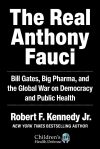
The Real Anthony Fauci: Bill Gates, Big Pharma, and the Global War on Democracy and Public Health by Robert F. Kennedy Jr., 5/5

There is no denying that this is a controversial book on controversial topics, written by a controversial author, and it wasn’t particularly difficult to spot some inadequately substantiated claims, outlandish hypotheses, less-than-impressive sources, and questionable interpretations of data. That said, one would have to be willfully naive and ignorant of human nature to ignore the preponderance of inarguable, factual evidence the author provides that some of our most respected institutions, scientists, politicians, businessmen/women, and philanthropists have sold their souls and woven a pervasive web of deceit, corruption, avarice, censorship and moral bankruptcy. Even with its failings, this book is a necessary and fearless testament to the enduring wisdom of 1 Timothy 6:10: “For the love of money is a root of all kinds of evils” (ESV).

Additionally, The Real Anthony Fauci is a tour de force in terms of seamlessly and meticulously incorporating technology into a traditional reading experience; the chapter endnotes link via a QR code to RFK Jr.’s website, where one can easily click through to the actual sources for most of the 2,194 citations contained in this formidable exposé.

Why I read it: Originally, I had no intention of reading this because, judging solely from its cover, it appeared to be little more than a hit-piece full of conspiracies, written by a crackpot. However, RFK Jr.’s interview on The Joe Rogan Experience left me with a more favorable impression of the author, as well as many unanswered questions about his claims.

Leadership Strategy and Tactics

Leadership Strategy and Tactics: Field Manual by Jocko Willink, 3/5

I appreciate the specific leadership (and followership) scenarios that Willink addresses in this book, but it feels somewhat contrived and disjointed. I suspect it would make a better reference resource than a cover-to-cover read.

Why I read it: working my way through Jocko Willinks’ books, if slightly out of order.

Extreme Ownership

Extreme Ownership: How U.S. Navy Seals Lead and Win by Jocko Willink and Leif Babin, 4/5

This book’s layout is flawless: each chapter starts with an engaging war story, extracts a leadership principle for further analysis, and concludes with a real-life application to business. My only complaint is that the authors often stop short in each example of exploring the actual results of their approach, sometimes failing to address the outcome altogether and other times glossing over it with vague descriptions of generic success. The question left, for me, is not whether the authors are effective hammers, but what scenarios realistically constitute appropriate nails.

Why I read it: It’s been on my radar for quite a while.

Winnie-the-Pooh

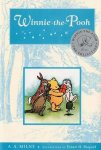
Winnie-the-Pooh by A.A. Milne with decorations by Ernest H. Shepard, 5/5

These stories are delightful and surprisingly witty (Milne was, after all, also a writer for the popular humor and satire magazine, Punch), so it is easy to see why Winnie-the-Pooh continues to be such a popular character, even almost 100 years after he was first introduced. This edition is particularly lovely, with thick paper, imaginative typesetting, and tastefully-colored illustrations.

Why I read it: included in a box of hand-me-down books from a friend.

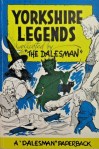
Yorkshire Legends

Yorkshire Legends collected by “The Dalesman,” 3/5

I love to see folklore preserved and even better when it is accompanied, as in this case, by a variety of appealing illustrations.

Why I read it: a fun find in a Yorkshire charity shop.

A Hunter-Gatherer’s Guide to the 21st Century

A Hunter-Gatherer’s Guide to the 21st Century: Evolution and the Challenges of Modern Life by Heather Heying and Bret Weinstein, 1/5

I found this book to be profoundly and unrelentingly irritating. The authors are clearly well-educated and well-spoken, yet they seem more concerned with sounding impressive and achieving “guru” status than presenting a rational argument. Each chapter is a hodgepodge of facts, references to the work of others, opinions, and anecdotes, concluding with a short bullet point list of generic lifestyle recommendations that, in most cases, feels completely unsupported by the previous content. This would be annoying enough, but the thing that really made me furious was how the authors use a self-satisfied, scholarly tone and liberal endnote references (which somehow never supported the claims that I was actually interested in verifying) to mask under-developed theories and bad writing. Obviously, I feel under-qualified to criticize the work of two experienced academics, but it doesn’t take a PhD in Biology to recognize their consistent failure to present convincing points in a logical manner that supports bigger ideas.

Why I read it: a birthday present from my dad.

Parenting with Love and Logic

Parenting with Love and Logic: Teaching Children Responsibility by Foster Cline, MD, and Jim Fay, 3/5

I really like the core of this parenting philosophy, which is that even very young children should be given opportunities to make decisions and experience the resulting [reasonable] positive and negative consequences without parental interference, thus becoming equipped through practice for wise and independent decision-making. I do feel the authors take it a bit too far, though, suggesting manipulative and contrived phrases to mold every encounter into a choice and weaponize consequences.

Why I read it: a friend recommended it.

The Purpose Driven Life

The Purpose Driven Life by Rick Warren, 1/5

Reading this, one could be forgiven for mistaking Christianity for a pyramid scheme and this book for its investment pitch.

Why I read it (or at least, the first 84 pages): it was included in a bunch of books passed along to me by a friend. I remembered it being really popular for a while, so thought I’d check it out.

Literary Lapses

Literary Lapses by Stephen B. Leacock, 3/5

A collection of humorous essays that have stood up quite well to the passage of over 100 years’ time.

Why I read it: I’ve had a free version of this bookmarked on Wikisource for so long that I can’t remember how I first heard of it. While tidying up my bookmarks, I decided to just buy a cheap copy of the book, since I hate reading ebooks.