Tomorrowmind

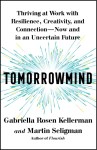
Tomorrowmind: Thriving at Work with Resilience, Creativity, and Connection–Now and in an Uncertain Future by Gabriella Rosen Kellerman and Martin Seligman, 1/5

This book not only represents everything that is classically hateable about pop psychology and the self-help genre, it plumbs new depths of dystopian deception. To be fair, there were warning signs, starting with the point in the introduction at which the authors straight-facedly suggest PRISM as a “handy (if out of order) acronym” to remember the concepts of resilience and cognitive agility (R), meaning and mattering (M), rapid rapport to build social support (S), prospection (P), and creativity and innovation (I). That peculiarly unhelpful scrambled egg of an acronym should have been my clue to close the covers and move on down my to-read list. Unfortunately, I decided to wade through a repetitive, half-baked, jargon-laden mess that ultimately morphed into a sales pitch for BetterUp, written by its chief product officer (Kellerman) and, as a little further research quickly revealed, the namesake of BetterUp’s foray into artificial intelligence–MartyAI.

How dark is that? Not only does Tomorrowmind fail to provide anything of value to readers struggling to cope with the stress of an increasingly volatile, technology-driven, future-oriented work environment, the authors actually manage to leverage that same audience in support of their own contribution to the dystopian future they pretend to address–offering the life coaching services of a lifeless, ai-powered chatbot. Ironically, Kellerman and Seligman have achieved more success by pivoting their psychology careers to address modern times than many of the people they use as positive examples in their book. Needless to say, their success hasn’t come from subscribing to life coaching services, buying self-help books, or applying the muddled concepts on view in this embarrassment of a contribution to literature.

Why I read it: The topic sounded interesting and I had respect for Seligman based on his book Learned Optimism.

Bel Canto

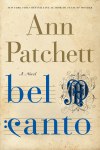
Bel Canto: A Novel by Ann Patchett, 5/5

This exquisitely written character study of a group of hostages and their guerilla captors is effortlessly beautiful and surprisingly well paced, given the confined context provided by the story’s extreme constraints with regard to location and plot. Like a poet adhering to a particular rhyme scheme, the author works within these constraints to explore the inner workings and relationships of a seemingly disparate cast, including a world-famous soprano, her most devoted admirer, rebel generals, child soldiers, assorted international businessmen, and the translator whose language skills link them all together.

Why I read it: I encountered a glowing review on Facebook, which was almost definitely, in retrospect, written by AI.

Winterset Hollow

Winterset Hollow: A Novel by Jonathan Edward Durham, 1/5

I respect the hard work and courage required of first-time novelists, but…this was so bad. At the heart of this fantasy story is an imaginary work of poetry, supposedly written in the early 1900s and of enduring popularity and influence. Unfortunately, the poetry excerpts throughout the book are not convincing at all: for no apparent reason, the introductory verses and a handful of other snippets are in a different rhyme scheme than all the rest, and the overall effect is not consistent with the work’s era of origin. As a lover of poetry, it was hard to maintain suspension of disbelief in the face of verses like the following (21-22):

You know I love it here, said Runny, you know I am a happy bunny
But still I wish to spread my wings and fly beyond the trees
I promise you that I’ll be back, I promise I’m not lying, Flack
I promise I just need to go see what I need to see

And with those words, his shoulders dropped, and Runny hopped a might hop
And turned to face the hedgerow that he’d known for all this time
And jump, he did, as rabbits do, for this was sad for Runny too
It was no treat to go and leave his bestest frog behind

Poetry aside, the descriptive passages are self-indulgently tedious, like someone telling you every detail of a dream they had the other night. The author’s word choices are often contrived in their novelty, trampling across the line between “inventive” and “incorrect.” Words used in unexpected ways are usually a sign of excellent writing, but not when they fail to enhance the effect of the text and merely serve as a distraction. I was particularly baffled by the appearance of the word “ingrace” in three different contexts, none of which were consistent with the solitary dictionary definition (from 1913) that exists online. Adding to my annoyance were petty complaints like an increasingly repetitive use of “well” as an intensifier towards the end of the book (I guess you could say I was well annoyed by it), multiple instances of comparing things to lanterns, and more than one reference to “serendipity.” Scenes of gruesome violence and a somewhat banal plot twist work feverish overtime to cover for characters lacking in depth and development. The cover blurb by Diana Gabaldon (author of the Outlander series) describing Winterset Hollow as “astonishingly powerful and multilayered” is so ridiculous in light of the book’s crucial shortcomings that I have to assume she was treating the review as a creative writing exercise.

Why I read it: The author is absolutely hilarious on Instagram.

We Who Wrestle with God

We Who Wrestle with God: Perceptions of the Divine by Jordan B. Peterson, 4/5

A good indicator of Truth with a capital T is that the insights it produces expand the mind and effortlessly illuminate even the darkest corners of a topic, where lesser conceptions fear to tread. There are not many corners more dark than the blood-soaked, primal tales of the Old Testament around which Peterson’s bold and wide-ranging existential exploration occurs. More than just an in-depth character study of God, as revealed through crucial episodes of the Old Testament, this substantial work explores our relationship with the intangible realities of existence on both an individual and societal level, and the codification of these eternal truths into our oldest and most meaningful stories.

Free of the timeworn arguments and vocabulary of Christian apologetics, Peterson’s approach is sure to earn him a “straight to hell” label from many (and not just fundamentalists). I will admit to feeling an uneasy chill, that only others with a religious background would likely understand, at the language of the last couple paragraphs in particular. I won’t go into detail, though, because given the context of the previous 500+ pages, I believe the issue is merely evidence of the author’s tendency to follow a train of thought wherever it may lead, even if it means committing the sin of entering new, unexplored territory in what is supposed to be concluding material. Speaking of sins, I must comment on the astounding number of typos and errors this book contains–by far the most I have ever encountered in a published work. Hopefully these will be rectified in future editions.

Lest I end this review on a sour note, let me re-iterate how amazed I am that a work so broad in scope could be, at the same time, incredibly nuanced. There is something inspired about Peterson’s perspective, which allows him to dissect the most challenging and abstract aspects of the human experience without killing its joy and mystery.

Why I read it: I was curious about Peterson’s theological beliefs, and trusted that he would have an interesting and intellectual approach to the topic.

Adulthood is a Gift!

Adulthood is a Myth Gift! A Celebration of “Sarah’s Scribbles” by Sarah Andersen, 3/5

This fifth book in the “Sarah Scribbles” collection contains some fun comics and fifteen illustrated, short essays of varying interest. I enjoyed learning about the process behind Andersen’s trademark style, even if it did steal a bit of the “magic.”

Why I read it: I visit sarahcandersen.com once in a while to catch up and saw that I was behind a couple books.

Oddball

Oddball by Sarah Andersen, 3/5

The fact that this collection of comics made me lol instead of rofl is a testament to how much I’ve changed as a person over the last few years. What used to be extremely relatable to me as an anxious, single, bookish introvert, has become less so as my sense of identity has shifted more towards being a wife, mother, and active member of the local martial arts community. That said, Sarah Andersen is still hilarious and the amount she can communicate with a few squiggly lines is incredibly impressive.

Why I read it: I visit sarahcandersen.com once in a while to catch up and saw that I was behind a couple books.

12 Rules for Life

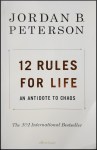
12 Rules for Life: An Antidote to Chaos by Jordan B. Peterson, 4/5

Jordan Peterson is, in my opinion, one of the most brilliant thinkers and lecturers of the 21st-century in his field and, if he were a more intentional writer, I believe he would deserve a place with the immortal greats of philosophy. Unfortunately, instead of utilizing the writing process to distill and clarify his ideas, he settles for more or less transferring his thought processes straight onto the page. The result is very uneven in tone, bouncing wildly between folksy storytelling and esoteric musings that challenged even my well-trained attention span (exhibit A: Ornithology: An Introduction). It took three tries for me to make it through this book, but I was rewarded by Peterson’s fearless acceptance of the most terrible aspects of human existence and the deeply satisfying integration of that chaos into a perspective that ennobles the common man and makes one want to pick up a sword and fight dragons.

Rule 1: Stand up straight with your shoulders back.
Rule 2: Treat yourself like someone you are responsible for helping.
Rule 3: Make friends with people who want the best for you.
Rule 4: Compare yourself to who you were yesterday, not to who someone else is today.
Rule 5: Do not let your children do anything that makes you dislike them.
Rule 6: Set your house in perfect order before you criticize the world.
Rule 7: Pursue what is meaningful (not what is expedient).
Rule 8: Tell the truth–or, at least, don’t lie.
Rule 9: Assume that the person you are listening to might know something you don’t.
Rule 10: Be precise in your speech.
Rule 11: Do not bother children when they are skateboarding.
Rule 12: Pet a cat when you encounter one on the street.

Why I read it: I became familiar with Peterson when he achieved viral popularity a few years ago.

2024 Stats

In 2024, I read thirty-eight books, twenty-five of which were nonfiction, eleven fiction, and two poetry.

I read 3 book written in the 1700s.
1 book written in the 1800s.
1 book written between 1900-1949.
7 books written between 1950-1999.
26 books written between 2000-2024.

Books that I rated 1 star: 0 (0%)
2 stars: 8 (21%)
3 stars: 13 (34%)
4 stars: 7 (19%)
5 stars: 10 (26%)

Of Men and Mountains

Of Men and Mountains by William O. Douglas, 3/5

This simple, wholesome memoir is a love letter to Washington state’s Cascade mountains and the character-building, spirit-refreshing experiences while exploring them that had a profound effect on Supreme Court justice William O. Douglas throughout his life.

Why I read it: I snagged it from my mother-in-law’s donation pile and read it at night to combat pregnancy-induced insomnia.

Gulliver’s Travels and Baron Munchausen

Gulliver’s Travels by Jonathan Swift and Baron Munchausen by Rudolf Erich Raspe, 2/5

When I finally get around to reading an enduring classic, it is usually fairly obvious what timeless merits ensured its survival. In the case of Gulliver’s Travels, however, I was surprised to find it exceedingly dull and tediously obsessed with the author’s now-obscure political feuds. Perhaps the most entertaining aspect of this 1888 edition is the unfiltered disapproval evident in the editor’s preface and biography of Jonathan Swift, who apparently played rather fast and loose with the ladies (at least by the standards of the time) and did not shy away from the occasional crass flight of literary fancy. The editor baldly states that he “has not disguised his want of affection for the character of this hero” (10) and is “unable to make the biography a eulogy” (10). He continues further to claim that “The greatest difficulty in the analysis of Swift’s literary character is to discover by what depravity of intellect he acquired a taste for loathsome and filthy ideas, from which every other mind shrinks with disgust” (50). Adding further insult to injury are the numerous footnotes pettily highlighting instances of incorrect grammar in Swift’s at-that-time 162-year-old work. The whole effect was so judgy, self-righteous, uptight, and just stereotypically Victorian that, in retrospect, where I expected to find a commentary on 18th-century morals and issues, I instead encountered an unintentional commentary on 19th-century ones.

The second part of this book consists of the bafflingly ridiculous tall tales of Baron Munchausen, in two volumes. I did not enjoy this unillustrated edition as much as the other that I previously reviewed.

Why I read it: Gulliver’s Travels has been on my to-read list for ages, but I didn’t realize I owned a copy until I was searching for a boring book to combat pregnancy-induced insomnia.