The Greater Trumps

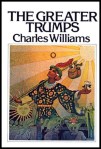
The Greater Trumps by Charles Williams, 3/5

This story of a young couple’s quest to unlock the power of the original tarot deck features beautifully crafted dialogue, fantastical imagery, interesting characters and, unfortunately, some Romani stereotypes that have not aged well.

Why I read it: it’s the fourth book in Charles Williams’ set of supernatural thrillers.

Shakespeare’s Fingerprints

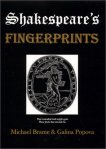
Shakespeare’s Fingerprints by Michael Brame & Galina Popova, 1/5

This is one of the most ludicrous books I have ever read and I could not stop talking about it to my poor husband, who also had to listen to a soundtrack of shocked snorts, giggles, gasps and groans as each page revealed some new absurdity.

The authors disagree with the scholarly consensus that William Shakespeare was a common actor from Stratford-upon-Avon, instead believing that his name was used as a pseudonym by Edward de Vere, 17th Earl of Oxford. The most convincing basis for this belief is a timeline of biographical events from de Vere’s life that seem to be referenced in Shakespeare’s plays and poems (assuming these works are semi-biographical, which the authors in no way prove).

Unfortunately, any reasonable and interesting points are obscured by inane literary analysis using criteria so broad that it soon loses all meaning. The authors start by claiming that Shakespeare’s use of certain common letters and combinations (e.g. o, vo, wo, vvo, eo, ver, fer, fair, etc.) should be interpreted as a purposeful play on the letters and sounds in de Vere’s name and title–a “fingerprint” clue to the author’s real identity. Not satisfied with co-opting such a large number of very common words to support their hypothesis, they then proceed to compare Shakespeare’s writing with other literary works of the time, identifying any similar metaphors, phrases, topics, rhyming word choices, poetic forms, even basic grammatical structure, as “proof” that de Vere was the real author. Ultimately, their tortured reasoning forces them to conclude that de Vere used no less than 37 pseudonyms (many representing real people who were alive at the time) and was single-handedly responsible for the development of 16th-century English literature.

Frustratingly, the authors focus on fluffing up ridiculous arguments with academic terminology in an effort to sound erudite, meanwhile studiously avoiding the performance of any real research that would prove or disprove their hypothesis. I really can’t emphasize enough how absolutely embarrassing and ridiculous the end result is. It’s difficult to write a review because the more detail I try to include, the more we fall down the rabbit hole of insanity. By keeping my analysis fairly short, I am not over-simplifying their arguments, but portraying them in a better light than they appear after closer examination. Still, I can’t resist giving two specific examples of what the amused reader will encounter. At one point the authors analyze the adjective “sweet” thus: “sweetsv veetseventeenth Vere” (99). Even the title Much Ado About Nothing is proof of Edward de Vere’s authorship in their eyes, since “Ad is most plausibly a play on Ed, the nickname of the genius lurking behind the Shakespeare pseudonym” (8). Insanity!

Oh, and if you are wondering, as I did, how not just one but TWO academics from the University of Washington could be behind this book, it might help clear things up to know that they were married at the time…

Why I read it: I bought it greatly discounted at a used bookstore many years ago.

The Place of the Lion

The Place of the Lion by Charles Williams, 2/5

This is the fourth of Williams’ supernatural thrillers that I have read, and by far my least favorite, since it consists mostly of hallucinatory spiritual ramblings and very little plot. This is all the more disappointing because what little story exists is very interesting: philosophical Ideas (Strength, Beauty, Subtlety, Wisdom, etc.) from the angelic realm emerge into the sleepy English countryside via their representative animals, consuming people with varying effect depending on each person’s tendencies.

Why I read it: I’m working my way through Williams’ novels.

2022 Stats

In 2022, I read twenty books, eleven of which were nonfiction and nine fiction.

I read 1 book written in the 13th century.
1 book written between 1850-1899.
7 books written between 1900-1949.
3 books written between 1950-1999.
8 books written between 2000-2022.

Books that I rated 1 star: 0 (0%)
2 stars: 4 (20%)
3 stars: 8 (40%)
4 stars: 3 (15%)
5 stars: 5 (25%)

What to Expect the Second Year

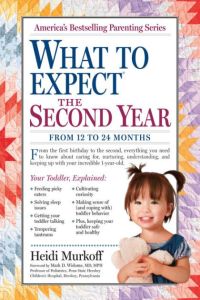
What to Expect the Second Year: From 12 to 24 Months by Heidi Murkoff and Sharon Mazel, 2/5

I found this book to be good primarily for two things: 1. confirming that all the craziness is normal and 2. making me thankful for all the craziness that we haven’t encountered. That said, I was disappointed by the same issues that bothered me in the previous book–namely, a laughably paranoid thoroughness that would be unhealthy in practice (if even attainable at all), and a patronizingly dismissive approach to non-mainstream points of view on controversial topics.

The sections on parenting and discipline were especially underwhelming, which was unfortunate because those are the topics about which I have the most burning questions. In effect, Murkoff associates all physical discipline with uncontrolled parental rage, providing as a substitute for this straw man a form of “discipline” that involves removing the source of temptation from the child or the child from the situation. This seems like a great strategy for handling delicate scenarios and other people’s children, but in my opinion, it is not discipline at all and fails to teach important lessons about self-control and boundaries that I know my almost-two-year-old is capable of learning.

Why I read it: It is very relevant to my life at the moment.

What If? 2

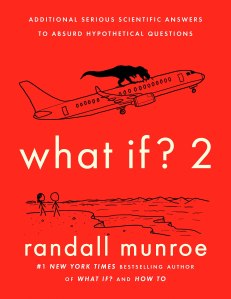
What If? 2: Additional Serious Scientific Answers to Absurd Hypothetical Questions by Randall Munroe, 5/5

He’s done it again! This sequel to What If? is laugh-out-loud funny and I enjoyed how the author used longer-running jokes throughout, as well as short-answer segments to add some [admittedly unneeded] variety.

Why I read it: I’m a fan of the author and his webcomic, xkcd.

Many Dimensions

Many Dimensions by Charles Williams, 4/5

This spellbinding book must not be judged by this later edition’s psychedelic cover art or by a mere summary of its bizarre plot, in which an infinitely divisible holy relic empowers its keepers to travel through time and space. The story is, in fact, much more sophisticated than you might expect–peopled with interesting characters and exploring (often humorously) the political, social, and ethical ramifications of such an object’s existence. I felt the plot was a little weak towards the end, or it would have been a 5/5 for me.

Why I read it: I am working my way through Charles Williams’ seven supernatural novels.

Clanlands

Clanlands: Whisky, Warfare, and a Scottish Adventure Like No Other by Sam Heughan and Graham McTavish, 2/5

From a literary perspective, it’s frankly shocking that something so closely resembling a shared Google Doc rough draft somehow survived the publishing process and exists in book form. Unpolished, unfocused, and overflowing with “cringe,” this book waffles between authors’ perspectives just like it waffles between travelogue, memoir, history and reality TV pitch. There were a few humorous moments and interesting historical facts, but I don’t think it has much to offer anyone outside of its target audience–Heughligans and fans of Outlander. Perhaps surprisingly, given my opinion of the book, I did enjoy its associated TV show, Men in Kilts.

Why I read it: my mother-in-law generously lent me her brand new copy while we were on a hunting trip.

War in Heaven

War in Heaven by Charles Williams, 3/5

I’m not going to pretend that I understood the more esoteric implications of this bizarre spiritual thriller, but I certainly did enjoy its zany plot, humor, and original take on the ever-popular search for the Holy Grail. It’s not a particularly well-crafted novel, but it’s hard to fault a story that opens thusly:

The telephone bell was ringing wildly, but without result, since there was no-one in the room but the corpse.

Why I read it: After my introduction to Charles Williams via All Hallows’ Eve, I wanted to read some of his other “novels of the supernatural,” of which War in Heaven is the first.

The Complete Morgan Horse

The Complete Morgan Horse by Jeanne Mellin, with illustrations by the author, 3/5

This 1986 compilation of two earlier books definitely shows its age but still retains some value as a collection of vintage Morgan photos, excellent artwork by the author, and a fairly detailed history of the breed. Mellin is a better artist than writer, and her prose tends to be a bit dry and repetitive, with a slightly patronizing tone. However, I was still fascinated to learn about the roots of this uniquely American horse breed and its influence on the American Saddlebred and the Standardbred.

Why I read it: I remember coveting this book when I checked it out of the library as a kid, and it finally dawned on me that I’m a grown-up now and can just buy a copy if I want.