
Category: Reviews
Tarzan of the Apes
 Tarzan of the Apes by Edgar Rice Burroughs, 4/5
This is a bittersweet little story, written with the refined yet melodramatic style (and casual racism) that characterizes a lot of literature from the early 1900s. Like most people, I was already familiar with the characters and story line, but I recognized very little of pop culture Tarzan in this original tale.
The edition is noteworthy because it is printed in landscape format, supposedly making it easier to read in bed. I really enjoyed the novelty, but didn’t think it was any easier to read lying down than a normal book.
Why I read it: A lovely birthday gift from one of my brothers and his family.
Basic Ridercourse
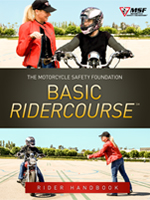 Basic Ridercourse by the Motorcycle Safety Foundation, 5/5
This handbook has a straightforward, yet appealing layout and presents a lot of basic information about operating a motorcycle. I appreciated how it focused on safety without being patronizing about it.
Why I read it: Lent to me by friends who ride.
The Total Dirt Rider Manual
 The Total Dirt Rider Manual by Pete Peterson and the editors of Dirt Rider, 5/5
Well-illustrated and written with a healthy dose of humor, this book seems about as helpful as it is possible for a book about something like dirt biking to be.
Why I read it: Lent me by a friend who rides, doubtless as an elaborate set-up for asking if I forgot to read the part about “not falling off the bike” when I wipe out for the first time.
Wit and Wonder
 Wit and Wonder: Poetry with Rhythm and Rhyme by James D. Herren, 5/5
When the author, a fellow fan of Stephen Fry’s The Ode Less Travelled, asked me out of the blue to review his newly self-published e-book of poetry, I felt a bit worried about balancing the responsibilities of being both a Very Nice Person and an Honest Book Reviewer. Thankfully, this moral dilemma was postponed to another time–I wholeheartedly love Herren’s poetry, finding it to be unpretentious, heartfelt and skillfully written. There is something in it for everyone–I kept pausing to read certain poems aloud to family members and even sent a couple screenshots to my sister on the east coast. When print copies of Wit and Wonder become available in April, I plan to buy one for my private library, as well as one for my family’s library and one to give a friend (something to look forward to, Alison B.). For those of you who aren’t quite as addicted to the smell of fresh ink as I am, the e-book is available now on Amazon through this link.
I tried to pick out a favourite poem to include in this review, but I liked too many of them to narrow it down to one. So I decided to pick out two that illustrated the range of tone and style in this collection, but they contrasted too much to appear side-by-side. So I finally narrowed it down to three (which is pretty good, given that there are 148 poems to choose from).
Acrobatics
I juggled the bills —
and my family, and job —
all while keeping a roof on our heads,
then I threw in a dance,
and a dash of romance,
for my wife who was juggling kids.
Dare
Away with words.
Fling wild.
Crash in a dazzling way.
Dance on the shoulders of giants.
Mock them with your brilliance.
Rise.
Fall.
Shine.
Think
The things I think are sometimes not
the things I think I thought I thought.
I thought I heard a dinosaur
but that was just my father’s snore.
I thought I saw a crocodile
but it was just my sister’s smile.
I thought I heard a dying cat —
my mother’s singing, only that.
I thought the world was torn apart
but that was just my brother’s fart.
I think it would be fun if you
could think of things the way I do.
Jonathan Wild
 The History of the Life of the Late Mr. Jonathan Wild the Great by Henry Fielding, 2/5
This peculiarly depressing little satire flips traditional concepts of morality on its head by recasting infamous 18th-century thief Jonathan Wild as a “Great Man,” deriding all honest men as “that pitiful order of mortals who are in contempt called good-natured; being indeed sent into the world by nature with the same design with which men put little fish into a pike-pond in order to be devoured by that voracious water-hero” (73). There are a few hilarious moments but overall Fielding’s satirical style is a bit strained and tedious.
Why I read it: I can’t remember where I picked this book up from, but it probably ended up in the pile beside my bed because I really enjoyed Fielding’s Tom Jones.
Antonio Stradivari
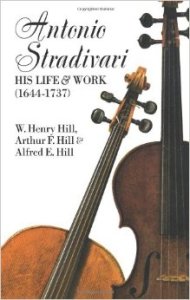 Antonio Stradivari: His Life & Work (1644-1737) by W. Henry Hill, Arthur F. Hill and Alfred E. Hill, 3/5
This reprint of a 1902 book contains more information than the average person would ever want to know about Stradivari and his instruments. The writing style is very dry and technical–I wish there was a glossary and more pictures (especially in color) of the instruments they describe. I did enjoy witnessing the eye for detail and nuance that the authors displayed as they discussed specific instruments, pointing out tiny differences between violins that looked identical to me. All in all, a great reference book, but not a particularly enjoyable or memorable read.
Why I read it: Dover accidentally included it in a package of other books my mom ordered and said to just keep it.
Scary Close
 Scary Close: Dropping the Act and Finding True Intimacy by Donald Miller, 3/5
Miller is an entertaining writer, but not a very convincing psychologist. While it is fun to read the story of how he developed a healthier approach to relationships and gradually found love at a relatively late age, I felt like he spent a lot of time answering easy questions I didn’t have while skirting around the most important, mysterious, confusing aspects of the topic. He claims to want to teach that “love is worth what it costs,” but the focus of the book is much more on how to pay the cost than the worth. For me, the real question isn’t what caused his previous relationships to fail and his current one to succeed (that is fairly obvious–turns out that authenticity and vulnerability make a better foundation than insecurity and manipulation), the big question is why did he suddenly feel compelled to make it work with someone in particular? Now that I’m thinking about it, this is the exact issue I had with the previous book on relationships I read. Perhaps one day, I’ll find a book that focuses on the why, not the how, but until then I guess I’ll just hope they are as entertaining as this one.
Why I read it: a family member recommended it to me.
2016 Stats
In 2016 I read forty-two books, eighteen of which were nonfiction, twelve fiction, seven comic (or image-based) and five poetry.
I averaged 0.8 books a week, but the most books I read in a single month was nine (March).
I read 2 books written in the 11th century
1 book written in the 1700s
3 books written in the 1800s
4 books written between 1900-1949
17 books written between 1950-1999
15 books written between 2000-2016
Books that I rated 1 star: 3 (~7%)
2 stars: 5 (~12%)
3 stars: 7 (~17%)
4 stars: 14 (~33%)
5 stars: 13 (~31%)
So why did I read only half as many books as last year? Martial arts. I now spend about 14 hours a week doing kickboxing, Brazilian jiu-jitsu and MMA, which not only cuts down on my free time but also makes me too tired to read much in bed!
The Essential Spider-Man
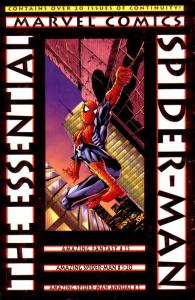 The Essential Spider-Man by Stan Lee and Steve Ditko, 3/5
Reading this collection was a fun, new experience and I loved the artwork, but the writing is atrocious–so much of it consists of characters talking to themselves so that the reader can tell what is going on, e.g. “Good thing my spider powers enable me to jump out of the way as Doctor Wombat attacks with his furry, robotic claws of death.” Perhaps this is just inherent to the medium, but I do not remember encountering a similar problem in Watchmen (the only other comic series I’ve read). Still, the corny writing and unsophisticated plots do have an undeniable charm especially, I imagine, for people who grew up reading comic books.
Why I read it: I like trying new genres of literature and my sister’s boyfriend offered to lend me his well-worn, childhood copy.
Miracles
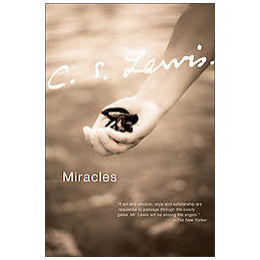 Miracles: A Preliminary Study by C.S. Lewis, 5/5
It’s like no one told C.S. Lewis that you can’t prove the existence of God, so he just does. And that is merely to lay the foundation for his main topic, which I actually found much less interesting and convincing than the preliminary discussions–the man does not shirk an intellectual challenge. Though I have occasionally sensed some antagonism from him towards science, in this book he cheerfully tackles both the known and unknown with the grace, focus and rigorous logic that make me sometimes fear that I tend to put more faith in him than in God. Of course, no matter how hard one tries to be open-minded and logical, it cannot be too difficult a task to convince someone of something they already believe. With that in mind, I would love to know how this book is perceived by people with different backgrounds and beliefs than me.
Why I read it: C.S. Lewis is one of my favourite authors and thankfully, every time I think I’ve read all his books I come across a new one.

