
Category: Reviews
Clanlands
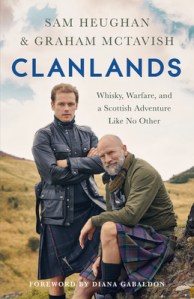
Clanlands: Whisky, Warfare, and a Scottish Adventure Like No Other by Sam Heughan and Graham McTavish, 2/5
From a literary perspective, it’s frankly shocking that something so closely resembling a shared Google Doc rough draft somehow survived the publishing process and exists in book form. Unpolished, unfocused, and overflowing with “cringe,” this book waffles between authors’ perspectives just like it waffles between travelogue, memoir, history and reality TV pitch. There were a few humorous moments and interesting historical facts, but I don’t think it has much to offer anyone outside of its target audience–Heughligans and fans of Outlander. Perhaps surprisingly, given my opinion of the book, I did enjoy its associated TV show, Men in Kilts.
Why I read it: my mother-in-law generously lent me her brand new copy while we were on a hunting trip.
War in Heaven

War in Heaven by Charles Williams, 3/5
I’m not going to pretend that I understood the more esoteric implications of this bizarre spiritual thriller, but I certainly did enjoy its zany plot, humor, and original take on the ever-popular search for the Holy Grail. It’s not a particularly well-crafted novel, but it’s hard to fault a story that opens thusly:
The telephone bell was ringing wildly, but without result, since there was no-one in the room but the corpse.
Why I read it: After my introduction to Charles Williams via All Hallows’ Eve, I wanted to read some of his other “novels of the supernatural,” of which War in Heaven is the first.
The Complete Morgan Horse

The Complete Morgan Horse by Jeanne Mellin, with illustrations by the author, 3/5
This 1986 compilation of two earlier books definitely shows its age but still retains some value as a collection of vintage Morgan photos, excellent artwork by the author, and a fairly detailed history of the breed. Mellin is a better artist than writer, and her prose tends to be a bit dry and repetitive, with a slightly patronizing tone. However, I was still fascinated to learn about the roots of this uniquely American horse breed and its influence on the American Saddlebred and the Standardbred.
Why I read it: I remember coveting this book when I checked it out of the library as a kid, and it finally dawned on me that I’m a grown-up now and can just buy a copy if I want.
Botanical Art from the Golden Age of Scientific Discovery
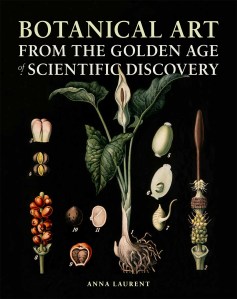
Botanical Art from the Golden Age of Scientific Discovery by Anna Laurent, 5/5
I borrowed this book from the library just to flip through the pictures, but it turned out to be an unexpectedly delightful read. The text perfectly balances with the images, providing just enough additional information to capture the reader’s interest and encourage a more in-depth examination of the many botanical wall-charts it features.
Why I read it: a brief intention to create my own botanical art lead me to order all related books from the library (there weren’t many).
Letters from the Earth

Letters from the Earth: Uncensored Writings by Mark Twain, edited by Bernard DeVoto, 2/5
From a scholarly perspective, this collection of previously unpublished writings by Mark Twain is no doubt a valuable resource. However, from a casual reader’s perspective, it was a bit of a tedious mishmash. The main attraction, to me, was an unfinished story, dubbed by the editor “The Great Dark,” which made it onto the list of “10 Forgotten Fantastical Novels You Should Read Immediately.” The concept was memorable–a man and his family are trapped on a dream ship exploring a microscopic drop of water–but the tone was very uneven and the story too unpolished and indeed, unfinished, to be a satisfying read. Much of the rest of this collection consisted of snarky essays in which the author mocked Christianity in an ignorant and closed-minded way that, in my opinion, reflected more poorly on himself than on the religion.
Why I read it: this was the last book I had left to read from the list of “10 Forgotten Fantastical Novels You Should Read Immediately.”
What to Expect the First Year
What to Expect the First Year by Heidi Murkoff, 3/5
My husband and I were fortunate enough to have the world’s most chill baby, so I didn’t bother reading most of this book until we were halfway through year two of parenthood. Though raising our little guy has definitely become more challenging as he matures, the first twelve months were relatively straightforward; most issues that came up were easily addressed by a quick internet search, knowledgeable friends and family, or at medical check-ups. I didn’t feel the anxious anticipation, curiosity, and solitariness of first-time pregnancy that made What to Expect When You’re Expecting so comforting and helpful. For me, this book occupies a weirdly unhelpful middle ground, at times too hyper-focused to be practical or too general to be a reliable source for researching complex issues (especially controversial ones like vaccinations or discipline).
Why I read it: a friend and parent of two young children recommended it very highly.
All Hallows’ Eve
All Hallows’ Eve by Charles Williams, 5/5
I had very little idea what to expect from this slim book and that, perhaps, is partly why I found it to be so absolutely astonishing (though pure novelty cannot account for that fully). I don’t want to give away too much, but think Gothic thriller meets supernatural romance in the interest of exploring highly-developed and unconventional theological beliefs. I was not at all surprised to later learn that Williams was a regular member of the Inklings, enjoying the friendship and literary criticism of C.S. Lewis and J.R.R. Tolkien.
This book demands to be re-read, but I would avoid this edition (Oxford Reprints) at all costs. The binding has that ubiquitously cheap, self-published feel and the text contains a baffling number of typos. Most egregious of all is the use of hyphens in place of em dashes. I know how pedantic that complaint sounds, but Williams used em dashes often and in very long sentences. The relentless and incorrect use of hyphens disrupted visual flow in addition to hindering comprehension.
Why I read it: another entry on the list of 10 Forgotten Fantastical Novels You Should Read Immediately.
The Boats of the “Glen Carrig” and Other Nautical Adventures

The Boats of the “Glen Carrig and Other Nautical Adventures by William Hope Hodgson, 3/5
Taken singly, these stories are fun in a kitschy way, but overall, the effect is repetitive and hackneyed. Maybe the editor’s introduction about Hodgson’s writing career tainted my perspective, but I got the feeling throughout that the author was writing more for a financial inlet than a creative outlet. There were a few brief moments when I thought “Oh, he is capable of higher quality writing and insightful observations when he cares to be,” but they were lost in the endless “weeds” that the ships in his stories all-too-inevitably encountered.
Why I read it: one of the few remaining entries on the list of 10 Forgotten Fantastical Novels You Should Read Immediately that I have left to read.
The Adventures of Baron Munchausen

The Adventures of Baron Munchausen by Rudolf Erich Raspe, illustrated by Gustave Dore, 3/5
The ridiculous and fantastical exploits of Baron Munchausen remind me very much of the tall tales told of American folk heroes Davy Crockett and Paul Bunyan. In fact, I so firmly associate this aesthetic with 19th- and 20th-century America that I really struggled to reconcile it with 18th-century Germany. I looked in vain for an undercurrent of serious political satire, but none was to be found. Even the illustrations seemed implausible: Gustave Doré is best known for his extremely serious engravings of Biblical scenes. I had to verify that he was even capable of depictions like Baron Munchausen’s butt plugging a hole in a leaky ship, while a school of fish look on in obvious shock. This book should not exist but it’s so bonkers that I’m glad it does (even if it’s not exactly my cup of tea).
Why I read it: another one from the list of 10 Forgotten Fantastical Novels You Should Read Immediately.
Scars and Stripes

Scars and Stripes: An Unapologetically American Story of Fighting the Taliban, UFC Warriors, and Myself by Tim Kennedy and Nick Palmisciano, 4/5
At some point (I don’t even remember when), I got it in my head that Tim Kennedy was kind of an obnoxious d-bag, so I had zero interest in reading what I was sure would be an obnoxious and terribly-written autobiography. I wouldn’t have even known it existed if my husband hadn’t listened to the audio book and then proceeded to tell me stories from it until I ordered it from the library just to get him to shut up.
I couldn’t put it down. In about one chapter, I went from “eh, it’s ok for what it is” to staying up late into the night trying to find a slightly boring spot to stop reading. It’s not great literature, but man, is it great stories!
Why I read it: a recommendation from my husband.

