
Tagged: parenting
The Incredible Years

The Incredible Years: A Trouble-Shooting Guide for Parents of Children Aged 2-8 Years by Carolyn Webster-Stratton, 2/5
Reading this book made me feel insecure about the more traditional approach to parenting that my husband and I have employed with success for almost three years now. Having one’s ideas challenged is not a bad thing, in itself, but what made me most uncomfortable was how self-conscious I started to feel about interacting with my child. Weirdly, it was the positive interactions that were most affected; instead of feeling joy from being authentic and savoring the moment, I became focused on doing it “by the book” and adding a check mark to my mental record of parenting wins and losses. It was a gross feeling.
While I disagree with the author’s tiresome advice that, seemingly, 99% of behavioral issues are best addressed by ignoring, time-outs, or sticker reward charts, if one can glean what is useful without departing from common sense and simplicity, this book has some helpful ideas to offer. The concept of time-outs is presented in a sensibly structured way and there were good ideas for how to participate in playtime without taking over or getting frustrated (hint: imitate and describe what is happening instead of dictating). Also, since I grew up as an introverted homeschool kid, it was helpful to be reminded that integrating well with social groups is a skill that parents can help their children develop, not an inevitable byproduct of personality.
Why I read it: a hand-me-down (without a specific recommendation) from a friend.
Positive Parenting with a Plan
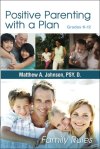
Positive Parenting with a Plan (Grades K-12): FAMILY Rules by Matthew A. Johnson, 2/5
At first, I was put off by the author’s cocksure tone, cringey attempts at humor, and brazen assertion that common sense and anecdotal evidence are perfectly reasonable substitutes for scientific research with regard to his scheme of essentially gamifying family life. However, after reading a few of the aforementioned anecdotes, I learned that there is a level of family dysfunction that I simply was not even aware existed and might credibly justify the extreme approach that this book lays out. Call me naive, but I didn’t know that many children are so out of control that the only threat parents can effectively use is to literally send them away to live with other family members or at one of the numerous long-term treatment facilities that apparently are a thing that exists! In a situation in which, God forbid, my child was physically assaulting me, committing crimes, doing drugs, and causing thousands of dollars of property damage, I guess I would try anything, no matter how contrived, extreme, and unsupported by scientific research it might feel.
Why I read it: it was in a box of hand-me-down books from a friend.
Adult Children of Emotionally Immature Parents
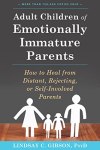
Adult Children of Emotionally Immature Parents: How to Heal from Distant, Rejecting, or Self-Involved Parents by Lindsay C. Gibson, 2/5
This book is shallow as a parking lot puddle, full of cringey anecdotes and generic advice. The reader is encouraged, regardless of their own psychological state, to assess problematic people in their life using criteria so broad and subjective that a diagnosis of “emotionally immature” is practically guaranteed. Once their problems have predictably been blamed on childhood and upbringing, the inevitable advice to “awaken your True Self” by finding your inner child ensues. If the author is correct that who you were before fourth grade is key, then I guess my True Self is a horse?
Why I read it: Lent to me (but pointedly not recommended) by a family member who evidently knows me extremely well.
Parenting with Love and Logic
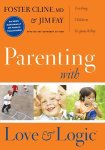
Parenting with Love and Logic: Teaching Children Responsibility by Foster Cline, MD, and Jim Fay, 3/5
I really like the core of this parenting philosophy, which is that even very young children should be given opportunities to make decisions and experience the resulting [reasonable] positive and negative consequences without parental interference, thus becoming equipped through practice for wise and independent decision-making. I do feel the authors take it a bit too far, though, suggesting manipulative and contrived phrases to mold every encounter into a choice and weaponize consequences.
Why I read it: a friend recommended it.
What to Expect the Second Year
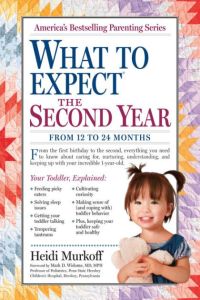
What to Expect the Second Year: From 12 to 24 Months by Heidi Murkoff and Sharon Mazel, 2/5
I found this book to be good primarily for two things: 1. confirming that all the craziness is normal and 2. making me thankful for all the craziness that we haven’t encountered. That said, I was disappointed by the same issues that bothered me in the previous book–namely, a laughably paranoid thoroughness that would be unhealthy in practice (if even attainable at all), and a patronizingly dismissive approach to non-mainstream points of view on controversial topics.
The sections on parenting and discipline were especially underwhelming, which was unfortunate because those are the topics about which I have the most burning questions. In effect, Murkoff associates all physical discipline with uncontrolled parental rage, providing as a substitute for this straw man a form of “discipline” that involves removing the source of temptation from the child or the child from the situation. This seems like a great strategy for handling delicate scenarios and other people’s children, but in my opinion, it is not discipline at all and fails to teach important lessons about self-control and boundaries that I know my almost-two-year-old is capable of learning.
Why I read it: It is very relevant to my life at the moment.
What to Expect the First Year
What to Expect the First Year by Heidi Murkoff, 3/5
My husband and I were fortunate enough to have the world’s most chill baby, so I didn’t bother reading most of this book until we were halfway through year two of parenthood. Though raising our little guy has definitely become more challenging as he matures, the first twelve months were relatively straightforward; most issues that came up were easily addressed by a quick internet search, knowledgeable friends and family, or at medical check-ups. I didn’t feel the anxious anticipation, curiosity, and solitariness of first-time pregnancy that made What to Expect When You’re Expecting so comforting and helpful. For me, this book occupies a weirdly unhelpful middle ground, at times too hyper-focused to be practical or too general to be a reliable source for researching complex issues (especially controversial ones like vaccinations or discipline).
Why I read it: a friend and parent of two young children recommended it very highly.
Experimenting with Babies

Experimenting with Babies: 50 Amazing Science Projects You Can Perform on Your Kid by Shaun Gallagher, 5/5
This book is very good for what it is–a light-hearted and accessible collection of activities, based on scientific experiments, that highlight the nuances of a baby’s development. The presentation is not at all rigorous and might even uncharitably be considered “dumbed-down,” but does go well beyond the few common reflexes (e.g. rooting, Moro, stepping, etc.) with which parents might already be familiar. Personally, I do not feel motivated to actually perform any of the experiments with my own baby, but it was still fascinating to learn more about his fascinating progression from potato to person.
Why I read it: A friend lent it to me.
The Family Bed
 The Family Bed by Tine Thevenin, 2/5
The author is a passionate advocate of communal family sleeping arrangements but writes in the simplistic style of a college research paper and relies too heavily on anecdotes. Before the topic of bed-sharing was even on my radar, I had already been warned against it by a friend whose eight-year-old was still not comfortable sleeping alone. Since opinions obviously vary, I wish this book had presented a more scholarly approach to the topic. Despite its shortcomings, it did provide an interesting point of view that encourages an open-minded approach to what should be a very personal and judgement-free lifestyle choice.
Why I read it: I’m expecting my first baby, so a friend gave it to me along with a couple books on childbirth.
 OmniRambles