
Tagged: american revolution
George Washington’s Expense Account
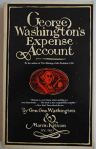
George Washington’s Expense Account by Gen. Geo.Washington and Marvin Kitman, 3/5
Any romantic notions about the American Revolution that still lingered in my mind after reading the eye-opening A Respectable Army were diffused by this cringe-inducing account of George Washington living like a literal king on the country’s dime–spending the equivalent of millions of dollars in today’s money–while his ragged soldiers were frequently hungry and unpaid. I eventually tired of Kitman’s tongue-in-cheek commentary and now-obscure political references, but perusing the included facsimile in George Washington’s tidy but inscrutably cursive handwriting helped me appreciate the accessibility of a modern transcription with context.
Why I read it: antiques expert Peter Combs mentioned it in one of his weekly YouTube videos.
The Midwife’s Revolt
 The Midwife’s Revolt by Jodi Daynard, 3/5
This fun and competently-written story about the adventures of Abigail Adam’s midwife during the American Revolution was a bit too much of a page-turner to fit my customary pre-bedtime reading schedule, leaving me somewhat sleep-deprived over the last couple days. The book is impressively long and Daynard doesn’t succumb to the first-time novelist’s temptation to rush the ending. I thought she also did a good job of incorporating period-specific vocabulary in a natural way. Ultimately, though, the plot felt lacking to me, the characters puppetish and I found the ending unsatisfying in its predictability and mushy romanticism. Suspension of disbelief was difficult for me to attain and I often found myself wondering just how accurate the author’s perception of the era really was.
Since my friend Alison, who is an enthusiastic connoisseur of historical fiction, assures me that the book is well-written and convincing, the foregoing complaints no doubt stem from my deep mistrust of the historical fiction genre in general (which is surely not Jodi Daynard’s fault). I know that all history is subjective (filtered as it is through human perception) but some sources are more subjective than others, with historical fiction being the most untrustworthy and potentially misleading of all, in my opinion. I don’t mind so much when iconic time periods are used as settings or major historic events are incorporated into plots, but it grates on me no end when famous people from the past, people who were once as fully alive, independent and individual as you and I, are co-opted for major roles in other people’s made-up stories. What right does an author have to put words into these once-alive mouths? To invent experiences and reactions, emotions and opinions, for people who can no longer defend or explain themselves? Most historical fiction seems written by people who are either expert writers OR expert historians, but how rarely is a synthesis of these two qualities achieved.
[Why I read it: it was my friend’s end-of-summer book recommendation. Our library didn’t have a copy, but I put in a request and they bought it! This is the second time in as many months. I’m definitely feeling spoiled.]

