
Tagged: 5/5
Storey’s Illustrated Breed Guide to Sheep, Goats, Cattle, and Pigs

Storey’s Illustrated Breed Guide to Sheep, Goats, Cattle, and Pigs by Carol Ekarius, 5/5
High-quality photographs accompany informative text about 163 different livestock breeds in this excellent reference book. It provides a good jumping-off point for further research into specific breeds and I appreciated the extra information the author provides about the history of livestock domestication and the science of breed development.
Why I read it: Still on a quest to identify every cow I pass by.
The Thursday Murder Club
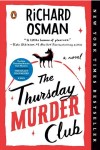
The Thursday Murder Club: a novel by Richard Osman, 5/5
The only mystery left unsolved at the end of this charming, witty, and absolutely delightful novel is how something so polished and sparkling could be the author’s first. I read it in one day and didn’t handle distractions too gracefully, I’m afraid. It made me laugh, it made me cry, and I especially appreciated how the author took his time at the end instead of wrapping up too hastily.
Why I read it: Frustratingly, I can’t remember how I heard of this series.
Great Tales from English History
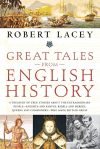
Great Tales from English History: A Treasury of True Stories About the Extraordinary People–Knights and Knaves, Rebels and Heroes, Queens and Commoners–Who Made Britain Great by Robert Lacey, 5/5
This collection of historical stories is deftly woven together, seamlessly transporting the reader through over 9000 years of British history (from the Mesolithic period to postwar times). Famous incidents are presented with a fresh perspective and there is a satisfying variety of fascinatingly obscure events and details included as well. I wish there was a book like this written about every country in the world!
Why I read it: one of the few “required reading” entries from my college days that earned a permanent home on my shelves.
The Federalist Papers

The Federalist Papers by Alexander Hamilton, James Madison, and John Jay, 5/5
In these 85 essays, originally published in 1787-88 by New York newspapers, three Founding Fathers use the pseudonym “Publius” to argue passionately for the ratification of the newly-proposed Constitution of the United States. Blow by blow, the authors address and dismantle the most popular criticisms of the day, occasionally stooping to empty rhetoric and snide remarks, but more often establishing logical and convincing rebuttals, based on common sense, the events of history, the practices of other nations, and a clear-eyed appraisal of human nature (recognizing both its positive and negative tendencies). It was a strange and refreshing experience to encounter in-depth and nuanced arguments, presented with respect for the everyday reader’s intelligence and belief in their sincere desire to form an educated and fair-minded opinion. Almost two hundred and forty years later, it is easy to be cynical and pessimistic about the future of our country, but it is no exaggeration to say that reading this book, in combination with the actual Constitution, re-kindled my love, pride and admiration for the grand experiment that is the United States of America.
Why I read it: A free copy showed up in my mailbox, completely unsolicited. Unfortunately, I peeled the mailing label off to read the back cover and now can’t recall what organization sent it.
Washington State Place Names

Washington State Place Names by James W. Phillips, 5/5
One of my favorite reading experiences is to find myself, thanks to a good book, enthralled with a topic in which I had little previous interest. Washington State history is definitely one of those topics and this is one of those books. Hundreds of entries provide the fascinating and often surprising stories behind the names of Washington’s noteworthy mountains, rivers, islands, counties, cities, and towns.
Why I read it: a fun thrift store find.
Anthology of Japanese Literature
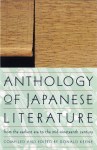
Anthology of Japanese Literature from the Earliest Era to the Mid-Nineteenth Century, compiled and edited by Donald Keene, 5/5
This collection is pleasingly varied and conveniently oriented towards a lay audience; the annotations are minimal and linguistic subtleties are simply acknowledged without being dissected. Most of the short poems are presented in side-by-side rōmaji (romanized Japanese) and English, allowing the reader to absorb a little more of the syllabic patterns, alliteration, and overall flavor of the original writings. Though the imagery, values, and cultural references felt refreshingly unfamiliar, there was an undeniable undercurrent of universal human appeal in the timeless themes of love, loss, death, and spiritual life.
Why I read it: an interesting-looking thrift store find.
The Real Anthony Fauci
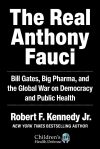
The Real Anthony Fauci: Bill Gates, Big Pharma, and the Global War on Democracy and Public Health by Robert F. Kennedy Jr., 5/5
There is no denying that this is a controversial book on controversial topics, written by a controversial author, and it wasn’t particularly difficult to spot some inadequately substantiated claims, outlandish hypotheses, less-than-impressive sources, and questionable interpretations of data. That said, one would have to be willfully naive and ignorant of human nature to ignore the preponderance of inarguable, factual evidence the author provides that some of our most respected institutions, scientists, politicians, businessmen/women, and philanthropists have sold their souls and woven a pervasive web of deceit, corruption, avarice, censorship and moral bankruptcy. Even with its failings, this book is a necessary and fearless testament to the enduring wisdom of 1 Timothy 6:10: “For the love of money is a root of all kinds of evils” (ESV).
Additionally, The Real Anthony Fauci is a tour de force in terms of seamlessly and meticulously incorporating technology into a traditional reading experience; the chapter endnotes link via a QR code to RFK Jr.’s website, where one can easily click through to the actual sources for most of the 2,194 citations contained in this formidable exposé.
Why I read it: Originally, I had no intention of reading this because, judging solely from its cover, it appeared to be little more than a hit-piece full of conspiracies, written by a crackpot. However, RFK Jr.’s interview on The Joe Rogan Experience left me with a more favorable impression of the author, as well as many unanswered questions about his claims.
Winnie-the-Pooh
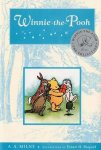
Winnie-the-Pooh by A.A. Milne with decorations by Ernest H. Shepard, 5/5
These stories are delightful and surprisingly witty (Milne was, after all, also a writer for the popular humor and satire magazine, Punch), so it is easy to see why Winnie-the-Pooh continues to be such a popular character, even almost 100 years after he was first introduced. This edition is particularly lovely, with thick paper, imaginative typesetting, and tastefully-colored illustrations.
Why I read it: included in a box of hand-me-down books from a friend.
Hand-Taming Wild Birds At the Feeder
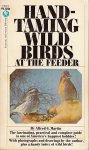
Hand-Taming Wild Birds At the Feeder by Alfred G. Martin, with photographs and drawings by the Author, 5/5
I bought this book for the charming naivete of its cover and topic, but soon became fully invested in all the feathered characters featured inside. The author provides helpful, if purely anecdotal, advice about diet preferences and taming techniques for specific species, in addition to many touching stories about birds he has known.
Why I read it: a thrift store find.
Range
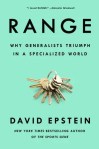
Range: Why Generalists Triumph in a Specialized World by David Epstein, 5/5
On good days, I appreciate the diverse array of skills and experiences that make me who I am. Not yet 40 years old, I can make a credible case for claiming the informal titles of musician, intellectual, artist, athlete, teacher, and photographer. Many days, though, I struggle with feeling like a failure for never having pursued a “proper” career (and the money that comes with one) and so far not finding that one big, important thing I am supposed to be doing with my life.
If I’d read this book earlier, I could have avoided some of those bad days. Epstein blows apart the notion that choosing a career path as early as possible and pursuing it single-mindedly in ever-increasing depth, is the only road to success. Instead, he makes a convincing argument for the value of developing a broad base of interests and experiences, while unashamedly searching for pursuits with high “match quality” to yourself (instead of making a virtue of never quitting). The time this takes need not be wasted, since the most innovative contributions tend to come from people making connections between superficially disparate experiences and ideas, not from those who have specialized the most in any given field.
Life has not been as linear and predictable as I expected; in this book I was comforted to see a reflection of that experience. I learned that, contrary to the claims of pop psychology, personalities and even core values can change over time. That it is ok not to jump on the academic bandwagon of learning more and more about less and less. That continuing to follow my curiosity will provide the best chance of encountering my life’s purpose. And that I shouldn’t undervalue (or under-utilize) the skills and experiences I accumulate along the way just because they weren’t all acquired on a traditional timeline.
Why I read it: I think it was mentioned in Steven Kotler’s The Art of Impossible.

