
Tagged: 3/5
Shogun
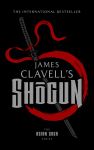
Shogun by James Clavell, 3/5
This 1300-page monster of a hardback novel weighs almost 4lbs, and anyone who thinks it’s weird to dwell on a book’s physical dimensions in a book review has clearly not been been physically traumatized, as I have, by attempting to read it in bed every night! I am only partially joking; the book’s unwieldiness gives a palpable presence to the author’s leisurely writing style, which often makes it seem as if scenes were occurring in real time and not in the pages of a novel. As far as plot, well it’s got a lot. A lot of politics, religion, drama, and unacknowledged historical inspiration. There were a few chapters that dragged, but overall, I felt surprisingly engaged by the story, despite its obscene length and last-minute reliance on a deus ex machina of sorts. The detailed portrayal of 17th-century Japanese culture, written by a European making no claims to historical accuracy, seems problematic to me (I doubt something like this could be written nowadays without causing controversy), but surprisingly, there seem to be no complaints. While I am impressed by the author’s confidence and stamina, I found the length of the book to be a bit self-indulgent and would prefer to read a true account of the historical events portrayed in this novel.
Why I read it: When the first season of the 2024 TV show based on this book ended, I was left wanting more.
Game Shows FAQ

Game Shows FAQ: All That’s Left to Know About the Pioneers, the Scandals, the Hosts, and the Jackpots by Adam Nedeff, 3/5
This is an interesting book about TV game shows, providing info on historical popularity trends, how shows were made, which ones survived and which ones failed, and a bit of fun, behind-the-scenes gossip. I felt that the author lost some steam as the book progressed and there were a completely unacceptable number of typos, but overall, it was a decent read on a pretty random topic.
Why I read it: on a shelf of staff picks at my local library.
Fast Like a Girl

Fast Like a Girl: A Woman’s Guide to Using the Healing Power of Fasting to Burn Fat, Boost Energy, and Balance Hormones by Dr. Mindy Pelz, 3/5
It is refreshing to read a diet book written specifically for women. This is the clearest layout of the female hormone cycle I’ve ever encountered, accompanied by easily understandable nutritional guidelines for each stage–a welcome break from the one-size-fits-all approach of most programs. The author makes an impassioned and compelling argument for the “miraculous” healing power of fasting but, unfortunately, relies heavily on anecdotal evidence from her own practice. Like many questionable health gurus, Pelz has a doctorate in chiropractics and her main source of credibility seems to be a few celebrity clients and the following she has built by posting hundreds of YouTube videos on topics for which she has zero formal education. Much of what she states without reservation seems to reside in that twilight zone of science where it may be correct, but has yet to be satisfactorily proven.
Now, I am not a blind believer in mainstream medicine–I feel there is an air of undeserved infallibility about it, closed-mindedness, and conflicts of interest that slow progress unnecessarily. However, even a little research into Dr. Mindy and her fasting regimen rings warning bells. She has built an entire program and community around her ideas, yet there is not a single Doctor of Medicine on her 24-person team. Dietician Abby Langer has written an excellent review of Fast Like a Girl that points out the cult-like aspects of Pelz’s program and is able to put her finger on some of the over-confident language in this book that made me uncomfortable without quite knowing why. Curious, I did just a little further research on the much-vaunted concept of fast-induced autophagy, finding that Pelz not only fails to mention the potential negative effects of autophagy, but also bases her 17-72 hour fast guidelines on a study of baby mice that cannot be extrapolated to human subjects and neither supports her recommendation, nor even the actual statement in the book to which the endnote is appended (32).
Another issue I have with Pelz is her attempt to discredit calorie-restriction diets by employing the straw man fallacy (5). As someone who has personally achieved substantial, long-term, transformative weight loss through calorie counting, I found her depiction of calorie-restriction diets to be either ignorant or downright deceptive (depending on how generous you want to be about her motives). She cites a study from the 1960s called the “Minnesota Starvation Experiment” in an attempt to discount an approach to weight loss that is completely reasonable, commonsense, accessible, and has worked for many, many people. I achieved metabolic health, according to her own definition, through calorie counting and exercise. Sure, there are many times I have slept in and had a very late breakfast…does the fact that I went 15 hours between dinner and breakfast mean that I fasted? According to Pelz, yes, and I can expect health miracles if I continue do this a lot. According to commonsense, no!
The author’s attempt to demonize calorie-restriction diets becomes even more ridiculous when you get past the fasting section of the book and reach her actual “30-Day Fasting Reset,” which involves two diet plans (ketobiotic and hormone feasting), along with a bunch of complicated and gross-sounding recipes. It feels like a total bait-and-switch to be told that, in addition to fasting, one should also adhere to a diet that is much like any other diet that people routinely fail to stick with. We’re told to avoid bad oils, refined flours and sugar, toxic chemical ingredients, and alcohol, while adding in specific healthy foods (all organic, non-GMO, hormone-free, obviously). Duh! How is this different from other diets? How is someone who fails at traditional diets going to have success trying to eliminate processed foods, sweetener in your coffee, breads, pastas, crackers, and desserts? How is this better than counting calories and experiencing for yourself the value of choosing nutrient dense foods over empty calories? I honestly cannot comprehend how anyone who is struggling with weight loss would be able to stick with this diet plan over others. So, what we are left with is some very cliched diet recommendations, six different fasts (all under-researched), and some information about what types of foods might support female hormones at different times of the month (no citations given).
One might be justified for wondering why I would give a book that I perceive to have so many issues a decent, 3/5 rating. The reason is this: I respect the author’s exploration at the cutting edge of nutrition and medicine, and appreciate her focus on the female experience. Just because the scientific research on fasting doesn’t yet justify specific guidelines doesn’t mean it’s not a concept of value, worth experimenting with (especially for people who have tried literally everything else).
Why I read it: my dad sent me a podcast featuring Dr. Mindy, but I would rather read a book than listen to a podcast any day.
The Last Devil to Die
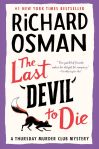
The Last Devil to Die: A Thursday Murder Club Mystery by Richard Osman, 3/5
This story contained some touching character development and I enjoyed how the author incorporated characters and references from previous books. I felt that the criminal-with-a-heart-of-gold archetype is getting a bit worn at this point in the series, but perhaps that is my fault for reading three Thursday Murder Club books in less than a week.
Why I read it: the fourth book in the series.
The Man Who Died Twice

The Man Who Died Twice: A Thursday Murder Club Mystery by Richard Osman, 3/5
Enjoyable, though a bit less witty and charming than the first book in the series and featuring a more conventional, spy thriller plot.
Why I read it: the second in a series that started out very strong.
Before and After the Book Deal
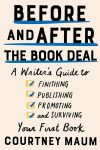
Before and After the Book Deal: A Writer’s Guide to Finishing, Publishing, Promoting, and Surviving Your First Book by Courtney Maum, 3/5
Despite Maum’s humorous approach, I found this insider perspective on the book publishing process to be quite off-putting. Seeing the business side of books is truly like visiting the proverbial sausage factory and I am not a happier reader for coming to the realization that “author” hovers near the very bottom of any list of viable career choices, below even those perennial classics–“actor” and “musician.” This state of things is not Maum’s fault, but it is not Donald Trump’s fault either, which is a fact she seems to struggle with at several points in this exceedingly woke book.
Why I read it: it was on a list of recommended resources for writers on my Instagram feed.
Lifelike Drawing with Lee Hammond

Lifelike Drawing with Lee Hammond by Lee Hammond, 3/5
I learned how to draw realistic pencil portraits many years ago from Lee Hammond’s Draw Real Animals!, but pulled this book off the shelf for reference when struggling with the background for a recent project (see below). Realizing afterwards that I likely had never actually read this through before, I decided to do so and did glean a couple of helpful tips that either were not in her other book or I had just forgotten over the years.

The Houses We Live In

The Houses We Live In: An Identification Guide to the History and Style of American Domestic Architecture, edited by Jeffery Howe, 3/5
Either architectural styles are not as clear-cut as I expected, or the info in this unwieldy book was not presented in the most logical way. Long blocks of text, multiple writers, and occasionally unhelpful photo captions made for a somewhat overwhelming reading experience, but I did appreciate the thorough glossary and informative line art. Learning to spot some of the historical features characteristic of different time periods and styles was fun and makes every house I drive by that much more interesting.
Why I read it: If my memory is correct, I convinced my parents many years ago to let me buy this book from a thrift store in Hawaii and bring it home in our luggage despite its considerable size.
The Body Keeps the Score

The Body Keeps the Score: Mind, brain and body in the transformation of trauma by Bessel van der Kolk, 3/5
This disturbing and rather lengthy book was not as self-help oriented as I expected it to be. The author expresses a career’s worth of frustration with the medical establishment’s over-reliance on DSM-facilitated symptom labeling and prescription medication. He makes an impassioned case for a more holistic approach to understanding trauma and its varied effects, particularly with regard to brain function, but I felt that he relied heavily on anecdotal evidence, demonstrated an oversimplified understanding of neurobiology, and was perhaps more interested in finding research and studies with favorable outcomes than in assessing their quality.
As far as treatment is concerned, the author is all over the place, telling stories about clients who had success with EMDR, internal family systems, yoga, theater, HRV training, neurofeedback, journaling, massage, and more. Most of the cases he presents are very extreme and I felt like my own experiences didn’t even register on that scale.
Why I read it: a midwife suggested that it might help me process a traumatic birth experience.
Leadership Strategy and Tactics

Leadership Strategy and Tactics: Field Manual by Jocko Willink, 3/5
I appreciate the specific leadership (and followership) scenarios that Willink addresses in this book, but it feels somewhat contrived and disjointed. I suspect it would make a better reference resource than a cover-to-cover read.
Why I read it: working my way through Jocko Willinks’ books, if slightly out of order.
 OmniRambles