
Tagged: 3/5
The Houses We Live In

The Houses We Live In: An Identification Guide to the History and Style of American Domestic Architecture, edited by Jeffery Howe, 3/5
Either architectural styles are not as clear-cut as I expected, or the info in this unwieldy book was not presented in the most logical way. Long blocks of text, multiple writers, and occasionally unhelpful photo captions made for a somewhat overwhelming reading experience, but I did appreciate the thorough glossary and informative line art. Learning to spot some of the historical features characteristic of different time periods and styles was fun and makes every house I drive by that much more interesting.
Why I read it: If my memory is correct, I convinced my parents many years ago to let me buy this book from a thrift store in Hawaii and bring it home in our luggage despite its considerable size.
The Body Keeps the Score

The Body Keeps the Score: Mind, brain and body in the transformation of trauma by Bessel van der Kolk, 3/5
This disturbing and rather lengthy book was not as self-help oriented as I expected it to be. The author expresses a career’s worth of frustration with the medical establishment’s over-reliance on DSM-facilitated symptom labeling and prescription medication. He makes an impassioned case for a more holistic approach to understanding trauma and its varied effects, particularly with regard to brain function, but I felt that he relied heavily on anecdotal evidence, demonstrated an oversimplified understanding of neurobiology, and was perhaps more interested in finding research and studies with favorable outcomes than in assessing their quality.
As far as treatment is concerned, the author is all over the place, telling stories about clients who had success with EMDR, internal family systems, yoga, theater, HRV training, neurofeedback, journaling, massage, and more. Most of the cases he presents are very extreme and I felt like my own experiences didn’t even register on that scale.
Why I read it: a midwife suggested that it might help me process a traumatic birth experience.
Leadership Strategy and Tactics

Leadership Strategy and Tactics: Field Manual by Jocko Willink, 3/5
I appreciate the specific leadership (and followership) scenarios that Willink addresses in this book, but it feels somewhat contrived and disjointed. I suspect it would make a better reference resource than a cover-to-cover read.
Why I read it: working my way through Jocko Willinks’ books, if slightly out of order.
Yorkshire Legends
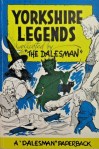
Yorkshire Legends collected by “The Dalesman,” 3/5
I love to see folklore preserved and even better when it is accompanied, as in this case, by a variety of appealing illustrations.
Why I read it: a fun find in a Yorkshire charity shop.
Parenting with Love and Logic
Parenting with Love and Logic: Teaching Children Responsibility by Foster Cline, MD, and Jim Fay, 3/5
I really like the core of this parenting philosophy, which is that even very young children should be given opportunities to make decisions and experience the resulting [reasonable] positive and negative consequences without parental interference, thus becoming equipped through practice for wise and independent decision-making. I do feel the authors take it a bit too far, though, suggesting manipulative and contrived phrases to mold every encounter into a choice and weaponize consequences.
Why I read it: a friend recommended it.
Literary Lapses

Literary Lapses by Stephen B. Leacock, 3/5
A collection of humorous essays that have stood up quite well to the passage of over 100 years’ time.
Why I read it: I’ve had a free version of this bookmarked on Wikisource for so long that I can’t remember how I first heard of it. While tidying up my bookmarks, I decided to just buy a cheap copy of the book, since I hate reading ebooks.
Shadows of Ecstasy
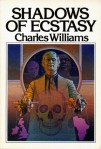
Shadows of Ecstasy by Charles Williams, 3/5
Brimming with Williams’ trademark brand of semi-plausible bizarreness, this story depicts the “Second Evolution of Man,” a physical and spiritual take-over of Western civilization, centered in Africa and led by the charismatic Nigel Considine. The author (not very convincingly) pits Christianity, spirituality and agnosticism against a cult of super-humanity which, having re-focused the most powerful human emotions to unlock the secret of perpetual fulfillment and eternal life, is on the cusp of mastering the act of self-resurrection as well.
The plot moves along well and Williams refrains from too many of the tiresome and esoteric flights of spirituality that characterize many of his other works. However, I felt ambivalent about the main characters and a bit exhausted trying to distinguish any potential racism amongst the 1930s vocabulary.
Why I read it: the fifth in Williams’ set of supernatural thrillers.
Fight Night

Fight Night: A Novel by Miriam Toews, 3/5
Since I like my dialogue to be punctuated, do not generally enjoy the coming-of-age genre, and think “girl power” is a bit cringeworthy, I shouldn’t have enjoyed this book. However, consistent with the theme of her novel, Toews infuses her writing with so much love and humor that I was challenged to look past my preconceptions and appreciate the power of love to make messy situations, damaged people, embarrassment, mistakes, death, and loss into something beautiful.
Why I read it: I was going through my old reviews to make a book shopping list when I saw Toews’ transcendent novel, All My Puny Sorrows,and realized I’d never gotten around to reading more of her work.
The Greater Trumps
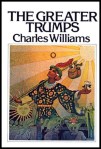
The Greater Trumps by Charles Williams, 3/5
This story of a young couple’s quest to unlock the power of the original tarot deck features beautifully crafted dialogue, fantastical imagery, interesting characters and, unfortunately, some Romani stereotypes that have not aged well.
Why I read it: it’s the fourth book in Charles Williams’ set of supernatural thrillers.
War in Heaven

War in Heaven by Charles Williams, 3/5
I’m not going to pretend that I understood the more esoteric implications of this bizarre spiritual thriller, but I certainly did enjoy its zany plot, humor, and original take on the ever-popular search for the Holy Grail. It’s not a particularly well-crafted novel, but it’s hard to fault a story that opens thusly:
The telephone bell was ringing wildly, but without result, since there was no-one in the room but the corpse.
Why I read it: After my introduction to Charles Williams via All Hallows’ Eve, I wanted to read some of his other “novels of the supernatural,” of which War in Heaven is the first.

