
Tagged: 2/5
Gulliver’s Travels and Baron Munchausen

Gulliver’s Travels by Jonathan Swift and Baron Munchausen by Rudolf Erich Raspe, 2/5
When I finally get around to reading an enduring classic, it is usually fairly obvious what timeless merits ensured its survival. In the case of Gulliver’s Travels, however, I was surprised to find it exceedingly dull and tediously obsessed with the author’s now-obscure political feuds. Perhaps the most entertaining aspect of this 1888 edition is the unfiltered disapproval evident in the editor’s preface and biography of Jonathan Swift, who apparently played rather fast and loose with the ladies (at least by the standards of the time) and did not shy away from the occasional crass flight of literary fancy. The editor baldly states that he “has not disguised his want of affection for the character of this hero” (10) and is “unable to make the biography a eulogy” (10). He continues further to claim that “The greatest difficulty in the analysis of Swift’s literary character is to discover by what depravity of intellect he acquired a taste for loathsome and filthy ideas, from which every other mind shrinks with disgust” (50). Adding further insult to injury are the numerous footnotes pettily highlighting instances of incorrect grammar in Swift’s at-that-time 162-year-old work. The whole effect was so judgy, self-righteous, uptight, and just stereotypically Victorian that, in retrospect, where I expected to find a commentary on 18th-century morals and issues, I instead encountered an unintentional commentary on 19th-century ones.
The second part of this book consists of the bafflingly ridiculous tall tales of Baron Munchausen, in two volumes. I did not enjoy this unillustrated edition as much as the other that I previously reviewed.
Why I read it: Gulliver’s Travels has been on my to-read list for ages, but I didn’t realize I owned a copy until I was searching for a boring book to combat pregnancy-induced insomnia.
Ornithology: An Introduction
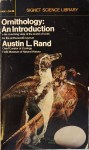
Ornithology: An Introduction by Austin L. Rand, 2/5
On the surface, this 1960s paperback about bird science meets every criteria for Most Boring Book Ever Written. Despite finding it to be surprisingly readable (no doubt because birds are intrinsically bizarre), it is difficult for me to imagine that anyone else in the entire world has read this book in the last twenty years.
Why I read it: The comically boring title caught my eye in the thrift store and I bought it specifically to send me off to sleep on difficult nights. It worked perfectly.
The Big Door Prize

The Big Door Prize: A Novel by M. O. Walsh, 2/5
When the TV show based on this novel committed the crime of a season-ending cliffhanger, followed by permanent cancellation, I hoped to find the closure and answers I wanted so desperately by reading the book. Unfortunately, there is so little similarity between the two that it actually raised more questions than it answered, such as why on earth would the show writers keep the same weirdly unrelated title when they were planning to change almost everything else about the story? I am not exaggerating–saying the show is based on this book is the equivalent of creating a sci-fi series about a time-traveling jeweler and saying it’s based on Lord of the Rings.
Now, this cannot be a fair review of the novel because I admittedly spent the first half of it struggling to re-picture all the characters, and the rest trying to reconcile the vast differences between the charming TV series I had enjoyed and the bleak, depressing, comparatively unimaginative plot of the novel.
SPOILERS AHEAD
So how does the story actually end? Well, I read a lot of Reddit threads on the topic and was surprised that practically no one provided a detailed answer to this question, possibly because the answer is not revealed until the last few pages of a book that is almost unbearably dull in comparison to the show. In the novel, it is revealed that the obnoxious town photographer, Bruce “Deuce” Newman (the character on whom the show’s “Giorgio” is loosely based), created the DNAMIX (Morpho) machine as part of an art project to capture images of all the townspeople and use them to create a giant mosaic of Cherilyn (Cass), with which he hoped to win her love by displaying it at the town’s bicentennial celebration. At first, he entertained himself by writing specific “potentials” for people, but eventually he just set it to random. The book ends with him moving on from his obsession with Cherilyn, who renews her relationship with her husband, Douglas Hubbard (Dusty). In a less-uplifting subplot, Trina fails in her attempt to frame Jacob as a school shooter in punishment for sexual abuse resulting from his now-dead twin brother’s abandonment of her at a drunken high school party.
Why I read it: to get closure for the cancelled TV show based on the novel.
Know Your Cows
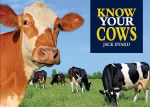
Know Your Cows by Jack Byard, 2/5
Repetitive text and limited photos, which range in quality from “acceptable” to “2000s cell phone camera,” make this small spotter’s guide a disappointing read and a reference of doubtful usefulness.
Why I read it: There are so many cows around that I thought it would be fun to learn more about them.
A Walk in the Woods
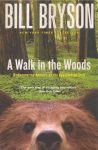
A Walk in the Woods: Rediscovering America on the Appalachian Trail by Bill Bryson, 2/5
Numerous reader recommendations on social media, the subtitle’s promise, and four (!) introductory pages of hyperbolic blurbs made me expect an uplifting, insightful and hilarious account of thru-hiking the Appalachian Trail, with a strong human interest aspect. I could not have been more mistaken in every single way. Over the course of the first half of the book, Bryson hikes less than a quarter of the trail (p. 162) and even that is not continuous; he skips a large portion of Tennessee because interactions with “stupid” cab drivers and, of all things, the state’s history of anti-evolutionary legislature, gave him “a powerful urge not to be this far south any longer” (p.108).
The second half of the book sees the author driving to different parts of the trail for day hikes, seemingly desperate to scrape together enough bleak and preachy anecdotes to earn his book advance. Most of his depictions of the people he encounters along the way are snarky, shallow, and mean-spirited. Trail-related material is generously padded with smug forays into armchair activism, including endless dire predictions about the environment and the imminent demise of various species of plants and animals that, twenty-five years after publication, seem overblown (at least, in the cases I paused to look into further).
The last straw, for me, was when Bryson took a rare break from obsessing about bears and how dangerous and fast and numerous and hungry for hikers they are to express his disapproval of guns and unironically comment “Goodness knows what the world is coming to when park rangers carry service revolvers” (p. 168). At that point, I realized that, much like how Bill Bryson had tried and failed to thru-hike the Appalachian Trail, I had tried and failed to like his book about it.
Why I read it: an oft-mentioned entry in the comments on an Instagram post about favorite (or most meaningful–I can’t remember which) books.
The Incredible Years

The Incredible Years: A Trouble-Shooting Guide for Parents of Children Aged 2-8 Years by Carolyn Webster-Stratton, 2/5
Reading this book made me feel insecure about the more traditional approach to parenting that my husband and I have employed with success for almost three years now. Having one’s ideas challenged is not a bad thing, in itself, but what made me most uncomfortable was how self-conscious I started to feel about interacting with my child. Weirdly, it was the positive interactions that were most affected; instead of feeling joy from being authentic and savoring the moment, I became focused on doing it “by the book” and adding a check mark to my mental record of parenting wins and losses. It was a gross feeling.
While I disagree with the author’s tiresome advice that, seemingly, 99% of behavioral issues are best addressed by ignoring, time-outs, or sticker reward charts, if one can glean what is useful without departing from common sense and simplicity, this book has some helpful ideas to offer. The concept of time-outs is presented in a sensibly structured way and there were good ideas for how to participate in playtime without taking over or getting frustrated (hint: imitate and describe what is happening instead of dictating). Also, since I grew up as an introverted homeschool kid, it was helpful to be reminded that integrating well with social groups is a skill that parents can help their children develop, not an inevitable byproduct of personality.
Why I read it: a hand-me-down (without a specific recommendation) from a friend.
Positive Parenting with a Plan
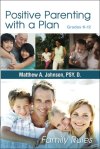
Positive Parenting with a Plan (Grades K-12): FAMILY Rules by Matthew A. Johnson, 2/5
At first, I was put off by the author’s cocksure tone, cringey attempts at humor, and brazen assertion that common sense and anecdotal evidence are perfectly reasonable substitutes for scientific research with regard to his scheme of essentially gamifying family life. However, after reading a few of the aforementioned anecdotes, I learned that there is a level of family dysfunction that I simply was not even aware existed and might credibly justify the extreme approach that this book lays out. Call me naive, but I didn’t know that many children are so out of control that the only threat parents can effectively use is to literally send them away to live with other family members or at one of the numerous long-term treatment facilities that apparently are a thing that exists! In a situation in which, God forbid, my child was physically assaulting me, committing crimes, doing drugs, and causing thousands of dollars of property damage, I guess I would try anything, no matter how contrived, extreme, and unsupported by scientific research it might feel.
Why I read it: it was in a box of hand-me-down books from a friend.
Discipline Equals Freedom

Discipline Equals Freedom: Field Manual MK1-MOD1 (expanded edition) by Jocko Willink, 2/5
Reading this book is certainly more convenient than buying 200 motivational posters and sitting in a dark room while someone shouts their slogans in your ear and smacks you with the cardboard tubes they were shipped in.
Why I read it: my husband bought it.
Adult Children of Emotionally Immature Parents
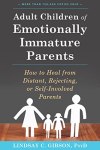
Adult Children of Emotionally Immature Parents: How to Heal from Distant, Rejecting, or Self-Involved Parents by Lindsay C. Gibson, 2/5
This book is shallow as a parking lot puddle, full of cringey anecdotes and generic advice. The reader is encouraged, regardless of their own psychological state, to assess problematic people in their life using criteria so broad and subjective that a diagnosis of “emotionally immature” is practically guaranteed. Once their problems have predictably been blamed on childhood and upbringing, the inevitable advice to “awaken your True Self” by finding your inner child ensues. If the author is correct that who you were before fourth grade is key, then I guess my True Self is a horse?
Why I read it: Lent to me (but pointedly not recommended) by a family member who evidently knows me extremely well.
History of American Painting

History of American Painting, Volume Two: The Light of Distant Skies (1760-1835) by James Thomas Flexner, 2/5
This second volume is less combative in tone than the first, but is still illustrated by depressingly low-quality, black and white reproductions of historic paintings. Flexner’s writing style is not unpleasant, but an overall lack of cohesiveness makes it difficult to place the info in context and I finished the book feeling that I had absorbed practically nothing (which was also the case with the first book in the series).
Why I read it: an old library sale find.
 OmniRambles