
Tagged: 1998
In the Name of Love
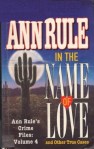
In the Name of Love and Other True Cases by Ann Rule, 3/5
This book’s format may be a little unusual–the first three-quarters explore the life and 1987 murder of entrepreneur Jerry Harris, while the remaining quarter contains four unrelated short cases–but I appreciated that, unlike In the Still of the Night, the author did not unnecessarily expand the first story in order to make it stand alone.
This is only the second book by Ann Rule that I’ve read and I was previously unaware of the existence of true crime as a genre of literature. At first, I was tempted to dismiss it as exploitative and voyeuristic; I love a good true crime documentary, but what feels like a harmless guilty pleasure to watch takes on a bit more moral weight for me when it appears in black and white on a page. However, I felt differently after looking up the Jerry Harris murder online and finding very little about it beyond the disgusting update that his killer has made a name for himself over the last 30 years by relentlessly filing over 2500 lawsuits from death row, most (if not all) of which are frivolous.1 The case summary online was dry and impersonal, contrasting greatly with the care and research Rule invested to make Jerry and Susan Harris come alive as real, vibrant, complicated people. Did Ann Rule profit from others’ tragedy? Yes. But nobody wants to be forgotten after they are gone and I think that this book is a respectful tribute to a few of the many lives that end too soon.
Why I read it: a hand-me-down from a friend.
A Walk in the Woods
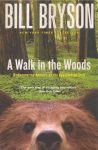
A Walk in the Woods: Rediscovering America on the Appalachian Trail by Bill Bryson, 2/5
Numerous reader recommendations on social media, the subtitle’s promise, and four (!) introductory pages of hyperbolic blurbs made me expect an uplifting, insightful and hilarious account of thru-hiking the Appalachian Trail, with a strong human interest aspect. I could not have been more mistaken in every single way. Over the course of the first half of the book, Bryson hikes less than a quarter of the trail (p. 162) and even that is not continuous; he skips a large portion of Tennessee because interactions with “stupid” cab drivers and, of all things, the state’s history of anti-evolutionary legislature, gave him “a powerful urge not to be this far south any longer” (p.108).
The second half of the book sees the author driving to different parts of the trail for day hikes, seemingly desperate to scrape together enough bleak and preachy anecdotes to earn his book advance. Most of his depictions of the people he encounters along the way are snarky, shallow, and mean-spirited. Trail-related material is generously padded with smug forays into armchair activism, including endless dire predictions about the environment and the imminent demise of various species of plants and animals that, twenty-five years after publication, seem overblown (at least, in the cases I paused to look into further).
The last straw, for me, was when Bryson took a rare break from obsessing about bears and how dangerous and fast and numerous and hungry for hikers they are to express his disapproval of guns and unironically comment “Goodness knows what the world is coming to when park rangers carry service revolvers” (p. 168). At that point, I realized that, much like how Bill Bryson had tried and failed to thru-hike the Appalachian Trail, I had tried and failed to like his book about it.
Why I read it: an oft-mentioned entry in the comments on an Instagram post about favorite (or most meaningful–I can’t remember which) books.
As I Remember
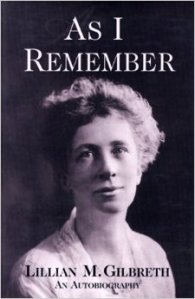 As I Remember: An Autobiography by Lillian M. Gilbreth, 2/5
In contrast to the hilarious escapades and fascinating insights of her children’s book, Cheaper by the Dozen, this posthumously-published autobiography of their mother, Lillian Gilbreth, reads like a cross between a calendar of events and an address book. Several things about the autobiography disturbed me, but it was hard to tell which were down to poor editing, which to Lillian herself and which to the practice of the times. I’d guess that the book’s strange layout in disjointed paragraphs and the abundance of careless typos throughout the text were due to lack of editing. The off-putting use of third-person tense was presumably Lillian’s personal choice, and I assume the bone-dry, unimaginative, unsentimental, relentlessly factual writing style was, at least in part, a reflection of her personality. Since female academics and engineers were an oddity at the time, it is possible that she was used to being on the defensive and avoiding displays of vulnerability. Conceivably, this attitude could be the cause of the chilling lack of emotion, personal details, and believable portrayals of relationships in this account, clearly at odds with the Gilbreths’ success and the obvious value they placed on the other people in their lives (even neighbors who were the barest of acquaintances received a mention in her story).
I feel this book failed on two fronts: it wasn’t demonstrative enough to achieve the humanity of a successful autobiography and it wasn’t technical enough to engender any real understanding of the family business (scientific management and efficiency), despite providing exhaustive accounts of business trips, academic papers and books published, lectures given and contracts secured.
[Why I read it: I enjoyed Cheaper by the Dozen very much and wanted to know more about the mother responsible for such a family.]

