All the Light We Cannot See

All the Light We Cannot See: A Novel by Anthony Doerr, 4/5

I could complain that this story lost me a bit near the end, but that could very well be a symptom of the pure exhaustion I was feeling at 1am, after reading the entire book in one day. While I can’t claim to be as emotionally traumatized (in a good way) as other reviewers seem to be, I did find this to be a well-crafted and beautifully-written work of historical fiction. I especially appreciated how the author was able to keep my interest equally in both the main character’s story arcs, despite switching between them for the bulk of the book in a way that would be annoying if not so thoughtfully done. A prominent MacGuffin and too little time spent weaving the two character’s stories together after they finally met, is all that keeps this from being a classic, in my opinion.

Why I read it: an oft-mentioned entry in the comments on an Instagram post about favorite (or most meaningful–I can’t remember which) books.

Save the Cat! Writes a Novel

Save the Cat! Writes a Novel: The Last Book on Novel Writing You’ll Ever Need by Jessica Brody, 4/5

Inspired by Blake Snyder’s “Save the Cat!” formula for screenwriting, author Jessica Brody breaks down the 15 basic plot points necessary for each of the 10 genres into which all stories can be categorized. Numerous examples and detailed breakdowns of famous novels are provided, making this a convincing, if somewhat tedious read.

Do I think it is necessary to follow a formula while writing a novel? Of course not. Does it steal the magic a bit to identify the unexpectedly unvaried elements that so many stories have in common? Yes, it does. But I can imagine that this handbook could be a lifesaver for a new or struggling author, or anyone looking to troubleshoot plot/pacing issues.

Why I read it: it was on a list of recommended resources for writers on my Instagram feed.

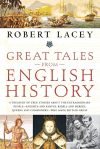
Great Tales from English History

Great Tales from English History: A Treasury of True Stories About the Extraordinary People–Knights and Knaves, Rebels and Heroes, Queens and Commoners–Who Made Britain Great by Robert Lacey, 5/5

This collection of historical stories is deftly woven together, seamlessly transporting the reader through over 9000 years of British history (from the Mesolithic period to postwar times). Famous incidents are presented with a fresh perspective and there is a satisfying variety of fascinatingly obscure events and details included as well. I wish there was a book like this written about every country in the world!

Why I read it: one of the few “required reading” entries from my college days that earned a permanent home on my shelves.

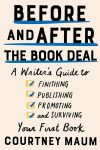
Before and After the Book Deal

Before and After the Book Deal: A Writer’s Guide to Finishing, Publishing, Promoting, and Surviving Your First Book by Courtney Maum, 3/5

Despite Maum’s humorous approach, I found this insider perspective on the book publishing process to be quite off-putting. Seeing the business side of books is truly like visiting the proverbial sausage factory and I am not a happier reader for coming to the realization that “author” hovers near the very bottom of any list of viable career choices, below even those perennial classics–“actor” and “musician.” This state of things is not Maum’s fault, but it is not Donald Trump’s fault either, which is a fact she seems to struggle with at several points in this exceedingly woke book.

Why I read it: it was on a list of recommended resources for writers on my Instagram feed.

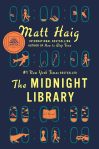
The Midnight Library

The Midnight Library: A Novel by Matt Haig, 4/5

It feels petty to complain that this deeply meaningful novel about existential crisis and regret boils down to a few cliches and wraps up a little too tidily–the fact remains that I read it greedily in one sitting, shedding a few tears in the process. I couldn’t shake an intense feeling that it was written just for me, which I’m sure is exactly how many other readers feel and is a testament to the author’s writing skill and insight into the mental struggles of modern existence.

Why I read it: an oft-mentioned entry in the comments on an Instagram post about favorite (or most meaningful–I can’t remember which) books.
100 Poems

100 Poems by Seamus Heaney, 4/5

I love that this collection of poems was hand-selected by Heaney’s wife and children after his death, not just to include his most loved and famous works, but ones that held personal significance and memories for his family as well. With that in mind, it felt like a privilege to read this collection and made it easier to focus on what I personally found beautiful and resonant, rather than feeling the need to make a value judgement about what I did not understand or connect with. One of my favorite moments was in the poem “Mossbawn: Sunlight,” when a baker is described as dusting the board with “a goose’s wing” (32).

On a separate topic, I want to take this opportunity to send some bad energy towards the fellow library user who felt that it was reasonable to make distracting pencil marks throughout the entire book. I erased every single one.

Why I read it: The author was featured on an episode of Antiques Road Trip and I was surprised that I had never heard of such a famous and beloved poet before.

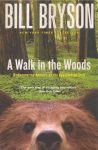
A Walk in the Woods

A Walk in the Woods: Rediscovering America on the Appalachian Trail by Bill Bryson, 2/5

Numerous reader recommendations on social media, the subtitle’s promise, and four (!) introductory pages of hyperbolic blurbs made me expect an uplifting, insightful and hilarious account of thru-hiking the Appalachian Trail, with a strong human interest aspect. I could not have been more mistaken in every single way. Over the course of the first half of the book, Bryson hikes less than a quarter of the trail (p. 162) and even that is not continuous; he skips a large portion of Tennessee because interactions with “stupid” cab drivers and, of all things, the state’s history of anti-evolutionary legislature, gave him “a powerful urge not to be this far south any longer” (p.108).

The second half of the book sees the author driving to different parts of the trail for day hikes, seemingly desperate to scrape together enough bleak and preachy anecdotes to earn his book advance. Most of his depictions of the people he encounters along the way are snarky, shallow, and mean-spirited. Trail-related material is generously padded with smug forays into armchair activism, including endless dire predictions about the environment and the imminent demise of various species of plants and animals that, twenty-five years after publication, seem overblown (at least, in the cases I paused to look into further).

The last straw, for me, was when Bryson took a rare break from obsessing about bears and how dangerous and fast and numerous and hungry for hikers they are to express his disapproval of guns and unironically comment “Goodness knows what the world is coming to when park rangers carry service revolvers” (p. 168). At that point, I realized that, much like how Bill Bryson had tried and failed to thru-hike the Appalachian Trail, I had tried and failed to like his book about it.

Why I read it: an oft-mentioned entry in the comments on an Instagram post about favorite (or most meaningful–I can’t remember which) books.

The Federalist Papers

The Federalist Papers by Alexander Hamilton, James Madison, and John Jay, 5/5

In these 85 essays, originally published in 1787-88 by New York newspapers, three Founding Fathers use the pseudonym “Publius” to argue passionately for the ratification of the newly-proposed Constitution of the United States. Blow by blow, the authors address and dismantle the most popular criticisms of the day, occasionally stooping to empty rhetoric and snide remarks, but more often establishing logical and convincing rebuttals, based on common sense, the events of history, the practices of other nations, and a clear-eyed appraisal of human nature (recognizing both its positive and negative tendencies). It was a strange and refreshing experience to encounter in-depth and nuanced arguments, presented with respect for the everyday reader’s intelligence and belief in their sincere desire to form an educated and fair-minded opinion. Almost two hundred and forty years later, it is easy to be cynical and pessimistic about the future of our country, but it is no exaggeration to say that reading this book, in combination with the actual Constitution, re-kindled my love, pride and admiration for the grand experiment that is the United States of America.

Why I read it: A free copy showed up in my mailbox, completely unsolicited. Unfortunately, I peeled the mailing label off to read the back cover and now can’t recall what organization sent it.

The Incredible Years

The Incredible Years: A Trouble-Shooting Guide for Parents of Children Aged 2-8 Years by Carolyn Webster-Stratton, 2/5

Reading this book made me feel insecure about the more traditional approach to parenting that my husband and I have employed with success for almost three years now. Having one’s ideas challenged is not a bad thing, in itself, but what made me most uncomfortable was how self-conscious I started to feel about interacting with my child. Weirdly, it was the positive interactions that were most affected; instead of feeling joy from being authentic and savoring the moment, I became focused on doing it “by the book” and adding a check mark to my mental record of parenting wins and losses. It was a gross feeling.

While I disagree with the author’s tiresome advice that, seemingly, 99% of behavioral issues are best addressed by ignoring, time-outs, or sticker reward charts, if one can glean what is useful without departing from common sense and simplicity, this book has some helpful ideas to offer. The concept of time-outs is presented in a sensibly structured way and there were good ideas for how to participate in playtime without taking over or getting frustrated (hint: imitate and describe what is happening instead of dictating). Also, since I grew up as an introverted homeschool kid, it was helpful to be reminded that integrating well with social groups is a skill that parents can help their children develop, not an inevitable byproduct of personality.

Why I read it: a hand-me-down (without a specific recommendation) from a friend.

Extreme Birds

Extreme Birds: the world’s most extraordinary and bizarre birds by Dominic Couzens, 4/5

This book delivers exactly what is promised on its front cover, packed with strange and astonishing facts that I expect would interest anyone (not just people who are into birds).

Why I read it: my husband bought it at a bookstore for some unknown reason.