
Tagged: self-help
Tomorrowmind
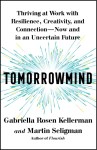
Tomorrowmind: Thriving at Work with Resilience, Creativity, and Connection–Now and in an Uncertain Future by Gabriella Rosen Kellerman and Martin Seligman, 1/5
This book not only represents everything that is classically hateable about pop psychology and the self-help genre, it plumbs new depths of dystopian deception. To be fair, there were warning signs, starting with the point in the introduction at which the authors straight-facedly suggest PRISM as a “handy (if out of order) acronym” to remember the concepts of resilience and cognitive agility (R), meaning and mattering (M), rapid rapport to build social support (S), prospection (P), and creativity and innovation (I). That peculiarly unhelpful scrambled egg of an acronym should have been my clue to close the covers and move on down my to-read list. Unfortunately, I decided to wade through a repetitive, half-baked, jargon-laden mess that ultimately morphed into a sales pitch for BetterUp, written by its chief product officer (Kellerman) and, as a little further research quickly revealed, the namesake of BetterUp’s foray into artificial intelligence–MartyAI.

How dark is that? Not only does Tomorrowmind fail to provide anything of value to readers struggling to cope with the stress of an increasingly volatile, technology-driven, future-oriented work environment, the authors actually manage to leverage that same audience in support of their own contribution to the dystopian future they pretend to address–offering the life coaching services of a lifeless, ai-powered chatbot. Ironically, Kellerman and Seligman have achieved more success by pivoting their psychology careers to address modern times than many of the people they use as positive examples in their book. Needless to say, their success hasn’t come from subscribing to life coaching services, buying self-help books, or applying the muddled concepts on view in this embarrassment of a contribution to literature.
Why I read it: The topic sounded interesting and I had respect for Seligman based on his book Learned Optimism.
12 Rules for Life
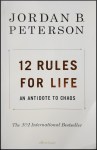
12 Rules for Life: An Antidote to Chaos by Jordan B. Peterson, 4/5
Jordan Peterson is, in my opinion, one of the most brilliant thinkers and lecturers of the 21st-century in his field and, if he were a more intentional writer, I believe he would deserve a place with the immortal greats of philosophy. Unfortunately, instead of utilizing the writing process to distill and clarify his ideas, he settles for more or less transferring his thought processes straight onto the page. The result is very uneven in tone, bouncing wildly between folksy storytelling and esoteric musings that challenged even my well-trained attention span (exhibit A: Ornithology: An Introduction). It took three tries for me to make it through this book, but I was rewarded by Peterson’s fearless acceptance of the most terrible aspects of human existence and the deeply satisfying integration of that chaos into a perspective that ennobles the common man and makes one want to pick up a sword and fight dragons.
Rule 1: Stand up straight with your shoulders back.
Rule 2: Treat yourself like someone you are responsible for helping.
Rule 3: Make friends with people who want the best for you.
Rule 4: Compare yourself to who you were yesterday, not to who someone else is today.
Rule 5: Do not let your children do anything that makes you dislike them.
Rule 6: Set your house in perfect order before you criticize the world.
Rule 7: Pursue what is meaningful (not what is expedient).
Rule 8: Tell the truth–or, at least, don’t lie.
Rule 9: Assume that the person you are listening to might know something you don’t.
Rule 10: Be precise in your speech.
Rule 11: Do not bother children when they are skateboarding.
Rule 12: Pet a cat when you encounter one on the street.
Why I read it: I became familiar with Peterson when he achieved viral popularity a few years ago.
How to Win Friends & Influence People
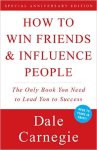
How to Win Friends & Influence People: The Only Book You Need to Lead You to Success by Dale Carnegie, 3/5
In today’s saturated self-help market, it takes a little imagination to understand just how novel and influential this first-of-its-kind work must have been, back in 1936. Carnegie’s “principles” are practical and based on a commonsense understanding of psychology that, though now well-worn, have stood the test of time. Charming anecdotes illustrate the following principles:
Three Fundamental Techniques in Handling People
Principle 1: Don’t criticize, condemn or complain.
Principle 2: Give honest and sincere appreciation.
Principle 3: Arouse in the other person an eager want.
Six Ways to Make People Like You
Principle 1: Become genuinely interested in other people.
Principle 2: Smile
Principle 3: Remember that a person’s name is to that person the sweetest and most important sound in any language.
Principle 4: Be a good listener. Encourage others to talk about themselves.
Principle 5: Talk in terms of the other person’s interests.
Principle 6: Make the other person feel important–and do it sincerely.
Win People to Your Way of Thinking
Principle 1: The only way to get the best of an argument is to avoid it.
Principle 2: Show respect for the other person’s opinions. Never say, “You’re wrong.”
Principle 3: If you are wrong, admit it quickly and emphatically.
Principle 4: Begin in a friendly way.
Principle 5: Get the other person saying “yes, yes” immediately.
Principle 6: Let the other person do a great deal of the talking.
Principle 7: Let the other person feel that the idea is his or hers.
Principle 8: Try honestly to see things from the other person’s point of view.
Principle 9: Be sympathetic with the other person’s ideas and desires.
Principle 10: Appeal to the nobler motives.
Principle 11: Dramatize your ideas.
Principle 12: Throw down a challenge.
Be a Leader
Principle 1: Begin with praise and honest appreciation.
Principle 2: Call attention to people’s mistakes indirectly.
Principle 3: Talk about your own mistakes before criticizing the other person.
Principle 4: Ask questions instead of giving direct orders.
Principle 5: Let the other person save face.
Principle 6: Praise the slightest improvement and praise every improvement. Be “hearty in your approbation and lavish in your praise.”
Principle 7: Give the other person a fine reputation to live up to.
Principle 8: Use encouragement. Make the fault seem easy to correct.
Principle 9: Make the other person happy about doing the thing you suggest.
Why I read it: a recommendation from my sister.
Positive Parenting with a Plan

Positive Parenting with a Plan (Grades K-12): FAMILY Rules by Matthew A. Johnson, 2/5
At first, I was put off by the author’s cocksure tone, cringey attempts at humor, and brazen assertion that common sense and anecdotal evidence are perfectly reasonable substitutes for scientific research with regard to his scheme of essentially gamifying family life. However, after reading a few of the aforementioned anecdotes, I learned that there is a level of family dysfunction that I simply was not even aware existed and might credibly justify the extreme approach that this book lays out. Call me naive, but I didn’t know that many children are so out of control that the only threat parents can effectively use is to literally send them away to live with other family members or at one of the numerous long-term treatment facilities that apparently are a thing that exists! In a situation in which, God forbid, my child was physically assaulting me, committing crimes, doing drugs, and causing thousands of dollars of property damage, I guess I would try anything, no matter how contrived, extreme, and unsupported by scientific research it might feel.
Why I read it: it was in a box of hand-me-down books from a friend.
Discipline Equals Freedom

Discipline Equals Freedom: Field Manual MK1-MOD1 (expanded edition) by Jocko Willink, 2/5
Reading this book is certainly more convenient than buying 200 motivational posters and sitting in a dark room while someone shouts their slogans in your ear and smacks you with the cardboard tubes they were shipped in.
Why I read it: my husband bought it.
The Code. The Evaluation. The Protocols.

The Code. The Evaluation. The Protocols. Striving to Become an Eminently Qualified Human by Jocko Willink, with Dave Berke and Sarah Armstrong, 1/5
I have a ton of respect for Jocko Willink…BUT…this book is so absolutely ridiculous that I’m not even sure if his advice to “Set physical goals like running a 5K or deadlifting 8000 pounds” (2.4) is a typo or not. Overlooking the trademark typewriter font (which is borderline unbearable), awkward formatting, and repetitive language, I still cannot imagine many scenarios in which a rigorous, score-based method of evaluating one’s progress towards godhood would be necessary or useful. The “Protocols” are a one-size-fits-all series of steps for addressing each of life’s little problems (such as death, trauma, and addiction) in a style that can only be described as bizarrely confident and obliviously motivational.
Why I read it: my husband bought several of Jocko’s books.
Adult Children of Emotionally Immature Parents
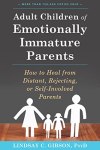
Adult Children of Emotionally Immature Parents: How to Heal from Distant, Rejecting, or Self-Involved Parents by Lindsay C. Gibson, 2/5
This book is shallow as a parking lot puddle, full of cringey anecdotes and generic advice. The reader is encouraged, regardless of their own psychological state, to assess problematic people in their life using criteria so broad and subjective that a diagnosis of “emotionally immature” is practically guaranteed. Once their problems have predictably been blamed on childhood and upbringing, the inevitable advice to “awaken your True Self” by finding your inner child ensues. If the author is correct that who you were before fourth grade is key, then I guess my True Self is a horse?
Why I read it: Lent to me (but pointedly not recommended) by a family member who evidently knows me extremely well.
The Body Keeps the Score

The Body Keeps the Score: Mind, brain and body in the transformation of trauma by Bessel van der Kolk, 3/5
This disturbing and rather lengthy book was not as self-help oriented as I expected it to be. The author expresses a career’s worth of frustration with the medical establishment’s over-reliance on DSM-facilitated symptom labeling and prescription medication. He makes an impassioned case for a more holistic approach to understanding trauma and its varied effects, particularly with regard to brain function, but I felt that he relied heavily on anecdotal evidence, demonstrated an oversimplified understanding of neurobiology, and was perhaps more interested in finding research and studies with favorable outcomes than in assessing their quality.
As far as treatment is concerned, the author is all over the place, telling stories about clients who had success with EMDR, internal family systems, yoga, theater, HRV training, neurofeedback, journaling, massage, and more. Most of the cases he presents are very extreme and I felt like my own experiences didn’t even register on that scale.
Why I read it: a midwife suggested that it might help me process a traumatic birth experience.
Leadership Strategy and Tactics

Leadership Strategy and Tactics: Field Manual by Jocko Willink, 3/5
I appreciate the specific leadership (and followership) scenarios that Willink addresses in this book, but it feels somewhat contrived and disjointed. I suspect it would make a better reference resource than a cover-to-cover read.
Why I read it: working my way through Jocko Willinks’ books, if slightly out of order.
Extreme Ownership
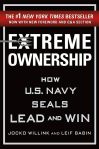
Extreme Ownership: How U.S. Navy Seals Lead and Win by Jocko Willink and Leif Babin, 4/5
This book’s layout is flawless: each chapter starts with an engaging war story, extracts a leadership principle for further analysis, and concludes with a real-life application to business. My only complaint is that the authors often stop short in each example of exploring the actual results of their approach, sometimes failing to address the outcome altogether and other times glossing over it with vague descriptions of generic success. The question left, for me, is not whether the authors are effective hammers, but what scenarios realistically constitute appropriate nails.
Why I read it: It’s been on my radar for quite a while.
 OmniRambles