
Tagged: psychology
Stalking the Wild Pendulum

Stalking the Wild Pendulum: On the Mechanics of Consciousness by Itzhak Bentov, 3/5
It would be too easy to dismiss this book, with all its talk of holograms, vibrations, and altered states of consciousness, as mere LSD-fueled, new-age nonsense. I think it deserves a closer look, if only to appreciate the author’s admirable accomplishment of developing a comprehensive theory of life, the universe and everything.
Using clear language, helpful chapter summaries, and a reasonable progression of thought, Bentov exploits the mysterious and seemingly unnatural uncertainty that exists at the extreme ends of a pendulum-like or oscillating movement in quantum mechanics to formulate a conception of reality as “a void filled with pulsating fields” (167) that form an “interference pattern or hologram of knowledge information we can call the ‘universal mind'” (157). Into this framework neatly slot the implausible yet persistently-reported human phenomena of telepathy, clairvoyance, out-of-body experience, enlightenment, reincarnation, etc.
Based on my own summary above, this seems the exact type of book that I would mercilessly flay as worthless woo-woo garbage. So why do I think it is actually something special? For one thing, I admire the author’s humble curiosity and undeniable intellect. While acknowledging the deeply unconventional nature of his own ideas and that “few scientists will read this book to the end” (2), he is not defensively anti-science or anti-anything (which is more than can be said for many people). Adding to its appeal, for me, is the fact that this book is the product of living-room discussions with friends and published with their encouragement, not in an attempt to sell something or gain prestige. How many people do you know with whom you could discuss the shape of the universe and the meaning of existence? I, for one, am envious. Any lingering doubts I might have had about this book and its author were dispelled by reading his Wikipedia page, which I refrained from doing earlier to avoid bias. He seems to have been a truly remarkable mind and a contributor of practical value, as well as theoretical, to humanity.
Why I read it: the title caught my eye in a used bookstore, but I didn’t want to spend money without knowing if it was utter nonsense, so I got it from the library later. Now, I wish I had bought it.
Tomorrowmind
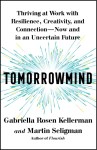
Tomorrowmind: Thriving at Work with Resilience, Creativity, and Connection–Now and in an Uncertain Future by Gabriella Rosen Kellerman and Martin Seligman, 1/5
This book not only represents everything that is classically hateable about pop psychology and the self-help genre, it plumbs new depths of dystopian deception. To be fair, there were warning signs, starting with the point in the introduction at which the authors straight-facedly suggest PRISM as a “handy (if out of order) acronym” to remember the concepts of resilience and cognitive agility (R), meaning and mattering (M), rapid rapport to build social support (S), prospection (P), and creativity and innovation (I). That peculiarly unhelpful scrambled egg of an acronym should have been my clue to close the covers and move on down my to-read list. Unfortunately, I decided to wade through a repetitive, half-baked, jargon-laden mess that ultimately morphed into a sales pitch for BetterUp, written by its chief product officer (Kellerman) and, as a little further research quickly revealed, the namesake of BetterUp’s foray into artificial intelligence–MartyAI.

How dark is that? Not only does Tomorrowmind fail to provide anything of value to readers struggling to cope with the stress of an increasingly volatile, technology-driven, future-oriented work environment, the authors actually manage to leverage that same audience in support of their own contribution to the dystopian future they pretend to address–offering the life coaching services of a lifeless, ai-powered chatbot. Ironically, Kellerman and Seligman have achieved more success by pivoting their psychology careers to address modern times than many of the people they use as positive examples in their book. Needless to say, their success hasn’t come from subscribing to life coaching services, buying self-help books, or applying the muddled concepts on view in this embarrassment of a contribution to literature.
Why I read it: The topic sounded interesting and I had respect for Seligman based on his book Learned Optimism.
We Who Wrestle with God

We Who Wrestle with God: Perceptions of the Divine by Jordan B. Peterson, 4/5
A good indicator of Truth with a capital T is that the insights it produces expand the mind and effortlessly illuminate even the darkest corners of a topic, where lesser conceptions fear to tread. There are not many corners more dark than the blood-soaked, primal tales of the Old Testament around which Peterson’s bold and wide-ranging existential exploration occurs. More than just an in-depth character study of God, as revealed through crucial episodes of the Old Testament, this substantial work explores our relationship with the intangible realities of existence on both an individual and societal level, and the codification of these eternal truths into our oldest and most meaningful stories.
Free of the timeworn arguments and vocabulary of Christian apologetics, Peterson’s approach is sure to earn him a “straight to hell” label from many (and not just fundamentalists). I will admit to feeling an uneasy chill, that only others with a religious background would likely understand, at the language of the last couple paragraphs in particular. I won’t go into detail, though, because given the context of the previous 500+ pages, I believe the issue is merely evidence of the author’s tendency to follow a train of thought wherever it may lead, even if it means committing the sin of entering new, unexplored territory in what is supposed to be concluding material. Speaking of sins, I must comment on the astounding number of typos and errors this book contains–by far the most I have ever encountered in a published work. Hopefully these will be rectified in future editions.
Lest I end this review on a sour note, let me re-iterate how amazed I am that a work so broad in scope could be, at the same time, incredibly nuanced. There is something inspired about Peterson’s perspective, which allows him to dissect the most challenging and abstract aspects of the human experience without killing its joy and mystery.
Why I read it: I was curious about Peterson’s theological beliefs, and trusted that he would have an interesting and intellectual approach to the topic.
12 Rules for Life
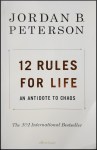
12 Rules for Life: An Antidote to Chaos by Jordan B. Peterson, 4/5
Jordan Peterson is, in my opinion, one of the most brilliant thinkers and lecturers of the 21st-century in his field and, if he were a more intentional writer, I believe he would deserve a place with the immortal greats of philosophy. Unfortunately, instead of utilizing the writing process to distill and clarify his ideas, he settles for more or less transferring his thought processes straight onto the page. The result is very uneven in tone, bouncing wildly between folksy storytelling and esoteric musings that challenged even my well-trained attention span (exhibit A: Ornithology: An Introduction). It took three tries for me to make it through this book, but I was rewarded by Peterson’s fearless acceptance of the most terrible aspects of human existence and the deeply satisfying integration of that chaos into a perspective that ennobles the common man and makes one want to pick up a sword and fight dragons.
Rule 1: Stand up straight with your shoulders back.
Rule 2: Treat yourself like someone you are responsible for helping.
Rule 3: Make friends with people who want the best for you.
Rule 4: Compare yourself to who you were yesterday, not to who someone else is today.
Rule 5: Do not let your children do anything that makes you dislike them.
Rule 6: Set your house in perfect order before you criticize the world.
Rule 7: Pursue what is meaningful (not what is expedient).
Rule 8: Tell the truth–or, at least, don’t lie.
Rule 9: Assume that the person you are listening to might know something you don’t.
Rule 10: Be precise in your speech.
Rule 11: Do not bother children when they are skateboarding.
Rule 12: Pet a cat when you encounter one on the street.
Why I read it: I became familiar with Peterson when he achieved viral popularity a few years ago.
How to Win Friends & Influence People
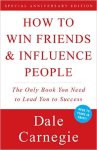
How to Win Friends & Influence People: The Only Book You Need to Lead You to Success by Dale Carnegie, 3/5
In today’s saturated self-help market, it takes a little imagination to understand just how novel and influential this first-of-its-kind work must have been, back in 1936. Carnegie’s “principles” are practical and based on a commonsense understanding of psychology that, though now well-worn, have stood the test of time. Charming anecdotes illustrate the following principles:
Three Fundamental Techniques in Handling People
Principle 1: Don’t criticize, condemn or complain.
Principle 2: Give honest and sincere appreciation.
Principle 3: Arouse in the other person an eager want.
Six Ways to Make People Like You
Principle 1: Become genuinely interested in other people.
Principle 2: Smile
Principle 3: Remember that a person’s name is to that person the sweetest and most important sound in any language.
Principle 4: Be a good listener. Encourage others to talk about themselves.
Principle 5: Talk in terms of the other person’s interests.
Principle 6: Make the other person feel important–and do it sincerely.
Win People to Your Way of Thinking
Principle 1: The only way to get the best of an argument is to avoid it.
Principle 2: Show respect for the other person’s opinions. Never say, “You’re wrong.”
Principle 3: If you are wrong, admit it quickly and emphatically.
Principle 4: Begin in a friendly way.
Principle 5: Get the other person saying “yes, yes” immediately.
Principle 6: Let the other person do a great deal of the talking.
Principle 7: Let the other person feel that the idea is his or hers.
Principle 8: Try honestly to see things from the other person’s point of view.
Principle 9: Be sympathetic with the other person’s ideas and desires.
Principle 10: Appeal to the nobler motives.
Principle 11: Dramatize your ideas.
Principle 12: Throw down a challenge.
Be a Leader
Principle 1: Begin with praise and honest appreciation.
Principle 2: Call attention to people’s mistakes indirectly.
Principle 3: Talk about your own mistakes before criticizing the other person.
Principle 4: Ask questions instead of giving direct orders.
Principle 5: Let the other person save face.
Principle 6: Praise the slightest improvement and praise every improvement. Be “hearty in your approbation and lavish in your praise.”
Principle 7: Give the other person a fine reputation to live up to.
Principle 8: Use encouragement. Make the fault seem easy to correct.
Principle 9: Make the other person happy about doing the thing you suggest.
Why I read it: a recommendation from my sister.
The Midnight Library
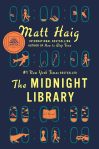
The Midnight Library: A Novel by Matt Haig, 4/5
It feels petty to complain that this deeply meaningful novel about existential crisis and regret boils down to a few cliches and wraps up a little too tidily–the fact remains that I read it greedily in one sitting, shedding a few tears in the process. I couldn’t shake an intense feeling that it was written just for me, which I’m sure is exactly how many other readers feel and is a testament to the author’s writing skill and insight into the mental struggles of modern existence.
Why I read it: an oft-mentioned entry in the comments on an Instagram post about favorite (or most meaningful–I can’t remember which) books.
The Incredible Years

The Incredible Years: A Trouble-Shooting Guide for Parents of Children Aged 2-8 Years by Carolyn Webster-Stratton, 2/5
Reading this book made me feel insecure about the more traditional approach to parenting that my husband and I have employed with success for almost three years now. Having one’s ideas challenged is not a bad thing, in itself, but what made me most uncomfortable was how self-conscious I started to feel about interacting with my child. Weirdly, it was the positive interactions that were most affected; instead of feeling joy from being authentic and savoring the moment, I became focused on doing it “by the book” and adding a check mark to my mental record of parenting wins and losses. It was a gross feeling.
While I disagree with the author’s tiresome advice that, seemingly, 99% of behavioral issues are best addressed by ignoring, time-outs, or sticker reward charts, if one can glean what is useful without departing from common sense and simplicity, this book has some helpful ideas to offer. The concept of time-outs is presented in a sensibly structured way and there were good ideas for how to participate in playtime without taking over or getting frustrated (hint: imitate and describe what is happening instead of dictating). Also, since I grew up as an introverted homeschool kid, it was helpful to be reminded that integrating well with social groups is a skill that parents can help their children develop, not an inevitable byproduct of personality.
Why I read it: a hand-me-down (without a specific recommendation) from a friend.
Positive Parenting with a Plan

Positive Parenting with a Plan (Grades K-12): FAMILY Rules by Matthew A. Johnson, 2/5
At first, I was put off by the author’s cocksure tone, cringey attempts at humor, and brazen assertion that common sense and anecdotal evidence are perfectly reasonable substitutes for scientific research with regard to his scheme of essentially gamifying family life. However, after reading a few of the aforementioned anecdotes, I learned that there is a level of family dysfunction that I simply was not even aware existed and might credibly justify the extreme approach that this book lays out. Call me naive, but I didn’t know that many children are so out of control that the only threat parents can effectively use is to literally send them away to live with other family members or at one of the numerous long-term treatment facilities that apparently are a thing that exists! In a situation in which, God forbid, my child was physically assaulting me, committing crimes, doing drugs, and causing thousands of dollars of property damage, I guess I would try anything, no matter how contrived, extreme, and unsupported by scientific research it might feel.
Why I read it: it was in a box of hand-me-down books from a friend.
Discipline Equals Freedom

Discipline Equals Freedom: Field Manual MK1-MOD1 (expanded edition) by Jocko Willink, 2/5
Reading this book is certainly more convenient than buying 200 motivational posters and sitting in a dark room while someone shouts their slogans in your ear and smacks you with the cardboard tubes they were shipped in.
Why I read it: my husband bought it.
The Code. The Evaluation. The Protocols.

The Code. The Evaluation. The Protocols. Striving to Become an Eminently Qualified Human by Jocko Willink, with Dave Berke and Sarah Armstrong, 1/5
I have a ton of respect for Jocko Willink…BUT…this book is so absolutely ridiculous that I’m not even sure if his advice to “Set physical goals like running a 5K or deadlifting 8000 pounds” (2.4) is a typo or not. Overlooking the trademark typewriter font (which is borderline unbearable), awkward formatting, and repetitive language, I still cannot imagine many scenarios in which a rigorous, score-based method of evaluating one’s progress towards godhood would be necessary or useful. The “Protocols” are a one-size-fits-all series of steps for addressing each of life’s little problems (such as death, trauma, and addiction) in a style that can only be described as bizarrely confident and obliviously motivational.
Why I read it: my husband bought several of Jocko’s books.
 OmniRambles