
Tagged: Nonfiction
It’s Not About the Shark
 It’s Not About the Shark: How to Solve Unsolvable Problems by David Niven, Ph.D., 3/5
Everyone likes a good story and this book is full of them, from Steven Spielberg’s broken mechanical shark to the unintuitive results of a psychological study involving marshmallows and SAT scores. However, the point of the book is ostensibly to enlighten, not just entertain, and this is where the weaknesses start, in my opinion. Every couple of anecdotes, Niven stops to draw conclusions and give tips about problem solving which tend to be counter-cultural and surprising, such as “when you are stuck, find a good distraction that takes you away from your problems” (22) or “don’t follow the leader…[who] in many cases is just the person with bad ideas who has been around the longest” (182). These tips are generally supported by two or three cherry-picked examples or studies and represent a gross oversimplification and overly-broad application of psychological findings. For example, just because doctors in a study who were given candy made more accurate diagnoses doesn’t necessarily mean “eat a candy bar” is helpful advice (though, in case you needed an excuse to break your diet, this advice can be found on page 40).
[Why I read it: I think my friend Joy mentioned it, but I’m not sure. I also had a good feeling about the author’s name, which I thought I recognized, but it turns out I was thinking about a different David Niven (the English actor).]
The Design of Everyday Things
 The Design of Everyday Things: Revised and Expanded Edition by Don Norman, 2/5
This soporific book is a sort of spiritual antithesis to Brian Hayes’ Infrastructure: A Field Guide to the Industrial Landscape: while the latter opened my eyes to the surprising truth that good writing can make even the most seemingly boring topic an absolute delight, the former reveals that other styles of writing can make even the most interesting topic a dreary chore to read about. And the topic is interesting: who hasn’t felt like an idiot when struggling with an object that was created without regard to the principles of human-centered design (I’m thinking of you, shower faucets at a friend’s house)?
Following the author’s preface, which revels unbecomingly in the previous edition’s alleged popularity, influence and inspiring effect on readers, comes pages and pages of unmemorable text about the “seven stages” of this and “three levels” of that–a sort of flow-chart in prose (almost as tedious to read as you might imagine). Interesting examples of good and bad design feel few and Norman seems to spend more time criticizing designs than offering any creative solutions. For example, he repeatedly states that one human mistake should never be enough to cause a catastrophe in, say, a chemical processing plant, but he doesn’t give many realistic ideas for how a sufficiently complicated, resilient system, run by humans could actually live up to his criteria.
All in all, it is difficult to say what it is about Norman’s writing style that grates on me so strongly. He is the kind of author who briefly mentions a subject, then stops to tell you that more info can be found about it online (which is already reasonably obvious), then goes on to say that you could use Google to find the info (who doesn’t?), and then gives you the specific words you should use in Google to find the information, being sure to remind you to use quotation marks around your search phrase (we get it already! Google it!). In addition, I suspect that there is something about his general sentence formation that tends toward the mind-numbing. It’s not that he uses difficult words or concepts, it’s just that I seemed to lose interest about three-quarters through many of his sentences. I literally spaced out twice while reading the following gem and have still failed to process its main meaning: “Like prototyping, testing is done in the problem specification phase to ensure that the problem is well understood, then done again in the problem solution phase to ensure that the new design meets the needs and abilities of those who will use it” (229). There, I zoned out again, mid-sentence. It’s magical.
In the acknowledgments, Norman thanks his wife for telling him when he was “stupid, redundant, and overly wordy” (303). Ironically, two-thirds of those words are ones I would still use to describe the book (in case you’re curious which two words, please know that the author is definitely not stupid). Looks like Norman needs another wife or two.
[Why I read it: my friend, Joy, mentioned reading it in her book club and the topic sounded interesting so I ordered it from the library.]
Increase Your Financial IQ
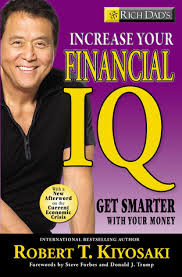 Increase Your Financial IQ: Get Smarter with Your Money by Robert T. Kiyosaki, 3/5
This book is a good follow-up to the too-anecdotal Rich Dad Poor Dad because it provides a variety of practical details and observations that give the reader an increased understanding of Kiyosaki’s financial philosophy. Some of his ideas make sense immediately (e.g. your house is not an asset, protecting your money with smart tax strategies, the power of information) but other concepts are still hazy to me (e.g. what is “leverage,” viewing bank loans as tax-free money).
Kiyosaki makes a couple of points that I found very depressing but illuminating. First, he advocates working for a network marketing company in order to learn sales skills and how to build a business. Network marketing gives me the creeping horrors and if that’s what it takes to be an entrepreneur, I might not be cut out for it. Secondly, he quotes a friend who says “Entrepreneurs have two characteristics…ignorance and courage” (194). This is a phenomenon I’ve noticed in many areas of life, not just business-building. It’s the blindly optimistic and self-confident who go out and do things successfully, not necessarily the people with real talent or skills.
[Why I read it: Kiyosaki doles out the info pretty thinly in his books and you need to read a few to get a handle on his ideas.]
Graham Crackers
 Graham Crackers: Fuzzy Memories, Silly Bits, and Outright Lies by Graham Chapman, compiled by Jim Yoakum, 4/5
This strange little compilation of miscellaneous writings by the late Graham Chapman (of Monty Python notoriety) is entertaining and provides some welcome insight into the inner workings of one of England’s funniest groups of writers.
[Why I read it: I found it in the thrift store.]
The ABC’s of Property Management
 The ABC’s of Property Management: What You Need to Know to Maximize Your Money Now by Ken McElroy, 2/5
This book contains practical information and advice in quantity and quality commensurate with a mere introduction to a book titled The ABC’s of Property Management. The author seems much more interested in scaring readers into hiring a professional property management company than in providing any information of real value. The main point I got out of the book was that property managers need to be very assertive people because they are required to ruthlessly screen prospective renters and to nickel and dime their renters to the absolute limit (which limit is established by calling the competition every month to gather information while posing as an ordinary shopper).
[Why I read it: I’m trying to increase my knowledge of personal finance by reading books in the “Rich Dad” series, starting with Rich Dad Poor Dad.]
Rich Dad Poor Dad
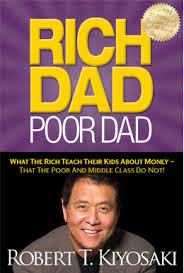 Rich Dad Poor Dad: What the Rich Teach Their Kids About Money–That the Poor and Middle Class Do Not by Robert T. Kiyosaki, 3/5
Using simplistic diagrams and entertaining anecdotes, Kiyosaki preaches a financial message that is as appealing as it is suspiciously pat: don’t just work for money, make money work for you. By this, I gather that he means to focus on acquiring income-producing assets instead of the more traditional approach of focusing on increasing your salary, only to spend it on ever-growing liabilities and expenses such as taxes, a too-big house, or expensive junk. Additionally, Kiyosaki points out that it is the hardworking self-employed and 9-5 rat racers who are, unfairly, the ones most gouged by taxes (a point to which I can personally attest)–the passive income and strategically-formed corporations of the financially literate are much less susceptible to taxes.
That said, I am very suspicious (I could end the sentence there but I’ll continue) of the advice of someone who makes money partly by selling hyped-up books, games and seminars about making money. It seems that there is an inherent conflict of interest or, at least, an unhealthy circularity similar to a career adviser whose own career is giving career advice. However, Kiyosaki’s basic ideas seem sensible and I could imagine them successfully directing the energies of someone who has set their mind on working hard to become very rich. (Of course, this is the kind of person who would likely become wealthy with or without the help of this book.) People looking to get rich quick will be disappointed–Rich Dad Poor Dad is more philosophical than practically helpful. I think its main value is to provide some context and an engaging introduction to Kiyosaki’s financial strategies. I plan to read his other books, which will hopefully substantiate his claims with rather more technical information and fewer generalities.
[Why I read it: I think I read this once years and years ago, but it came up again recently because my brother is researching the idea of investing in rental properties and mentioned reading it.]
The Talent Code
The Talent Code: Greatness Isn’t Born. It’s Grown. Here’s How. by Daniel Coyle, 4/5
Exploring the manifestations of talent in diverse subjects that range from Brazilian footballers to the Brontë sisters, Coyle proposes three factors that give rise to all the athletic, musical and mental skills that seem so innate and unattainable to us otherly-gifted: deep practice, ignition, and master coaching. Of these three elements, I found the first to be most interesting because it provides a description of the physical effects of concentrated practice. Now, I have logged numerous hours of piano practice (though, admittedly, somewhat fewer hours of “deep practice”), but never understood that this kind of focused skill-development was actually wrapping nerve fibers in my brain in layers of an insulating substance called myelin. This magical myelin affects the timing with which neurons fire electrical impulses and the speed with which these impulses travel, resulting in an increase in whatever skill is being practiced, regardless of the nature of the skill or the “natural talent” of the person involved. The implications are immense: suddenly it seems that real genius is the drive to perform thousands of hours of deep practice, not to have a high IQ, innate ability, or access to top coaching from the beginning. Also, it definitively establishes the value and efficiency of that painfully-focused, mentally-exhausting style of practicing that might otherwise cause discouragement when it does not generate immediately-impressive improvement.
Coyle’s writing style is entertaining and easy to read, but is somewhat lacking from a scholarly point of view; he is, after all, no neurologist or scientific researcher. Some of the studies he references and examples he uses seem questionable, and his sources are rather casually collected in sparse end notes. All in all, this book’s value is more in its descriptive powers than its prescriptive ones: lacking any of the three elements of talent (deep practice, ignition or master coaching), you are unlikely to become a world-class anything, whether you read it or not. However, lots of Coyle’s observations and claims resonated with me because I am fascinated by the learning process and hunger for accomplishment in a variety of areas.
[Why I read it: a friend, Joy, mentioned that she was reading it and got me interested.]
The Histories
 The Histories by Herodotus, translated by Aubrey de Sélincourt, 3/5
At its best, this fifth-century B.C. account of cultures and conflicts in the areas surrounding the Mediterranean tells epically ferocious tales of questionable veracity. At its worst, it reads like the dryer, more tedious parts of 20,000 Leagues Under the Sea (just substitute Greeks and Persians for fish and seaweed).
[Why I read it: Found it in the thrift store and it seemed like a good tool with which to combat my [gradually lessening] ignorance of Classical literature.]
The Constitution of the United States of America
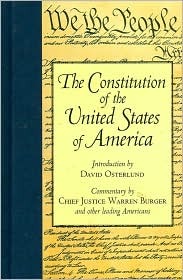 The Constitution of the United States of America, 5/5
It is tax season, so perhaps I can be forgiven for expecting “the supreme law of the land” to be as ludicrously bloated and unreadable as the Internal Revenue Code. Fortunately, it is not so–the fifty-five delegates to the 1787 Philadelphia Convention crafted a document of startling elegance, simplicity and practicality (probably marking the first and last time such adjectives could be used to describe a piece of legislation).
[Why I read it: I planned to send this copy to my brother after reading it myself, but it sat in the pile of books by my bed until it became assigned reading in my business law class.]
As You Wish
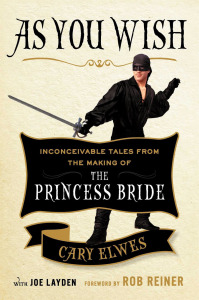 As You Wish: Inconceivable Tales from the Making of The Princess Bride by Cary Elwes with Joe Layden, 2/5
This underwhelming book, written by “Wesley” from the movie The Princess Bride, does contain some entertaining stories but consists mostly of uninteresting prose meant more to beef up the word count than to communicate anything insightful. Along with intensely boring descriptions of how many chairs were at the first table read and exactly what kind of sandwiches were provided, is a tiresome quantity of trite tributes to the general awesomeness of everyone involved with the film. And Elwes is not the only one spouting sweet nothings about the rest of the cast: there are also numerous interviews with relevant people who mostly seem to have nothing very meaningful to say and say it in a very generic way. Even worse, these interviews are set apart from the main text in grey boxes that fragment the reading experience, making it disjointed and annoying. All in all, I’d say the few really interesting anecdotes it contains make the book worth reading for fans of the movie, but they shouldn’t expect too much.
[Why I read it: I saw the title while ordering The Princess Bride novel at the library.]

