
Tagged: myth
Norse Mythology
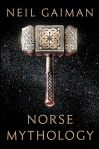
Norse Mythology by Neil Gaiman, 5/5
I am not a fan of Neil Gaiman’s work in general, but there is no denying the excellence of this retelling of tales from Norse mythology. The tone is fresh, without too much anachronism; sensitive and poetic, not melodramatic; and witty without flippancy.
Why I read it: my husband enjoyed the audiobook and I liked the bit that I overheard, so he bought a hard copy.
12 Rules for Life
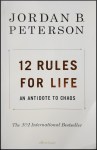
12 Rules for Life: An Antidote to Chaos by Jordan B. Peterson, 4/5
Jordan Peterson is, in my opinion, one of the most brilliant thinkers and lecturers of the 21st-century in his field and, if he were a more intentional writer, I believe he would deserve a place with the immortal greats of philosophy. Unfortunately, instead of utilizing the writing process to distill and clarify his ideas, he settles for more or less transferring his thought processes straight onto the page. The result is very uneven in tone, bouncing wildly between folksy storytelling and esoteric musings that challenged even my well-trained attention span (exhibit A: Ornithology: An Introduction). It took three tries for me to make it through this book, but I was rewarded by Peterson’s fearless acceptance of the most terrible aspects of human existence and the deeply satisfying integration of that chaos into a perspective that ennobles the common man and makes one want to pick up a sword and fight dragons.
Rule 1: Stand up straight with your shoulders back.
Rule 2: Treat yourself like someone you are responsible for helping.
Rule 3: Make friends with people who want the best for you.
Rule 4: Compare yourself to who you were yesterday, not to who someone else is today.
Rule 5: Do not let your children do anything that makes you dislike them.
Rule 6: Set your house in perfect order before you criticize the world.
Rule 7: Pursue what is meaningful (not what is expedient).
Rule 8: Tell the truth–or, at least, don’t lie.
Rule 9: Assume that the person you are listening to might know something you don’t.
Rule 10: Be precise in your speech.
Rule 11: Do not bother children when they are skateboarding.
Rule 12: Pet a cat when you encounter one on the street.
Why I read it: I became familiar with Peterson when he achieved viral popularity a few years ago.
Yorkshire Legends
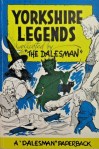
Yorkshire Legends collected by “The Dalesman,” 3/5
I love to see folklore preserved and even better when it is accompanied, as in this case, by a variety of appealing illustrations.
Why I read it: a fun find in a Yorkshire charity shop.
Treasure Hunting Northwest
 Treasure Hunting Northwest by Ruby El Hult, 3/5
This follow-up book to Lost Mines and Treasures of the Pacific Northwest is shorter, more elegantly written and can stand alone.
Why I read it: the title caught my eye in a used bookstore.
The Mabinogi
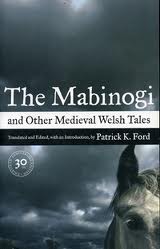 The Maginogi and Other Medieval Welsh Tales, translated and edited by Patrick K. Ford, 5/5
This scholarly translation is serious without being stuffy, making a great companion to Gwyn Jones’ more charming and humorous version.
Welsh Legends and Folk-Tales
 Welsh Legends and Folk-Tales, retold by Gwyn Jones, 5/5
These retellings are lively and witty, without pretension or rambling, and perfectly suited for reading aloud. It was especially interesting to read stories about King Arthur told from a Welsh perspective.
N.B. The Welsh pronunciation guide is rather unfortunately located at the back of the book, where you will encounter it after some 250 pages of incorrect mental pronunciation of names such as Blodeuwedd and Lleu Llaw Gyffes.
There are charming pen and ink illustrations by Joan Kiddell-Monroe at the beginning of each chapter. Also, fans of vintage C.S. Lewis and Tolkien books will undoubtedly recognise the name of illustrator Pauline Baynes, who did the cover art for this edition.
When I bought the book, I knew nothing about the author besides that, judging from the first name, there was a good chance she was Welsh. It turns out HE was Welsh and, in fact, a renowned scholar, writer, and translator of the Mabinogion (a collection of mediaeval Welsh myths). Gwyn Jones’ Wikipedia article is somewhat deficient, but I did find an interesting entry about him in Drout’s J.R.R. Tolkien Encyclopedia.
[Why I read it: I’m interested in lesser-known mythologies (especially those of the British Isles), so I picked this up at the thrift store for 99¢. The book felt like your average junky paperback and I was unfamiliar with the author, but seeing Pauline Baynes credited on the back cover really sold it to me, giving the book some class and authenticity.]
Heroes of the Dawn
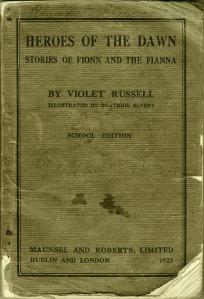 Heroes of the Dawn: Stories of Fionn and the Fianna by Violet Russell, 5/5
Given the prominent “School Edition” on the cover, the large text inside and the lack of any sort of author biography, I fully expected this to be a childish retelling of Irish legends, popularised for an American audience. I was wrong. The stories are beautifully and simply told by Violet Russell, née North, wife of Irish Nationalist and writer George “AE” Russell (whose Wikipedia article is well worth a read). There is no higher qualification needed for a recorder of myths than to be able to write, without pretension, what can be found in the beginning of the dedication “to Brian and Diarmuid”:
When you were small, and could not read for yourselves, and the long winter twilights were wearisome to you – sitting by the fire while the shadows played with each other over the room I told you these stories of ancient days, when magic and mystery and the folk of the other world were part of every one’s belief.
It is because you cared for them that I have re-written some of those about Fionn and his warriors, thinking that other children might wish – as you did – to know something about the old gods so often mentioned in the legends, and about Fionn and the Fianna Eireann.
The art by Beatrice Elvery is, even in this stripped-down, black-and-white, school version of the book, exceptional. My battered copy is missing the frontispiece (and the last page, irritatingly), but I scanned in the rest of the images since a convenient collection doesn’t seem to exist elsewhere on the internet.
A little research revealed quite a bit about the book’s author and illustrator…if only I could find out something about the book’s previous owner, who scrawled name and address several times amongst the pages. Plunket Stewart of Barrack Street No. 12, I’m thinking of you!
[Why I read it: obeying my compulsion to check the contents of vintage books that have no title printed on the spine, I found this in a Missouri antique store. I’m always on the look-out for lesser-known mythologies (basically anything that’s not Greek or Roman).]


 OmniRambles