
Tagged: leadership
Leadership Strategy and Tactics

Leadership Strategy and Tactics: Field Manual by Jocko Willink, 3/5
I appreciate the specific leadership (and followership) scenarios that Willink addresses in this book, but it feels somewhat contrived and disjointed. I suspect it would make a better reference resource than a cover-to-cover read.
Why I read it: working my way through Jocko Willinks’ books, if slightly out of order.
Extreme Ownership
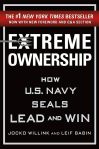
Extreme Ownership: How U.S. Navy Seals Lead and Win by Jocko Willink and Leif Babin, 4/5
This book’s layout is flawless: each chapter starts with an engaging war story, extracts a leadership principle for further analysis, and concludes with a real-life application to business. My only complaint is that the authors often stop short in each example of exploring the actual results of their approach, sometimes failing to address the outcome altogether and other times glossing over it with vague descriptions of generic success. The question left, for me, is not whether the authors are effective hammers, but what scenarios realistically constitute appropriate nails.
Why I read it: It’s been on my radar for quite a while.
Start with Why
 Start with Why: How Great Leaders Inspire Everyone to Take Action by Simon Sinek, 2/5
Sinek poses an interesting premise: companies wishing to develop an extremely loyal customer base and have the greatest influence on society and industry must let a clear sense of why they do what they do influence all decisions about what and how. By communicating a sense of purpose and how this purpose fits into the bigger picture of life, a business can ostensibly attract similarly-minded, passionate customers and ultimately have the freedom to be more innovative and influential than the faceless corporations trapped in “features” battles with each other, desperate to manipulate buyers with endless “deals” and minute spec improvements. Sinek basically argues that companies should function like good people, with strong character, ethics and a sense of higher purpose, instead of being focused solely on the bottom line. In fact, he goes so far as to say that “The goal of business should not be to do business with anyone who simply wants what you have. It should be to focus on the people who believe what you believe. When we are selective about doing business only with those who believe in our WHY, trust emerges” (80).
While Sinek’s approach is thought-provoking, I see a clear conflict between it and a society that is rife with lawsuits against businesses who refuse to provide services, based on religious beliefs. I wish the author had addressed this issue instead of beating one simple idea to death with a tedious, repetitive writing style and relentless references to Apple Inc. Perhaps he also could have supplemented his few cherry-picked examples, by explaining why numerous industry-leading companies have achieved great success while clearly not following his why-centered philosophy. He also does not adequately address the connection between authenticity and advertising–couldn’t it be argued that the only difference between companies appearing to have a strong “why” and all the others is merely superior advertising strategies (not necessarily fundamental differences in philosophy and operation)?
Why I read it: My brother recommended it under circumstances I have since forgotten (I procrastinated on writing this review for far too long!).
No Fear of Failure
No Fear of Failure: Real Stories of How Leaders Deal with Risk and Change by Gary Burnison, 3/5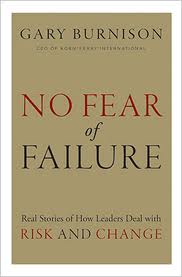
There were some interesting and inspiring interviews in this book, but couched in lots of “manager speak” buzzwords and catchphrases.
 OmniRambles