
Tagged: fiction
War in Heaven

War in Heaven by Charles Williams, 3/5
I’m not going to pretend that I understood the more esoteric implications of this bizarre spiritual thriller, but I certainly did enjoy its zany plot, humor, and original take on the ever-popular search for the Holy Grail. It’s not a particularly well-crafted novel, but it’s hard to fault a story that opens thusly:
The telephone bell was ringing wildly, but without result, since there was no-one in the room but the corpse.
Why I read it: After my introduction to Charles Williams via All Hallows’ Eve, I wanted to read some of his other “novels of the supernatural,” of which War in Heaven is the first.
Letters from the Earth

Letters from the Earth: Uncensored Writings by Mark Twain, edited by Bernard DeVoto, 2/5
From a scholarly perspective, this collection of previously unpublished writings by Mark Twain is no doubt a valuable resource. However, from a casual reader’s perspective, it was a bit of a tedious mishmash. The main attraction, to me, was an unfinished story, dubbed by the editor “The Great Dark,” which made it onto the list of “10 Forgotten Fantastical Novels You Should Read Immediately.” The concept was memorable–a man and his family are trapped on a dream ship exploring a microscopic drop of water–but the tone was very uneven and the story too unpolished and indeed, unfinished, to be a satisfying read. Much of the rest of this collection consisted of snarky essays in which the author mocked Christianity in an ignorant and closed-minded way that, in my opinion, reflected more poorly on himself than on the religion.
Why I read it: this was the last book I had left to read from the list of “10 Forgotten Fantastical Novels You Should Read Immediately.”
All Hallows’ Eve
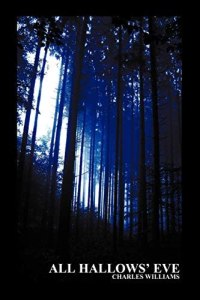
All Hallows’ Eve by Charles Williams, 5/5
I had very little idea what to expect from this slim book and that, perhaps, is partly why I found it to be so absolutely astonishing (though pure novelty cannot account for that fully). I don’t want to give away too much, but think Gothic thriller meets supernatural romance in the interest of exploring highly-developed and unconventional theological beliefs. I was not at all surprised to later learn that Williams was a regular member of the Inklings, enjoying the friendship and literary criticism of C.S. Lewis and J.R.R. Tolkien.
This book demands to be re-read, but I would avoid this edition (Oxford Reprints) at all costs. The binding has that ubiquitously cheap, self-published feel and the text contains a baffling number of typos. Most egregious of all is the use of hyphens in place of em dashes. I know how pedantic that complaint sounds, but Williams used em dashes often and in very long sentences. The relentless and incorrect use of hyphens disrupted visual flow in addition to hindering comprehension.
Why I read it: another entry on the list of 10 Forgotten Fantastical Novels You Should Read Immediately.
The Adventures of Baron Munchausen

The Adventures of Baron Munchausen by Rudolf Erich Raspe, illustrated by Gustave Dore, 3/5
The ridiculous and fantastical exploits of Baron Munchausen remind me very much of the tall tales told of American folk heroes Davy Crockett and Paul Bunyan. In fact, I so firmly associate this aesthetic with 19th- and 20th-century America that I really struggled to reconcile it with 18th-century Germany. I looked in vain for an undercurrent of serious political satire, but none was to be found. Even the illustrations seemed implausible: Gustave Doré is best known for his extremely serious engravings of Biblical scenes. I had to verify that he was even capable of depictions like Baron Munchausen’s butt plugging a hole in a leaky ship, while a school of fish look on in obvious shock. This book should not exist but it’s so bonkers that I’m glad it does (even if it’s not exactly my cup of tea).
Why I read it: another one from the list of 10 Forgotten Fantastical Novels You Should Read Immediately.
Doom

Doom by William Gerhardie, 3/5
Few escape the author’s satirical pen in this madcap, semi-autobiographical novel, even himself. From struggling artists to business magnates, grasping socialites to simple countryfolk, Gerhardie peoples his version of reality with mostly unlikeable but all too recognizable characters, living in a doomed world that is not as different from ours as one might hope. Is it an eerie prescience, or just a testament to mankind’s unchanging nature, that a novel written almost 100 years ago would depict the machinations of mass media moguls, the limitless privilege of the wealthy elite, and a world polarized by war over Russian territorial claims?
Why I read it: another entry on the list of “10 Forgotten Fantastical Novels You Should Read Immediately.”
Looking for the General
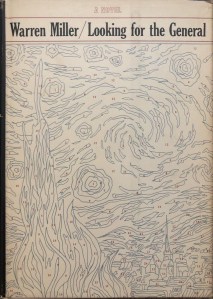
Looking for the General by Warren Miller, 3/5
Set in a semi-dystopian version of the 1960s, this bizarre book is written from the perspective of a physicist who becomes radicalized by an alien cult (literally, a group of people who believe aliens possessing unimaginable knowledge and power, having left earth, continue to monitor mankind via possession of abducted individuals and will return to elevate the deserving). It is a testimony to Miller’s observational powers and skill as a writer that he could create a serious, insightful, and fascinating novel based on such an unhinged premise.
Why I read it: Many years ago, I encountered a list of “10 Forgotten Fantastical Novels You Should Read Immediately,” and am slowly working my through it, having finally got around to using my library’s interlibrary loan service to order the more rare or out-of-print entries.
The Sagas of Icelanders
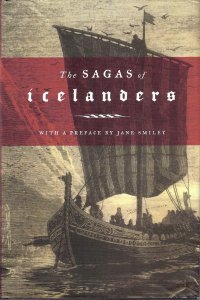
The Sagas of Icelanders: A Selection, Preface by Jane Smiley, Introduction by Robert Kellogg, 5/5
I’m not usually one to complain about scholarly features such as an extensive introduction, maps, diagrams, summaries, analysis, etc., but by page 73, I was ready to just get to the fun stories already! By any standard definition of “fun,” I would have quite a while longer to wait; the first saga’s opening paragraphs read about as smoothly as a cross between the Old Testament and War and Peace. Once I gave up trying to remember who was who’s father’s best friend’s son and where they came from and where they were going, I was able to enjoy the dramatic events for their human interest without getting too bogged down by genealogical, geographical and historical details.
That is not to say that I learned nothing about Norse culture along the way. The stories in this book corrected many misconceptions I had about Viking life; yes, they glorified masculinity to a level that many today would find intolerable, but they were far from being merely uncivilized, lawless barbarians. In fact, they had well-defined legislative and judicial infrastructure (though the enforcement of laws and rulings sometimes required one to show up with a large group of armed friends) and more respect for women’s rights than might be expected. While there are fantastical elements to some of the stories (especially the shorter tales at the end of the book), the overall tone was much more prosaic and historical than I expected.
Why I read it: I have read traditional stories from many cultures and this thrift store find piqued my curiosity. I started it while in the ER the weekend my son was born, then re-started it once I caught my breath over a year later!
The View from Saturday

The View from Saturday by E.L. Konigsburg, 4/5
A nuanced and well-written story, told from the perspectives of four individual middle schoolers and their teacher, who discover the transformative power of love and friendship as they compete in an academic bowl. Even though it is written for younger readers, the author doesn’t talk down or preach. This, combined with the varying first person perspectives and nonlinear timeline make for a challenging and meaningful reading experience at any age.
Why I read it: a recommendation from one of my students.
Magical Swimming and Flying Adventures

Magical Swimming and Flying Adventures by Elsa Fujinaka, 5/5
This little book has as many fairies and mermaids as you could possibly wish for, but my favorite character is the merfairyunicorn with two problems (don’t worry, the delightful duo on the cover are very good at solving problems). I was especially impressed by the detailed artwork, which is impressively consistent for all 16 pages and complements the story perfectly. I hope the author writes more books in the future!
Why I read it: What proud aunt could resist?
Scary Stories to Tell in the Dark
 Scary Stories to Tell in the Dark, collected by Alvin Schwartz, drawings by Stephen Gammell, 3/5
It is clear that children are the target audience for this book, but the simple layout and child-friendly writing style provide a disturbing contrast with the extremely dark and gross stories it contains. I wouldn’t have wanted to read such terrifying things as a kid and certainly wouldn’t want my own children to be exposed to these ideas at a young age. As an adult, I found the stories to be entertaining, if a bit simplistically retold, and the artwork in particular is outstanding.
Why I read it: a thrift store find. I’ve always been interested in fairy tales and myths, so paranormal stories are not that much of a stretch.
 OmniRambles