
Tagged: business
How to Win Friends & Influence People
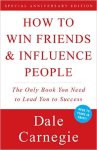
How to Win Friends & Influence People: The Only Book You Need to Lead You to Success by Dale Carnegie, 3/5
In today’s saturated self-help market, it takes a little imagination to understand just how novel and influential this first-of-its-kind work must have been, back in 1936. Carnegie’s “principles” are practical and based on a commonsense understanding of psychology that, though now well-worn, have stood the test of time. Charming anecdotes illustrate the following principles:
Three Fundamental Techniques in Handling People
Principle 1: Don’t criticize, condemn or complain.
Principle 2: Give honest and sincere appreciation.
Principle 3: Arouse in the other person an eager want.
Six Ways to Make People Like You
Principle 1: Become genuinely interested in other people.
Principle 2: Smile
Principle 3: Remember that a person’s name is to that person the sweetest and most important sound in any language.
Principle 4: Be a good listener. Encourage others to talk about themselves.
Principle 5: Talk in terms of the other person’s interests.
Principle 6: Make the other person feel important–and do it sincerely.
Win People to Your Way of Thinking
Principle 1: The only way to get the best of an argument is to avoid it.
Principle 2: Show respect for the other person’s opinions. Never say, “You’re wrong.”
Principle 3: If you are wrong, admit it quickly and emphatically.
Principle 4: Begin in a friendly way.
Principle 5: Get the other person saying “yes, yes” immediately.
Principle 6: Let the other person do a great deal of the talking.
Principle 7: Let the other person feel that the idea is his or hers.
Principle 8: Try honestly to see things from the other person’s point of view.
Principle 9: Be sympathetic with the other person’s ideas and desires.
Principle 10: Appeal to the nobler motives.
Principle 11: Dramatize your ideas.
Principle 12: Throw down a challenge.
Be a Leader
Principle 1: Begin with praise and honest appreciation.
Principle 2: Call attention to people’s mistakes indirectly.
Principle 3: Talk about your own mistakes before criticizing the other person.
Principle 4: Ask questions instead of giving direct orders.
Principle 5: Let the other person save face.
Principle 6: Praise the slightest improvement and praise every improvement. Be “hearty in your approbation and lavish in your praise.”
Principle 7: Give the other person a fine reputation to live up to.
Principle 8: Use encouragement. Make the fault seem easy to correct.
Principle 9: Make the other person happy about doing the thing you suggest.
Why I read it: a recommendation from my sister.
Before and After the Book Deal

Before and After the Book Deal: A Writer’s Guide to Finishing, Publishing, Promoting, and Surviving Your First Book by Courtney Maum, 3/5
Despite Maum’s humorous approach, I found this insider perspective on the book publishing process to be quite off-putting. Seeing the business side of books is truly like visiting the proverbial sausage factory and I am not a happier reader for coming to the realization that “author” hovers near the very bottom of any list of viable career choices, below even those perennial classics–“actor” and “musician.” This state of things is not Maum’s fault, but it is not Donald Trump’s fault either, which is a fact she seems to struggle with at several points in this exceedingly woke book.
Why I read it: it was on a list of recommended resources for writers on my Instagram feed.
Start with Why
 Start with Why: How Great Leaders Inspire Everyone to Take Action by Simon Sinek, 2/5
Sinek poses an interesting premise: companies wishing to develop an extremely loyal customer base and have the greatest influence on society and industry must let a clear sense of why they do what they do influence all decisions about what and how. By communicating a sense of purpose and how this purpose fits into the bigger picture of life, a business can ostensibly attract similarly-minded, passionate customers and ultimately have the freedom to be more innovative and influential than the faceless corporations trapped in “features” battles with each other, desperate to manipulate buyers with endless “deals” and minute spec improvements. Sinek basically argues that companies should function like good people, with strong character, ethics and a sense of higher purpose, instead of being focused solely on the bottom line. In fact, he goes so far as to say that “The goal of business should not be to do business with anyone who simply wants what you have. It should be to focus on the people who believe what you believe. When we are selective about doing business only with those who believe in our WHY, trust emerges” (80).
While Sinek’s approach is thought-provoking, I see a clear conflict between it and a society that is rife with lawsuits against businesses who refuse to provide services, based on religious beliefs. I wish the author had addressed this issue instead of beating one simple idea to death with a tedious, repetitive writing style and relentless references to Apple Inc. Perhaps he also could have supplemented his few cherry-picked examples, by explaining why numerous industry-leading companies have achieved great success while clearly not following his why-centered philosophy. He also does not adequately address the connection between authenticity and advertising–couldn’t it be argued that the only difference between companies appearing to have a strong “why” and all the others is merely superior advertising strategies (not necessarily fundamental differences in philosophy and operation)?
Why I read it: My brother recommended it under circumstances I have since forgotten (I procrastinated on writing this review for far too long!).
 OmniRambles