
Tagged: 5/5
The King of Diamonds
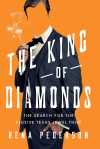
The King of Diamonds: The Search for the Elusive Texas Jewel Thief by Rena Pederson, 5/5
Pederson takes the reader on a ride-along as she investigates the most glamorous cold case imaginable: a brazen and idiosyncratic jewel thief who terrorized the fabulously wealthy of Dallas for a decade. Over seven years of research is condensed into a satisfying page-turner that weaves history, biography, and true crime together, while exploring the good, the bad and the ugly of 1950s and ’60s Dallas society, from the richest philanthropist to the shadiest gangster and everything in between.
Why I read it: I think I saw an author interview on social media and the story sounded fascinating.
Norse Mythology
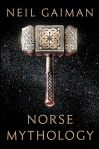
Norse Mythology by Neil Gaiman, 5/5
I am not a fan of Neil Gaiman’s work in general, but there is no denying the excellence of this retelling of tales from Norse mythology. The tone is fresh, without too much anachronism; sensitive and poetic, not melodramatic; and witty without flippancy.
Why I read it: my husband enjoyed the audiobook and I liked the bit that I overheard, so he bought a hard copy.
All That the Rain Promises and More…
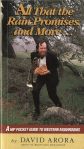
All That the Rain Promises and More: A Hip Pocket Guide to Western Mushrooms by David Arora, 5/5
Don’t be fooled by the frankly insane cover photo and title–this helpful book is packed with color photographs and well-organized descriptions of the most common mushrooms found in the western United States, interspersed with additional info, poetry, recipes, and anecdotes collected from the mycophile community. Yes, it’s a little silly at times, but the author is deeply knowledgeable about the topic and I appreciate the sense of humor and passion that are reflected in this conveniently-sized book. I found the closing essay to be particularly compelling on the topic of over-regulation of hunting/gathering activities:
“In other words, the largely urban-suburban vision of nature as a beautiful, peaceful refuge from the stresses and conflicts of civilization, is in fundamental conflict with the rural or less “civilized” perception of nature as a provider of sustenance and wealth. Therein lies a great irony: it is the cities that suck food, energy, and resources from the landscape, yet there is a long and tragic history of industrial and agricultural peoples persecuting “savage” outsiders (in the most literal sense of the word) who hunt and gather (253).”
…
“No doubt the admonition to “take only photographs, leave only footprints,” is desirable in certain sensitive or pristine areas. But it is inappropriate in most situations because it is a fundamental denial of who we are: creatures of the earth whose most ancient heritage (or birthright, if you will) is foraging for food in the forest.
This enforced separation of human being from the natural world can only undermine support for the public acquisition and protection of habitat. The more we view the forests and fields as a resource […] the more likely we are to cherish that resource (254).”Why I read it: I find mushrooms fascinating and love to spot them around the yard.
My Favorite Intermissions

My Favorite Intermissions: Lives of the Musical Greats and Other Facts You Never Knew You Were Missing by Victor Borge and Robert Sherman, 5/5
I half-expected this collection of loosely opera-themed musical anecdotes to be outdated and cringey, but I was so wrong. The passage of time and changing tastes have not dampened Borge’s trademark hilarity.
Why I read it: I loved watching Victor Borge on VHS as a child and this book was a welcome thrift store find.
Bel Canto
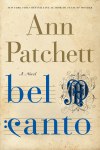
Bel Canto: A Novel by Ann Patchett, 5/5
This exquisitely written character study of a group of hostages and their guerilla captors is effortlessly beautiful and surprisingly well paced, given the confined context provided by the story’s extreme constraints with regard to location and plot. Like a poet adhering to a particular rhyme scheme, the author works within these constraints to explore the inner workings and relationships of a seemingly disparate cast, including a world-famous soprano, her most devoted admirer, rebel generals, child soldiers, assorted international businessmen, and the translator whose language skills link them all together.
Why I read it: I encountered a glowing review on Facebook, which was almost definitely, in retrospect, written by AI.
Birth Skills
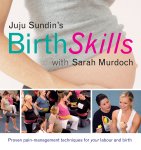
Birth Skills: Proven Pain-Management Techniques for Your Labour and Birth by Juju Sundin with Sarah Murdoch, 5/5
Juju’s approach to natural birth differs from most in that she does not encourage idealistic expectations or a skeptical view of modern medical interventions. Her focus is not on helping women achieve an unmedicated birth, per se, but on empowering them to understand the process and cope with pain the best they can, regardless of final outcomes. I believe this healthy approach might help those with perfectionist and control freak tendencies (like myself) to avoid some of the mental anguish and trauma associated with “unnatural” birth experiences that may fall far short of their expectations.
These birth skills were originally meant to be imparted through a multi-week, interactive, in-person class, so the fact that I speed-read the book shortly before my baby’s due date was clearly not ideal. However, thanks to the author’s straightforward style and intentional use of repetition, I felt like I had a decent understanding of the main principles and hoped to avoid an epidural by using movement, breathwork, mantras, visualization, and a birthing comb. Perhaps I have a very low pain tolerance or was not fully invested in the techniques–I certainly was not well-practiced–but I did not end up coping well with the pain of active labor. Vomiting from contractions that felt like being stabbed in the abdomen with a red hot poker, I was thankful for even the temporary relief a faulty epidural provided. The fact that I absolutely crumbled under what felt like unbearable and excruciating pain is humbling, but just because I literally cannot imagine how it would have been possible to endure the experience unmedicated is no reflection on this book and the positive effect it has had on numerous women’s labor and birth experiences.
Why I read it: a recommendation from an Instagram comment.
Education for Absolute Pitch

Education for Absolute Pitch: A New Way to Learn Piano by Naoyuki and Ruth Taneda, translated by Christopher Aruffo, 5/5
For several years, I sang in a choir with a tenor who had perfect pitch and, while I might have mentally referred to him by the not-awe-inspiring moniker “the human pitch pipe,” there was something undeniably god-like and enviable about his ability to pull any note out of thin air. I was very surprised to learn, many years later, that children between the ages of 3 and 4.5 years old can actually be taught this magical ability! What at first sounds “too good to be true” is soon clarified by this handbook, which lays out the intense, consistent, and long-term practice required in the pursuit of absolute pitch.
The German We Hear and Play method that this book outlines combines ear training (via “games” played with stuffed animals and colored balls) and rhythmic training with a meticulous piano curriculum. As a piano teacher with more than 20 years of experience, I do not find this method’s highly structured, color coordinated and extremely slow-moving approach to be very appealing. However, I am used to starting students at 6 years old and without focusing on ear training, so it makes sense that some concessions must be made for much younger children acquiring the skill of perfect pitch in conjunction with piano skills. I am cautiously optimistic about trying this method with my own toddler!
Why I read it: I believe I encountered the We Hear and Play method on translator Christopher Aruffo’s website, while looking for software that would teach perfect pitch to adults. The We Hear and Play website does not appear to have been updated recently, but I did reach out to Aruffo, who assured me immediately that it is still very much functional, while kindly offering additional help and resources.
Shadow Divers

Shadow Divers: The True Adventure of Two Americans Who Risked Everything to Solve One of the Last Mysteries of World War II by Robert Kurson, 5/5
When a group of shipwreck divers discover a German WWII U-boat sunken just 60 miles off the coast of New Jersey, it sparks a 6-year saga of danger, drama, research, speculation and discovery. Kurson’s prose is beautifully written and guides the reader effortlessly through the biographical backstories, technical diving information, and historical events that combine to form the context for a real-life adventure story so intriguing that I stayed up until 2am to finish it in one day. Though less mythical in topic than the author’s other diving book, Pirate Hunters, this one is equally interesting, has a more satisfying conclusion, and contains more photos.
Why I read it: I enjoyed Pirate Hunters and wanted to check out more by this author.
Pirate Hunters

Pirate Hunters: Treasure, Obsession, and the Search for a Legendary Pirate Ship by Robert Kurson, 5/5
This is one of those rare real-life stories that is crazier than fiction. The author does a great job of weaving in historical and biographical information about all the main characters, without losing momentum. I read the whole book in one day and stayed up until 2am to find out how it ended. Ultimately, I thought the ending was a bit anti-climactic, due in part to the photo insert (which felt inadequate, while also providing spoilers), but also due to the interventions of human nature and bureaucracy in an otherwise fantastical tale. However, I had no hesitation recommending the audio book to my husband and have ordered Kurson’s Shadow Divers, which is referenced in this book, from the library.
Why I read it: I salvaged it from my mother-in-law’s thrift store donation pile.
How Do I Do That In Lightroom Classic?

How Do I Do That In Lightroom Classic?: The Quickest Ways to Do the Things You Want to Do, Right Now! by Scott Kelby, 5/5
This slim reference book for Adobe Lightroom Classic is surprisingly readable and, though I’ve used Lightroom for many years, I did still pick up on a few interesting hints for further exploration.
Why I read it: While getting rid of a couple outdated Lightroom books I owned, it crossed my mind to check the library for some more recent offerings (not realizing this second edition was already a few years old).
 OmniRambles