
Tagged: 4/5
Seabiscuit
 Seabiscuit: An American Legend by Laura Hillenbrand, 4/5
This true story wasn’t quite as readable as I’d expected, having been absolutely blown away by Hillenbrand’s later work Unbroken. I was partly to blame for approaching the book with a skepticism that made me look disconsolately for footnotes where there were none. For some reason, I just couldn’t escape the nagging question “does she really know what all the people in her story said and felt, or is she just making it all up?” I would have had a much more enjoyable experience if I’d read the end notes, acknowledgements and interview with the author at the end of the book first. These sources helped me realize the insane amount of time and energy Hillenbrand, already an accomplished equestrian author, put into researching the story of Seabiscuit.
I just have to point out how bizarre it is that the horse’s face didn’t make it onto the cover of the book! Even the image on the spine is of the jockey, not his famous steed.
Why I read it: I was looking for something light to read while traveling and Seabiscuit had been on my radar for quite a while.
The Songlines
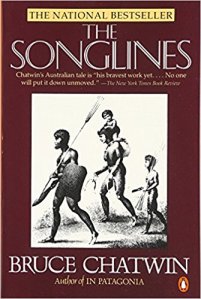 The Songlines by Bruce Chatwin, 4/5
A semi-fictitious scholar named Bruce (who, in sharing the author’s name, not-so-clearly provides literary license) explores the concept of “Songlines” or “Dreaming-tracks,” a musical interpretation of geography by which Aboriginal Australians understand the creation of the world and their place in it. Vivid characters and landscapes, described in short paragraphs with Chatwin’s succinct prose, have the power to transport the reader almost as surely as any vehicle to foreign lands.
Why I read it: I recognized the title in the thriftstore from reading Chatwin’s In Patagonia.
Architecture in Photographs
 Architecture in Photographs by Gordon Baldwin, 4/5
I enjoyed this little book, which contains a nice selection of photographs from the J. Paul Getty Museum along with a not-overwhelming amount of text about architectural photography’s venerable history. While a couple of the photographs left me shaking my head, completely unable to discern any artistic merit in them, the majority were inspiring and obviously captured with skill and care. In my experience, looking at good art is the easiest way to educate your eye as a photographer and this book provides plenty of inspiration. After reading it, I feel especially motivated to experiment with black and white photography, while not obsessing so much over cropping choices, lens distortion and making everything perfectly level.
Why I read it: I came across it while browsing in the library for light reading material to keep me entertained while cutting weight for an MMA fight two months ago.
McSweeney’s No. 48
 McSweeney’s No. 48, 4/5
I tend to have a difficult time enjoying modern literature, but this curated collection of writings was just light and varied enough to be interesting. Sure, there were the dark, unsettling, claustrophobic stories and the bafflingly artistic tales that I am apparently not smart enough to understand, and the gross story by the enlightened author who thinks writing about sex is soooo avant-garde. Thankfully, though, there were also a selection of entertaining, skillfully written pieces that kept me interested and appreciative.
Why I read it: Stumbled across it in the library and recognized the name from their website, where I remembered reading some funny open letters.
Go Add Value Someplace Else
 Go Add Value Someplace Else by Scott Adams, 4/5
This probably would have seemed funnier if I hadn’t read it while sitting in a sauna, cutting weight for my first MMA fight. Still, it made the time pass!
The Five Languages of Apology
 The Five Languages of Apology: How to Experience Healing in All Your Relationships by Gary Chapman and Jennifer Thomas, 4/5
Making and receiving apologies has always seemed like a fairly natural part of human interaction to me, so I’ve never given the topic much thought. However, I was recently very confused to be told plaintively by someone that “so-and-so has never apologized to me in twenty years!” What was so confusing about this comment? Well “so-and-so” had recently made an unexpected and unsolicited apology to me! Was I to believe this same person had purposefully withheld all apologies from someone else, or was there some other communication issue at play?
It turns out that different people have different expectations when it comes to what makes a sincere apology. According to this book, if one or more of the five “languages” of apology is lacking, the whole effort can fail to register with the recipient as a sincere apology, no matter how genuine it was intended to be.
- Expressing Regret: “I am sorry.”
- Accepting Responsibility: “I was wrong.”
- Making Restitution: “What can I do to make it right?”
- Genuinely Repenting: “I’ll try not to do that again.”
- Requesting Forgiveness: “Will you please forgive me?”
I feel that the use of the word “languages” to describe these five aspects is a too-obvious effort to tie this book in with Chapman’s The Five Love Languages, but it is undeniably helpful to know what shortcomings could cause an apology to ring untrue. While the main focus of the book is on how to make sure your apology meets the intended recipient’s subconscious criteria, it is also interesting to understand that just because an apology doesn’t cover the aspect that is most important to you, doesn’t necessarily mean that it is insincere.
Another very interesting point the authors make is that, while forgiveness is a decision, trust is an emotion (213). You can choose to forgive someone, but trust should be earned. Forgiveness doesn’t mean forgetting what someone has done, making light of their bad actions, or going back to the way things were, but it does mean giving your relationship with them a chance to heal and grow.
Why I read it: my sister recommended it and I’m always interested in learning to be a better communicator.
Wired to Eat
 Wired to Eat: Turn Off Cravings, Rewire Your Appetite for Weight Loss, and Determine the Foods that Work for You by Robb Wolf, 3/5
If lack of information is the reason you struggle with weight loss, then you may find this book to be life-changing–it certainly contains a lot of information. If lack of motivation is what’s holding you back, then you may find this book to be helpful–its tone is very motivational. However, if you are already familiar with the ultimate weight loss triumvirate Sleep More, Move More, Eat Less Processed Food, but you simply lack the self control to put it into practice, then you will likely find this to be just another useless diet book.
Many of Wolf’s observations are in line with my personal experience, especially that junk food makes you feel hungrier beyond reason and hyper-palatable, highly-processed foods are pure evil. However, I think of these facts as incidental to weight loss; in other words, learning them was simply the by-product of successful weight loss and maintenance in my case, not the cause. If knowledge gained through personal experience is insufficiently motivating, how much less is knowledge gained from merely reading a book? Such pessimistic practicalities aside, Wolf does his best to get his readers fired up and seems genuinely motivated to help people. His use of pop science/psychology is purposeful at least, though somewhat nauseating, and I respect his unusual advice that each person find the foods that work for them (within limits, obviously) instead of slavishly following some one-size-fits-all diet/religion. However, I feel that Wolf does not make nearly as convincing, scientific or detailed a case for the paleo diet as Good Food, Great Medicine makes for the Mediterranean diet (with the added benefit of much less hype and pop science).
Why I read it: My boyfriend thought it sounded interesting but I thought it sounded sketchy, so I read it first to save him time in case it sucked.
Tarzan of the Apes
 Tarzan of the Apes by Edgar Rice Burroughs, 4/5
This is a bittersweet little story, written with the refined yet melodramatic style (and casual racism) that characterizes a lot of literature from the early 1900s. Like most people, I was already familiar with the characters and story line, but I recognized very little of pop culture Tarzan in this original tale.
The edition is noteworthy because it is printed in landscape format, supposedly making it easier to read in bed. I really enjoyed the novelty, but didn’t think it was any easier to read lying down than a normal book.
Why I read it: A lovely birthday gift from one of my brothers and his family.
Film Directing
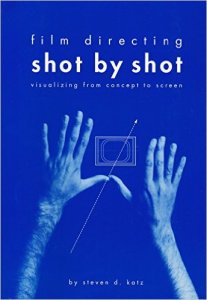 Film Directing Shot by Shot: Visualizing from Concept to Screen by Steven D. Katz, 4/5
This book offers a fascinating glimpse behind the scenes of the film director’s craft, laying out the many tools, visualisation strategies, camera angles, movements and stagings that are available to the person intent on transferring a story from script to film. The book format is obviously not ideal for the topic and it is up to the reader to imagine how a shot might flow between the still images that are provided, but the author is a clear communicator and most of the concepts are not difficult to understand.
Why I read it: I came across it while browsing through books at the thrift store and thought it looked interesting.
Fire in the Hole and Other Stories
 Fire in the Hole and Other Stories by Elmore Leonard, 4/5
I enjoyed Leonard’s punchy, no-nonsense writing style (distinctly American, somehow) and entertaining tales full of cool-as-ice characters, though much of it was more R-rated than I’m comfortable with.
Why I read it: I really liked the TV series Justified and wanted to check out the short story that inspired it.
 OmniRambles