
Tagged: 3/5
Doom

Doom by William Gerhardie, 3/5
Few escape the author’s satirical pen in this madcap, semi-autobiographical novel, even himself. From struggling artists to business magnates, grasping socialites to simple countryfolk, Gerhardie peoples his version of reality with mostly unlikeable but all too recognizable characters, living in a doomed world that is not as different from ours as one might hope. Is it an eerie prescience, or just a testament to mankind’s unchanging nature, that a novel written almost 100 years ago would depict the machinations of mass media moguls, the limitless privilege of the wealthy elite, and a world polarized by war over Russian territorial claims?
Why I read it: another entry on the list of “10 Forgotten Fantastical Novels You Should Read Immediately.”
Looking for the General
Looking for the General by Warren Miller, 3/5
Set in a semi-dystopian version of the 1960s, this bizarre book is written from the perspective of a physicist who becomes radicalized by an alien cult (literally, a group of people who believe aliens possessing unimaginable knowledge and power, having left earth, continue to monitor mankind via possession of abducted individuals and will return to elevate the deserving). It is a testimony to Miller’s observational powers and skill as a writer that he could create a serious, insightful, and fascinating novel based on such an unhinged premise.
Why I read it: Many years ago, I encountered a list of “10 Forgotten Fantastical Novels You Should Read Immediately,” and am slowly working my through it, having finally got around to using my library’s interlibrary loan service to order the more rare or out-of-print entries.
Scottish Castles
Scottish Castles: An Introduction to the Castles of Scotland by W. Douglas Simpson, 3/5
Little more than a glorified pamphlet, this small book still manages to address the major eras of Scottish castle-building between the 12th and 17th centuries, briefly addressing the historical contexts that affected changes in architectural styles. Starting with the simple motte and bailey structures of the 1100s, the reader encounters the stone towers and walled courtyards of the 1200s and the evolution of tower-houses between the 1300s and 1600s from simple rectangles to L-shapes and Z-shapes. There are a good number of black-and-white photos and floor plans, but pairing them with the relevant text requires a lot of flipping back and forth. Also, as might be expected in such a small book, many references go sadly un-illustrated and there is no glossary. Needless to say, I am still on the hunt for the ideal book about castles!
Why I read it: a used-book-store find that caught my eye.
Princess Kaiulani
Princess Kaiulani: The Last Hope of Hawaii’s Monarchy by Kristin Zambucka, 3/5
This book’s best feature is its generous selection of stunning, historical photos, which are given pride of place, accompanied by numerous excerpts from Princess Kaiulani’s personal correspondence. The author’s written contributions are very sparse and basic, resulting in an overall effect that is more scrapbook-like than literary.
I have now read two accounts of Hawaii’s transition to statehood and they could not be more different from each other. This tale of the forcible removal of the native Hawaiian monarchy by a bevy of white business owners and politicians was certainly more believable than the whitewashed, weaselly portrayal of the islands’ “liberation” depicted in Hawaii: A History.
Why I read it: The Princess has languished in a box of music books for as long as I can remember, but during a recent reorganization, I decided it was about time she was read and put on the shelf with the others.
Roar

Roar: How to Match Your Food and Fitness to Your Female Physiology for Optimum Performance, Great Health, and a Strong, Lean Body for Life by Stacy T. Sims, PhD, 3/5
It is so refreshing to read a book written specifically for female athletes that pragmatically and constructively addresses the comparative strengths and weaknesses of our sex. I am often the only woman on our martial arts fight team and it is tempting to think of myself simply as a smaller, weaker man, cursed with monthly inconsistency in performance. Sims makes it clear that things are not that simple and offers helpful ideas for navigating the ups and downs of the menstrual cycle, menopause, and pregnancy, in addition to the basics of general strength and conditioning, nutrition, hydration and recovery for women. I found the section on different types of birth control and their effects on athletic performance to be particularly interesting. I was also fascinated to find out that I should be eating protein as a recovery snack instead of carbs.
While I definitely plan to refer to this book in future, I do wish it contained specific footnotes for many of its claims instead of general endnotes. Sims’ recommendations for PMS supplements were particularly unsupported by any obvious science or reasoning, which did not inspire confidence. I also wish the advice was more easily scalable; while Sims gives many examples of specific guidelines for specific clients, there is obviously considerable guesswork that would be involved in applying her principles to one’s own situation. This is a definite obstacle to the practical application of her ideas, especially for a perfectionist like myself. Of course, no book can be a substitute for one-on-one coaching, so perhaps I am asking too much. But while I’m at it, I would love to ask for a book like this to be written specifically for female MMA athletes!
Why I read it: a recommendation from my sister.
Expectant Motherhood
 Expectant Motherhood by Nicholson J. Eastman, M.D., 3/5
In the last eight months, since I first found out that I was expecting a baby of my own, I have learned a lot about pregnancy and childbirth from a variety of sources. This vintage book from 1957 is the oldest of all, but I was delighted to discover that a surprisingly large amount of the information and advice it gives still survives, little changed, in our modern age. To me, this is encouraging proof that the process of growing and delivering a baby to the world is natural and something most women are innately empowered to accomplish.
Of course, much has changed in the field of medicine in the 60-plus years since the third edition of this book was published, leading to some fascinating insights into the past. For example, I had never thought to wonder how pregnancy tests worked before the modern “pee stick” was invented in the 1970s. I learned that the easiest and cheapest method was simply to wait until an expected menstrual cycle was at least ten days late, at which point chances were good that you were pregnant. The downside of this approach is obviously that you do not receive positive proof of pregnancy, just an ever-increasing likelihood of it. For those requiring more certainty, a much more expensive option was to wait two weeks past the missed menstrual cycle, inject a mouse or rabbit with the woman’s urine and, forty-eight to seventy-two hours later, dissect the unfortunate creature to check its ovaries for changes! The “frog test” also involved the injection of urine, but pregnancy was confirmed by the development of frog eggs in only eight to eighteen hours and the frog would happily survive. Needless to say, peeing on a stick seems much less gross and inconvenient after learning about these alternate methods of the past!
Why I read it: a gift from my sister.
Great American Folklore
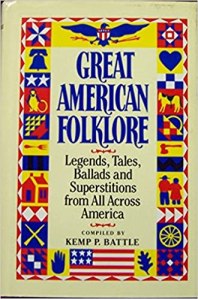 Great American Folklore: Legends, Tales, Ballads, and Superstitions from All Across America, compiled by Kemp P. Battle, 3/5
I understand the need to document and collect traditional stories to preserve them for posterity, but if there is a way to do so while also creating a good reading experience, the editor of this volume has not discovered it. Most of these tales clearly belong to an oral tradition, so it feels strange to encounter them stripped of their correct community context, not to mention the awkward (potentially racist) attempts to convey vernacular in prose.
Why I read it: Somehow it ended up in my to-read pile, though I can’t remember where or when I acquired it.
Blood of Elves
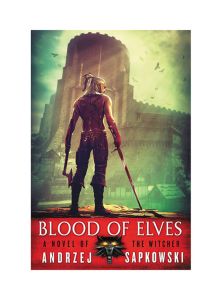 Blood of Elves by Andrzej Sapkowski, translated by Danusia Stok, 3/5
There are three books preceding this one in the Witcher Saga, chronologically, but Blood of Elves really does feel like the first to make a coherent contribution to an overarching story line. I feel that its literary quality isn’t quite up to par with The Last Wish, but it is definitely an enjoyable entry in an over-saturated genre.
Why I read it: gradually working my way through the series after enjoying the first season on Netflix.
Autumn
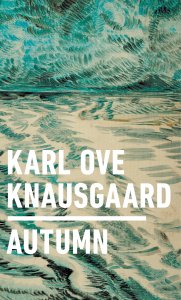 Autumn by Karl Ove Knausgaard, translated by Ingvild Burkey, 3/5
Reading this collection of short essays, mostly on such prosaic topics as “apples” and “plastic bags,” is a calming and grounding experience. Knausgaard combines the sensibilities of a sophisticated writer with the wide-eyed wonder of a child, rendering even the most commonplace subject somehow remarkable. The simple and honest manner in which the author’s thoughts and everyday life experiences permeate the text give one a sense of voyeurism without its intrinsic guilt; as if someone has left their curtains open solely to warm the hearts of passersby in the dark.
Why I read it: a recommendation by my sister, Anna.
Season of Storms
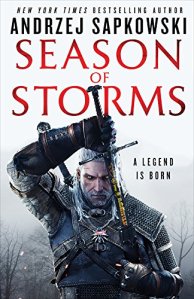 Season of Storms: A Legend is Born by Andrzej Sapkowski, translated by David French, 3/5
On a scale of literary quality, this is much closer to Jim Butcher than J.R.R. Tolkien, but it is still good fun. In my opinion, the author writes violence much better than romance, so this book was an improvement on the previous one in the series and leaves me looking forward to the next one.
Why I read it: Working my way through the Witcher series after enjoying the Netflix TV adaptation.
 OmniRambles