
Tagged: 2014
All the Light We Cannot See

All the Light We Cannot See: A Novel by Anthony Doerr, 4/5
I could complain that this story lost me a bit near the end, but that could very well be a symptom of the pure exhaustion I was feeling at 1am, after reading the entire book in one day. While I can’t claim to be as emotionally traumatized (in a good way) as other reviewers seem to be, I did find this to be a well-crafted and beautifully-written work of historical fiction. I especially appreciated how the author was able to keep my interest equally in both the main character’s story arcs, despite switching between them for the bulk of the book in a way that would be annoying if not so thoughtfully done. A prominent MacGuffin and too little time spent weaving the two character’s stories together after they finally met, is all that keeps this from being a classic, in my opinion.
Why I read it: an oft-mentioned entry in the comments on an Instagram post about favorite (or most meaningful–I can’t remember which) books.
The Body Keeps the Score

The Body Keeps the Score: Mind, brain and body in the transformation of trauma by Bessel van der Kolk, 3/5
This disturbing and rather lengthy book was not as self-help oriented as I expected it to be. The author expresses a career’s worth of frustration with the medical establishment’s over-reliance on DSM-facilitated symptom labeling and prescription medication. He makes an impassioned case for a more holistic approach to understanding trauma and its varied effects, particularly with regard to brain function, but I felt that he relied heavily on anecdotal evidence, demonstrated an oversimplified understanding of neurobiology, and was perhaps more interested in finding research and studies with favorable outcomes than in assessing their quality.
As far as treatment is concerned, the author is all over the place, telling stories about clients who had success with EMDR, internal family systems, yoga, theater, HRV training, neurofeedback, journaling, massage, and more. Most of the cases he presents are very extreme and I felt like my own experiences didn’t even register on that scale.
Why I read it: a midwife suggested that it might help me process a traumatic birth experience.
What to Expect the First Year
What to Expect the First Year by Heidi Murkoff, 3/5
My husband and I were fortunate enough to have the world’s most chill baby, so I didn’t bother reading most of this book until we were halfway through year two of parenthood. Though raising our little guy has definitely become more challenging as he matures, the first twelve months were relatively straightforward; most issues that came up were easily addressed by a quick internet search, knowledgeable friends and family, or at medical check-ups. I didn’t feel the anxious anticipation, curiosity, and solitariness of first-time pregnancy that made What to Expect When You’re Expecting so comforting and helpful. For me, this book occupies a weirdly unhelpful middle ground, at times too hyper-focused to be practical or too general to be a reliable source for researching complex issues (especially controversial ones like vaccinations or discipline).
Why I read it: a friend and parent of two young children recommended it very highly.
Grow a Little Fruit Tree

Grow a Little Fruit Tree: Simple Pruning Techniques for Small-Space, Easy-Harvest Fruit Trees by Ann Ralph, 5/5
I wouldn’t even think about buying a fruit tree without first re-reading this exceptional book, which makes a very convincing case for using aggressive (but surprisingly simple) pruning techniques to keep fruit trees in the 5- to 6-foot height range. These trees may seem ridiculously tiny at first glance, but anyone who has faced the prospect of caring for larger trees while perched atop a ladder, in addition to coping with an overabundant harvest of sub-par fruit, will appreciate the practicality of Ann Ralph’s philosophy.
Since pruning is such a hands-on activity, I had some doubts about how much help a mere book could offer. For this reason, I had already taken a series of virtual Master Pruning classes through PlantAmnesty. Unfortunately, I found that organization’s overall pruning philosophy to be a bit fanatical and somewhat discouraging. They have a very PETA vibe: picture taking a hair styling course to cut your roommate’s hair and being told that your main focus should be on not disturbing the hair’s glorious natural potential and if you still really want to cut it, maybe you should consider just getting a different roommate. To be fair, their fruit tree class was more practical than the others, but I was left a little depressed and stressed out by the whole experience. In contrast, Ann Ralph’s approach to pruning encourages joyful, fearless experimentation and this little book gave me back the enthusiasm that I originally had for the art of pruning.
Not only is Grow a Little Fruit Tree informative and encouraging, its design and illustrations are exceptionally beautiful. I think it’s a shame that designer and hand-letterer, Lana Lê, and artist Allison Langton are not credited on the cover! It took a little research, but I was happy to find that their online portfolios (see links) contain samples from the book that are well worth checking out.
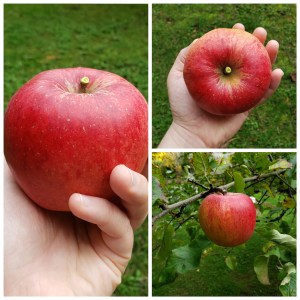
Show Your Work!
 Show Your Work! 10 Ways to Share Your Creativity and Get Discovered by Austin Kleon, 3/5
This is a helpful little book for anyone who struggles with the culture of self-obsession and inauthenticity that the Instagram era seems to encourage. Social networking can be a great tool for creating opportunities and growing business, but for some people, their internet persona easily takes on a faux life of its own that stifles real, personal growth.
Kleon addresses this issue in part by shifting the focus from product (ultimately, your ideal version of self) to process (your life experiences). Instead of just showing your artwork, you show your art work (33): the real-life, behind-the-scenes depiction of what you learn about what you love, in the spirit of true sharing not self-aggrandisement. His approach is genuine, carefree, messy, organic and much more likely to stimulate personal and professional growth, as well as lasting and meaningful connections with others, than any contrived attempt to impress could achieve.
While the book’s organization is a bit all over the place, it loosely expands on the following 10 rules:
- You don’t have to be a genius.
- Think process, not product.
- Share something small every day.
- Open up your cabinet of curiosities.
- Tell good stories.
- Teach what you know.
- Don’t turn into human spam.
- Learn to take a punch.
- Sell out.
- Stick around.
Why I read it: My library was discarding it and I remembered liking Kleon’s previous book.
All My Puny Sorrows
 All My Puny Sorrows by Miriam Toews, 5/5
All my words are insufficient to convey how exquisite this semi-autobiographical novel is; I am reduced to a string of mere adjectives…raw, beautiful, funny, insightful, uplifting, bittersweet…none of which can fully capture this story of two sisters, one a struggling writer with a history of failed relationships and the other a beautiful concert pianist who possesses everything happiness requires…except the will to live. Intensely personal, defiantly human, undeniably humorous, this book is a masterpiece and a privilege to read.
Why I read it: The first chapter is in McSweeney’s No. 48.
McSweeney’s No. 48
 McSweeney’s No. 48, 4/5
I tend to have a difficult time enjoying modern literature, but this curated collection of writings was just light and varied enough to be interesting. Sure, there were the dark, unsettling, claustrophobic stories and the bafflingly artistic tales that I am apparently not smart enough to understand, and the gross story by the enlightened author who thinks writing about sex is soooo avant-garde. Thankfully, though, there were also a selection of entertaining, skillfully written pieces that kept me interested and appreciative.
Why I read it: Stumbled across it in the library and recognized the name from their website, where I remembered reading some funny open letters.
Confessions of a Casting Director
 Confessions of a Casting Director: Help Actors Land Any Role with Secrets from Inside the Audition Room, by Jen Rudin, 3/5
This book provides an interesting perspective into the more prosaic side of glamorous showbiz. I really enjoyed the variety of personal anecdotes, not just from the author, but from a variety of people associated with the entertainment industry. The whole audition circuit sounds intense and I’m amazed how much rejection aspiring actors can endure while still maintaining the will to live. I guess it helps that the focus seems more on finding “the one” for each role than on weeding out bad actors. So even if you’re not “the one,” it doesn’t mean there’s anything wrong with you. The author’s attitude is very positive and encouraging overall, giving all-purpose advice that emphasizes the importance of professionalism and self-confidence.
Why I read it: thought it looked interesting while wandering around the library.
Go Add Value Someplace Else
 Go Add Value Someplace Else by Scott Adams, 4/5
This probably would have seemed funnier if I hadn’t read it while sitting in a sauna, cutting weight for my first MMA fight. Still, it made the time pass!
Crap Taxidermy
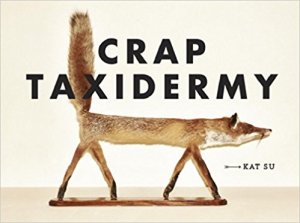 Crap Taxidermy by Kat Su, 3/5
Equal parts gross, funny and WTF? This small collection of images makes a fun novelty gift, but I think it’s more suited to its original website format: www.crappytaxidermy.com.
Why I read it: Came across it on Imgur and got a copy for my boyfriend’s dad (who does good taxidermy, not the crap kind).
 OmniRambles