Phaedo

phaedo platoPhaedo (On the Soul) by Plato, 4/5

This dialogue presents Plato’s account of the philosophical discussions that occurred amongst Socrates and his friends on the night of the former’s death.  Never having read the classical philosophers but awed by a vague awareness of their reputation, I expected the main topic of discussion—the controversial idea of the immortal soul—to be proved by the rigorous application of flawless logic, secular rationality and esoteric thinking.

This assumption caused me some problems as I read through the first 3/4 of the book and found many of the arguments it contains to be…well…unsatisfactory.  Questionable assumptions were frequently made and used as the basis for further arguments.  Often, issues of linguistics and philosophy seemed muddled up together, with shifting definitions leading to unconvincing conclusions.  Some lines of reasoning seemed frankly circular and many explanations seemed to create more questions than they answered.

At first, I was very frustrated with myself, thinking my stupidity surpassed lack of understanding to reach actual disagreement!  But as I read on, it became more and more apparent that Plato and Socrates must be famous for something other than infallible reasoning about philosophical issues.  In his complex “myth of the afterlife” near the end of the dialogue, Socrates finally gives up all pretense of logic, weaving a strange and wonderful tale of rivers and regions of the earth where souls travel after bodily death.

When I finally reached the following quote, I realized that what I had expected to be a grand testament to human intellectualism was in fact something much more touching and powerful: a dying man’s hopeful affirmation of faith that death is not the end.

Now to insist that those things are just as I’ve related them would not be fitting for a man of intelligence; but that either that or something like it is true about our souls and their dwellings, given that the soul evidently is immortal, that, I think, is fitting and worth risking, for one who believes that it is so—for a noble risk it is—so one should repeat such things to oneself like a spell; which is just why I’ve so prolonged the tale (114d).

[Why I read it: my knowledge of Greek literature is lacking, so when I saw this short book encompassing two famous philosophers at the thrift store, I thought it might be a good place to start.]

Love’s Labour’s Lost

loves labours lost shakespeareLove’s Labour’s Lost by William Shakespeare, 4/5

Armed only with the ambiguous aid of some humourless footnotes and crusty endnotes, I could sense a veritable jet stream of jokes, puns and witticism blowing right over my head.  How I missed my customary “cheater’s edition,” with its modern English translations on each facing page!  Unfortunately for me and my limited understanding of Elizabethan English, the play is more dialogue- than plot-driven and, though the premise is cute and there were many funny moments, I often found myself quoting one movie-watcher’s insightful comment on A Midsummer Night’s Dream (1999): “I can’t understand a damn word they are saying…”

[Why I read it: One day last week, I had an hour to kill while waiting for a ride.  Imagine my horror when I looked in my backpack and found myself bookless (French homework obviously doesn’t count).  Like a literary knight in shining armour, my sister produced her personal copy of Love’s Labour’s Lost, thus banishing my unhappy state.]

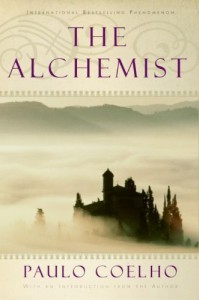
The Alchemist

alchemist paulo coelhoThe Alchemist by Paulo Coelho, 2/5

This relentlessly aphoristic story of spiritual self-discovery derives its limited appeal, in my opinion, from a competent use of archetypal characters and scenarios.  However, Coelho’s seeming ambition to attain full-on Guru status results in a narrative that is less a stream from the fount of wisdom than a diarrhea-like flow of half-digested, context-less fragments borrowed from every major religion, with no regard for consistency or original meaning.  The result is the sort of appealingly spiritual drivel that sounds like nonsense to most people with strong religious beliefs, but that omnists and artistic atheists would call beautiful and “like soooooo deep, you know?”

Several similes involving bovine manure come easily to mind, but perhaps it is more apt to think of The Alchemist as a sort of amateur symphony composed of tiny, jumbled-up fragments of very famous, very beautiful music from the span of thousands of years.  Connoisseurs and practicers of music, recognising the butchery of varying sources, would likely find the result to be unoriginal, baffling and a ridiculous mockery of true Music.  Everyone else would likely think the symphony was the most profound thing they’d ever heard.

[Why I read it: the author was unrecommended to me by a friend, who thought I might hate Coelho enough to write an amusingly vitriolic review.  I’m afraid that, this time, we’ll both have to settle for mild disdain instead…]

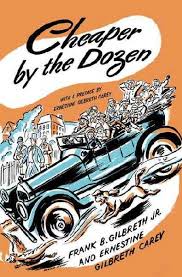
Cheaper by the Dozen

cheaper by the dozen frank and ernestine gilbrethCheaper by the Dozen by Frank B. Gilbreth Jr. and Ernestine Gilbreth Carey, 5/5

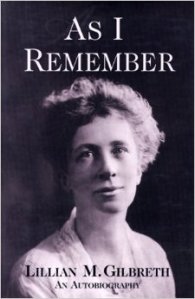
I can’t believe I didn’t get around to reading this classic until now.  I think that I had a bad impression of it from my mom, who had a bad impression of it from the movie versions.  At any rate, this book is hilarious and, to someone who knows big families or comes from one (like I do), it is utterly believable.  It made me laugh so hard that I had to read a couple parts aloud to the family.  It would make a great read-aloud book, by the way, if the reader can control the giggles.  I’ve requested the much-less-well-known sequel, Belles on Their Toes, from the library, as well as an autobiography of the mother, so I have more Gilbreth escapades to look forward to in future.

[Why I read it: I wanted to find out why a couple family friends found it so amusing that I’d posted Morse code in the bathroom for the kids to learn.  It seems Mr. Gilbreth had the same idea, though with a much cleverer execution…]

Doctor Thorne

doctor thorne anthony trollopeDoctor Thorne by Anthony Trollope, 2/5

I was equally surprised and disappointed by this novel, which almost completely lacks the charm, wit and originality of the first two books in the series.  An anorexic plot, weak characterization, and constant harping on the now largely-irrelevant topic of marrying below one’s station make this a tedious read and one I was glad to see the end of.  My enthusiasm to read the rest of the Chronicles of Barchester series has been dampened but, in light of the first two books’ excellence, I hold out hope that the fourth will not be a waste of time.

[Why I read it: I’m reading through the series, which starts with The Warden.]

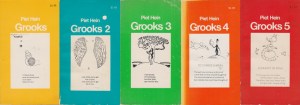
Grooks 1–5

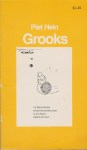
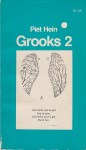
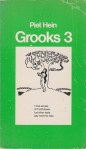
Grooks 1 2 3 4 5 piet heinGrooks 1–5 by Piet Hein, with the assistance of Jens Arup, 5/5

Poetry doesn’t come more witty, concise and hilarious than the gems found in this collection, which contains just a small sample of the over 7000 “grooks” written by Danish polymath Piet Hein.

Here are a couple of my favourite examples from the first book:

Consolation Grook

Losing one glove
is certainly painful,
but nothing
     compared to the pain
of losing one,
throwing away the other,
and finding
     the first one again.


The Road to Wisdom

The road to wisdom? — Well, it’s plain
and simple to express:
                   Err
                   and err
                   and err again
                   but less
                   and less
                   and less.


Sadly, these books are long out of print and, since little information is available about the different versions that were published in Denmark, Canada and the U.S., it is a confusing task to try to assemble a matching set.  I settled for Doubleday editions from the mid-1960s to early-1970s and was able to buy the books individually from AbeBooks (relying on ISBNs, not cover images, which were often missing or incorrect).

[Why I read it: the first three books were a random find at the thriftstore and I passed them along to my brother after enjoying them.  Years later, I happened to be visiting him and saw these books on the shelf.  They were so funny a second time that I decided to buy a complete set for myself.]

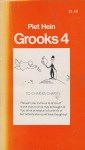
The gallery below contains large images of the front covers, so you can get a feel better feel for the artwork and style of poetry:


Laughing Gas

laughing gas p g wodehouseLaughing Gas by P.G. Wodehouse, 5/5

Definitely the most bizarre Wodehouse story I’ve encountered, this tale of an English Earl who inadvertently swaps bodies with a Hollywood child star during a routine tooth extraction is told with a rate of quips and quibbles quaint per paragraph that your average author would be thrilled to achieve per chapter.

[Why I read it: Wodehouse is one of my favourite authors, so I was pleased to find a title I didn’t recognize in the rather impressive selection of Wodehouse books at Michael’s Books in Bellingham, WA.]

The Midwife’s Revolt

midwife's revolt jodi daynardThe Midwife’s Revolt by Jodi Daynard, 3/5

This fun and competently-written story about the adventures of Abigail Adam’s midwife during the American Revolution was a bit too much of a page-turner to fit my customary pre-bedtime reading schedule, leaving me somewhat sleep-deprived over the last couple days.  The book is impressively long and Daynard doesn’t succumb to the first-time novelist’s temptation to rush the ending.  I thought she also did a good job of incorporating period-specific vocabulary in a natural way.  Ultimately, though, the plot felt lacking to me, the characters puppetish and I found the ending unsatisfying in its predictability and mushy romanticism.  Suspension of disbelief was difficult for me to attain and I often found myself wondering just how accurate the author’s perception of the era really was.

Since my friend Alison, who is an enthusiastic connoisseur of historical fiction, assures me that the book is well-written and convincing, the foregoing complaints no doubt stem from my deep mistrust of the historical fiction genre in general (which is surely not Jodi Daynard’s fault).  I know that all history is subjective (filtered as it is through human perception) but some sources are more subjective than others, with historical fiction being the most untrustworthy and potentially misleading of all, in my opinion.  I don’t mind so much when iconic time periods are used as settings or major historic events are incorporated into plots, but it grates on me no end when famous people from the past, people who were once as fully alive, independent and individual as you and I, are co-opted for major roles in other people’s made-up stories.  What right does an author have to put words into these once-alive mouths?  To invent experiences and reactions, emotions and opinions, for people who can no longer defend or explain themselves?  Most historical fiction seems written by people who are either expert writers OR expert historians, but how rarely is a synthesis of these two qualities achieved.

[Why I read it: it was my friend’s end-of-summer book recommendation.  Our library didn’t have a copy, but I put in a request and they bought it!  This is the second time in as many months.  I’m definitely feeling spoiled.]

Kon-Tiki and I

Kon-tiki and i erik hesselbergKon-Tiki and I by Erik Hesselberg, 5/5

This humorous account of the Kon-Tiki expedition is written and illustrated by multi-talented Erik Hesselberg, artist, writer, composer, sculptor, and the only professional sailor aboard the balsa raft during its 4,300 mile journey from Peru to the Polynesian Islands.  I only meant to read a few pages of this book before bed, but ended up reading the whole thing in one go, laughing out loud at Hesselberg’s witty observations and admiring his art, which ranges from the sparse, spontaneous lines of caricature to more detailed, scientific drawings of  various sea creatures the crew encountered.  The book is very accessible and appeals to readers of every age, from children to those older people looking for a fun companion to Heyerdahl’s more in-depth account of the Kon-Tiki expedition.

[Why I read it: my brother recommended it to me.]

Smoke on the Mountain

smoke on the mountain joy davidmanSmoke on the Mountain: An Interpretation of the Ten Commandments by Joy Davidman, 2/5

I couldn’t find much to like in this preachy, dated commentary on the Ten Commandments, which joins hundreds of thousands of useless, forgettable sermons on the topic that have been written over the centuries.  Davidman does little more than poke at low-hanging fruit, criticizing society’s moral failings in a manner calculated to appeal more to the smugly self-satisfied or the masochistically guilt-ridden than the individual (Christian or non-Christian) who is searching for Truth.  Also, the tone of authority with which the author treats issues of theology, anthropology and history does not seem well-supported by any expertise or original thought.  The most remarkable aspect of the book is C.S. Lewis’s incredibly graceful foreword, which I think evinces approbation more benevolent than spontaneously appreciative.

[Why I read it: I was curious to learn more about the woman who some consider C.S. Lewis’s intellectual equal and whose death inspired A Grief Observed.  Unsurprisingly, my library didn’t have a copy of this book.  Surprisingly, they bought a copy when I requested it.  Pretty cool.]