
Category: Reviews
The Family Bed
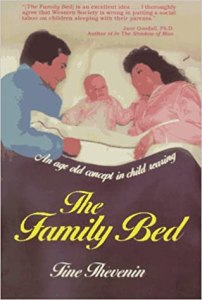 The Family Bed by Tine Thevenin, 2/5
The author is a passionate advocate of communal family sleeping arrangements but writes in the simplistic style of a college research paper and relies too heavily on anecdotes. Before the topic of bed-sharing was even on my radar, I had already been warned against it by a friend whose eight-year-old was still not comfortable sleeping alone. Since opinions obviously vary, I wish this book had presented a more scholarly approach to the topic. Despite its shortcomings, it did provide an interesting point of view that encourages an open-minded approach to what should be a very personal and judgement-free lifestyle choice.
Why I read it: I’m expecting my first baby, so a friend gave it to me along with a couple books on childbirth.
2020 Stats
In 2020, I read nineteen books, ten of which were nonfiction, and nine fiction.
I read 1 book written between 1900-1949
5 books written between 1950-1999
13 books written between 2000-2018
Books that I rated 1 star: 0 (0%)
2 stars: 2 (11%)
3 stars: 9 (47%)
4 stars: 5 (26%)
5 stars: 3 (16%)
Great American Folklore
 Great American Folklore: Legends, Tales, Ballads, and Superstitions from All Across America, compiled by Kemp P. Battle, 3/5
I understand the need to document and collect traditional stories to preserve them for posterity, but if there is a way to do so while also creating a good reading experience, the editor of this volume has not discovered it. Most of these tales clearly belong to an oral tradition, so it feels strange to encounter them stripped of their correct community context, not to mention the awkward (potentially racist) attempts to convey vernacular in prose.
Why I read it: Somehow it ended up in my to-read pile, though I can’t remember where or when I acquired it.
Blood of Elves
 Blood of Elves by Andrzej Sapkowski, translated by Danusia Stok, 3/5
There are three books preceding this one in the Witcher Saga, chronologically, but Blood of Elves really does feel like the first to make a coherent contribution to an overarching story line. I feel that its literary quality isn’t quite up to par with The Last Wish, but it is definitely an enjoyable entry in an over-saturated genre.
Why I read it: gradually working my way through the series after enjoying the first season on Netflix.
Ina May’s Guide to Childbirth
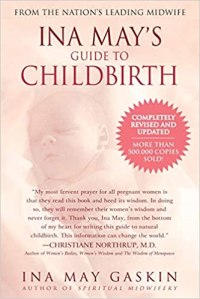 Ina May’s Guide to Childbirth by Ina May Gaskin, 5/5
Anecdotal evidence may not be the best kind of evidence, but it is definitely the most entertaining. I enjoyed reading about the natural childbirth experiences of the many women represented in this book and appreciated that, overall, the stories were comforting without sugarcoating the intensity of the birth experience. Entertaining or not, I wouldn’t have been able to take Gaskin very seriously if she did not also have vast practical experience and the approbation of many more traditionally-educated medical experts. Advocates of natural childbirth can seem a bit fanatical, but their passion is understandable in light of the unnecessary and often harmful medical interference that seemed to characterize obstetrics in the 1900s (in addition to the U.S.A.’s frankly appalling maternal mortality ratio). I am cautiously optimistic that medicine has by now advanced to include a more open-minded and respectful view of the female body’s innate capacity for birth.
Why I read it: a friend recommended the author’s book Spiritual Midwifery, which was not available as a hard copy at my library at the time, so I read this one instead.
Autumn
 Autumn by Karl Ove Knausgaard, translated by Ingvild Burkey, 3/5
Reading this collection of short essays, mostly on such prosaic topics as “apples” and “plastic bags,” is a calming and grounding experience. Knausgaard combines the sensibilities of a sophisticated writer with the wide-eyed wonder of a child, rendering even the most commonplace subject somehow remarkable. The simple and honest manner in which the author’s thoughts and everyday life experiences permeate the text give one a sense of voyeurism without its intrinsic guilt; as if someone has left their curtains open solely to warm the hearts of passersby in the dark.
Why I read it: a recommendation by my sister, Anna.
Natural Childbirth the Bradley Way
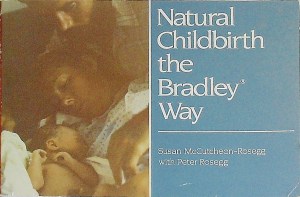 Natural Childbirth the Bradley Way by Susan McCutcheon-Rosegg, with Peter Rosegg, 4/5
I read this book for a laugh, expecting that almost 40 years of advancements in the field of medicine would have rendered it largely useless by now. To my surprise, I found myself being won over by the commonsense advice it presents, emphasizing mindful relaxation, supportive coaching, patience and faith in the natural process. After all, the act of childbirth is as old as time and if, as so many experts assert, we still experience primitive influences on a biological level, why should we rush to intervene with little excuse?
Season of Storms
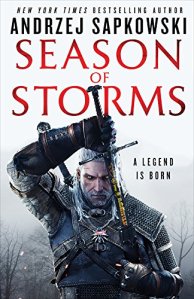 Season of Storms: A Legend is Born by Andrzej Sapkowski, translated by David French, 3/5
On a scale of literary quality, this is much closer to Jim Butcher than J.R.R. Tolkien, but it is still good fun. In my opinion, the author writes violence much better than romance, so this book was an improvement on the previous one in the series and leaves me looking forward to the next one.
Why I read it: Working my way through the Witcher series after enjoying the Netflix TV adaptation.
The Constant Rabbit
 The Constant Rabbit by Jasper Fforde, 3/5
It quickly became obvious to me that this book’s bizarre premise–the struggle for coexistence between humanity and anthropomorphic rabbits–was mostly just a vehicle for the author’s commentary on UK politics (particularly his hatred of the UK Independence Party). “Satire,” with its implications of humor, irony and sarcasm, seems too nuanced a word to describe the tone of this book and brief glimpses of Fforde’s literary creativity and skill just made the incessant political preaching all the more disappointing.
Why I read it: I love many of Fforde’s earlier works and when I heard that he was publishing again, I was very excited to catch up on his latest two books. My enthusiasm has cooled somewhat, since, sadly.
Sword of Destiny
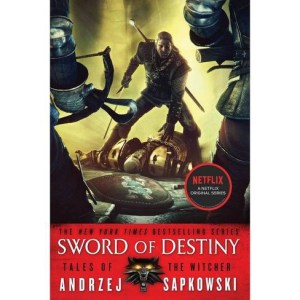 Sword of Destiny by Andrzej Sapkowski, translated by David French, 3/5
In contrast to The Last Wish, this second book in the Witcher Saga felt more like an average, run-of-the-mill adult fantasy than an inspired re-interpretation of classic fairytales and mythical archetypes. The “adult” passages were numerous and, frankly, cringe-worthy. If not for the first book’s merit, I would probably avoid reading more in the series.
 OmniRambles