
Category: Book Reviews
Extreme Ownership
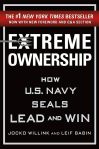
Extreme Ownership: How U.S. Navy Seals Lead and Win by Jocko Willink and Leif Babin, 4/5
This book’s layout is flawless: each chapter starts with an engaging war story, extracts a leadership principle for further analysis, and concludes with a real-life application to business. My only complaint is that the authors often stop short in each example of exploring the actual results of their approach, sometimes failing to address the outcome altogether and other times glossing over it with vague descriptions of generic success. The question left, for me, is not whether the authors are effective hammers, but what scenarios realistically constitute appropriate nails.
Why I read it: It’s been on my radar for quite a while.
Winnie-the-Pooh
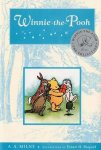
Winnie-the-Pooh by A.A. Milne with decorations by Ernest H. Shepard, 5/5
These stories are delightful and surprisingly witty (Milne was, after all, also a writer for the popular humor and satire magazine, Punch), so it is easy to see why Winnie-the-Pooh continues to be such a popular character, even almost 100 years after he was first introduced. This edition is particularly lovely, with thick paper, imaginative typesetting, and tastefully-colored illustrations.
Why I read it: included in a box of hand-me-down books from a friend.
Yorkshire Legends
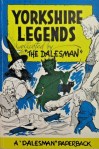
Yorkshire Legends collected by “The Dalesman,” 3/5
I love to see folklore preserved and even better when it is accompanied, as in this case, by a variety of appealing illustrations.
Why I read it: a fun find in a Yorkshire charity shop.
A Hunter-Gatherer’s Guide to the 21st Century

A Hunter-Gatherer’s Guide to the 21st Century: Evolution and the Challenges of Modern Life by Heather Heying and Bret Weinstein, 1/5
I found this book to be profoundly and unrelentingly irritating. The authors are clearly well-educated and well-spoken, yet they seem more concerned with sounding impressive and achieving “guru” status than presenting a rational argument. Each chapter is a hodgepodge of facts, references to the work of others, opinions, and anecdotes, concluding with a short bullet point list of generic lifestyle recommendations that, in most cases, feels completely unsupported by the previous content. This would be annoying enough, but the thing that really made me furious was how the authors use a self-satisfied, scholarly tone and liberal endnote references (which somehow never supported the claims that I was actually interested in verifying) to mask under-developed theories and bad writing. Obviously, I feel under-qualified to criticize the work of two experienced academics, but it doesn’t take a PhD in Biology to recognize their consistent failure to present convincing points in a logical manner that supports bigger ideas.
Why I read it: a birthday present from my dad.
Parenting with Love and Logic
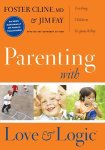
Parenting with Love and Logic: Teaching Children Responsibility by Foster Cline, MD, and Jim Fay, 3/5
I really like the core of this parenting philosophy, which is that even very young children should be given opportunities to make decisions and experience the resulting [reasonable] positive and negative consequences without parental interference, thus becoming equipped through practice for wise and independent decision-making. I do feel the authors take it a bit too far, though, suggesting manipulative and contrived phrases to mold every encounter into a choice and weaponize consequences.
Why I read it: a friend recommended it.
The Purpose Driven Life

The Purpose Driven Life by Rick Warren, 1/5
Reading this, one could be forgiven for mistaking Christianity for a pyramid scheme and this book for its investment pitch.
Why I read it (or at least, the first 84 pages): it was included in a bunch of books passed along to me by a friend. I remembered it being really popular for a while, so thought I’d check it out.
Literary Lapses

Literary Lapses by Stephen B. Leacock, 3/5
A collection of humorous essays that have stood up quite well to the passage of over 100 years’ time.
Why I read it: I’ve had a free version of this bookmarked on Wikisource for so long that I can’t remember how I first heard of it. While tidying up my bookmarks, I decided to just buy a cheap copy of the book, since I hate reading ebooks.
Hand-Taming Wild Birds At the Feeder
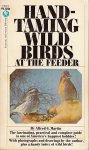
Hand-Taming Wild Birds At the Feeder by Alfred G. Martin, with photographs and drawings by the Author, 5/5
I bought this book for the charming naivete of its cover and topic, but soon became fully invested in all the feathered characters featured inside. The author provides helpful, if purely anecdotal, advice about diet preferences and taming techniques for specific species, in addition to many touching stories about birds he has known.
Why I read it: a thrift store find.
Range
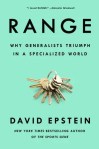
Range: Why Generalists Triumph in a Specialized World by David Epstein, 5/5
On good days, I appreciate the diverse array of skills and experiences that make me who I am. Not yet 40 years old, I can make a credible case for claiming the informal titles of musician, intellectual, artist, athlete, teacher, and photographer. Many days, though, I struggle with feeling like a failure for never having pursued a “proper” career (and the money that comes with one) and so far not finding that one big, important thing I am supposed to be doing with my life.
If I’d read this book earlier, I could have avoided some of those bad days. Epstein blows apart the notion that choosing a career path as early as possible and pursuing it single-mindedly in ever-increasing depth, is the only road to success. Instead, he makes a convincing argument for the value of developing a broad base of interests and experiences, while unashamedly searching for pursuits with high “match quality” to yourself (instead of making a virtue of never quitting). The time this takes need not be wasted, since the most innovative contributions tend to come from people making connections between superficially disparate experiences and ideas, not from those who have specialized the most in any given field.
Life has not been as linear and predictable as I expected; in this book I was comforted to see a reflection of that experience. I learned that, contrary to the claims of pop psychology, personalities and even core values can change over time. That it is ok not to jump on the academic bandwagon of learning more and more about less and less. That continuing to follow my curiosity will provide the best chance of encountering my life’s purpose. And that I shouldn’t undervalue (or under-utilize) the skills and experiences I accumulate along the way just because they weren’t all acquired on a traditional timeline.
Why I read it: I think it was mentioned in Steven Kotler’s The Art of Impossible.
The Ultimate Gift

The Ultimate Gift: A Novel by Jim Stovall, 1/5
Sometimes, you can judge a book by its cover. Preachy, predictable, and poorly written, this novel is pretty much rock bottom in terms of literary quality.
Why I read it: trying to stay open-minded and this was passed along in a box of random books from a friend.
 OmniRambles