
Category: Book Reviews
Scary Close
 Scary Close: Dropping the Act and Finding True Intimacy by Donald Miller, 3/5
Miller is an entertaining writer, but not a very convincing psychologist. While it is fun to read the story of how he developed a healthier approach to relationships and gradually found love at a relatively late age, I felt like he spent a lot of time answering easy questions I didn’t have while skirting around the most important, mysterious, confusing aspects of the topic. He claims to want to teach that “love is worth what it costs,” but the focus of the book is much more on how to pay the cost than the worth. For me, the real question isn’t what caused his previous relationships to fail and his current one to succeed (that is fairly obvious–turns out that authenticity and vulnerability make a better foundation than insecurity and manipulation), the big question is why did he suddenly feel compelled to make it work with someone in particular? Now that I’m thinking about it, this is the exact issue I had with the previous book on relationships I read. Perhaps one day, I’ll find a book that focuses on the why, not the how, but until then I guess I’ll just hope they are as entertaining as this one.
Why I read it: a family member recommended it to me.
2016 Stats
In 2016 I read forty-two books, eighteen of which were nonfiction, twelve fiction, seven comic (or image-based) and five poetry.
I averaged 0.8 books a week, but the most books I read in a single month was nine (March).
I read 2 books written in the 11th century
1 book written in the 1700s
3 books written in the 1800s
4 books written between 1900-1949
17 books written between 1950-1999
15 books written between 2000-2016
Books that I rated 1 star: 3 (~7%)
2 stars: 5 (~12%)
3 stars: 7 (~17%)
4 stars: 14 (~33%)
5 stars: 13 (~31%)
So why did I read only half as many books as last year? Martial arts. I now spend about 14 hours a week doing kickboxing, Brazilian jiu-jitsu and MMA, which not only cuts down on my free time but also makes me too tired to read much in bed!
The Essential Spider-Man
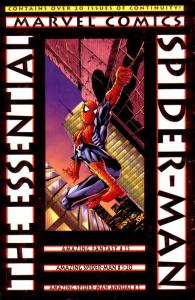 The Essential Spider-Man by Stan Lee and Steve Ditko, 3/5
Reading this collection was a fun, new experience and I loved the artwork, but the writing is atrocious–so much of it consists of characters talking to themselves so that the reader can tell what is going on, e.g. “Good thing my spider powers enable me to jump out of the way as Doctor Wombat attacks with his furry, robotic claws of death.” Perhaps this is just inherent to the medium, but I do not remember encountering a similar problem in Watchmen (the only other comic series I’ve read). Still, the corny writing and unsophisticated plots do have an undeniable charm especially, I imagine, for people who grew up reading comic books.
Why I read it: I like trying new genres of literature and my sister’s boyfriend offered to lend me his well-worn, childhood copy.
Miracles
 Miracles: A Preliminary Study by C.S. Lewis, 5/5
It’s like no one told C.S. Lewis that you can’t prove the existence of God, so he just does. And that is merely to lay the foundation for his main topic, which I actually found much less interesting and convincing than the preliminary discussions–the man does not shirk an intellectual challenge. Though I have occasionally sensed some antagonism from him towards science, in this book he cheerfully tackles both the known and unknown with the grace, focus and rigorous logic that make me sometimes fear that I tend to put more faith in him than in God. Of course, no matter how hard one tries to be open-minded and logical, it cannot be too difficult a task to convince someone of something they already believe. With that in mind, I would love to know how this book is perceived by people with different backgrounds and beliefs than me.
Why I read it: C.S. Lewis is one of my favourite authors and thankfully, every time I think I’ve read all his books I come across a new one.
Film Directing
 Film Directing Shot by Shot: Visualizing from Concept to Screen by Steven D. Katz, 4/5
This book offers a fascinating glimpse behind the scenes of the film director’s craft, laying out the many tools, visualisation strategies, camera angles, movements and stagings that are available to the person intent on transferring a story from script to film. The book format is obviously not ideal for the topic and it is up to the reader to imagine how a shot might flow between the still images that are provided, but the author is a clear communicator and most of the concepts are not difficult to understand.
Why I read it: I came across it while browsing through books at the thrift store and thought it looked interesting.
Four Novels of the 1970s
 Four Novels of the 1970s: Fifty-Two Pickup, Swag, Unknown Man No. 89 and The Switch by Elmore Leonard, 1/5
I made it most of the way through the first novel in this collection and, while I admired the film-noir mood and punchy dialogue, eventually gave up because it was just too R-rated for me. Given that I enjoy watching a lot of R-rated movies, this might seem strange, but there’s just something about books–I get a bad feeling from reading things in print that wouldn’t phase me to watch on film.
I suspect that Fifty-Two Pickup might be one of Leonard’s roughest books and I might have had better luck with some of his more comedic works, but I just don’t feel motivated to give them a try at this point.
Why I read it: Got a batch of Elmore Leonard books out of the library to read, starting with his 10 Rules of Writing.
Mr. Majestyk
 Mr. Majestyk by Elmore Leonard, 3/5
This is no literary masterpiece, but it’s got a likeable good guy, a hot girl, a selection of mean bad guys and plenty of gun play, so it seems petty to complain.
Why I read it: I needed a break from some of Leonard’s darker work and I enjoyed the Charles Bronson movie which served as inspiration for this short novel.
The Works of Oscar Wilde
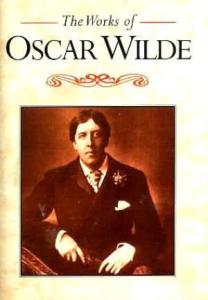 The Works of Oscar Wilde by Oscar Wilde, 5/5
Oscar Wilde is one of my favorite authors and I have read (and re-read) his major works, such as the entrancing novella, The Picture of Dorian Gray, and the impossibly witty play The Importance of Being Earnest. However, there were a few of his short stories, plays and poems that I’d never encountered before, so this collection was a delightful mix of old favourites and new discoveries.
Why I read it: this collection was a birthday present from my dad.
Fire in the Hole and Other Stories
 Fire in the Hole and Other Stories by Elmore Leonard, 4/5
I enjoyed Leonard’s punchy, no-nonsense writing style (distinctly American, somehow) and entertaining tales full of cool-as-ice characters, though much of it was more R-rated than I’m comfortable with.
Why I read it: I really liked the TV series Justified and wanted to check out the short story that inspired it.
The New Toughness Training for Sports
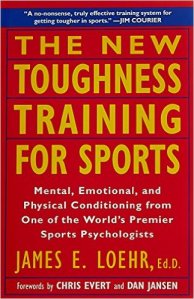 The New Toughness Training for Sports: Mental, Emotional, and Physical Conditioning from One of the World’s Premier Sports Psychologists by James E. Loehr, ED.D., 4/5
For the casual participant in competitive sports, this book is the literary equivalent of that annoying person who gives you really hard, practical advice when maybe all you wanted was some encouragement and affirmation (I don’t actually know anyone like that, so That Person is probably me). While I was put off by all the self-assessment, soul-searching, diary-keeping, essay-writing, plans, logs and mantras Loehr recommends, they do seem like a plausible way to at least take your mind off negative emotions, clarify your commitment to your sport and get focused.
Defining “toughness” as “the ability to consistently perform toward the upper range of your talent and skill regardless of competitive circumstances” (5), Loehr explores the concepts of Real Self vs Performer Self and how your mental and emotional habits affect your Ideal Performance State. One of the most interesting ideas in this book is wave-making–achieving growth through alternating phases of stress and recovery (mental, emotional and physical). This is something I’d already figured out on some level, but never seen put into words. Also, Loehr’s clarification of just how much stress is healthy was very helpful. I’ve long thought that the whole “no pain no gain” mentality is a bit simplistic and possibly dangerous for people with over-achieving personalities; yes, you should push yourself, but going too far just to make a point is a bad long-term strategy. Loehr distinguishes between discomfort and pain, identifying the first as stress that toughens and the second as a symptom of overtraining.
My first impression of this book was not good, but as I dip into it again to write this review, I start to suspect that it might reward a slower, more thoughtful reading than the first one I gave it. It contains a lot of information, but all very concisely communicated, which can give the impression of shallowness during a quick reading. If it wasn’t overdue at the library, I’d read it again, but perhaps I will buy a copy instead.
Why I read it: Stephan Kesting mentioned it on grapplearts.com as one of his favorite sports psychology books (along with Wrestling Tough).
 OmniRambles