
Category: Book Reviews
The Traveling Photographer’s Manifesto
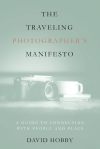
The Traveling Photographer’s Manifesto: A Guide to Connecting with People and Place by David Hobby, 5/5
When a book is written well by someone with personality who is passionate about a topic on which they have expertise, the subject becomes almost irrelevant. In these circumstances, I can and have enjoyed reading about everything from botanical art to infrastructure. But when a book checks all of these boxes and is also about two of my passions–photography and traveling–what a treat!
Though I am not (and do not aspire to be) a street photographer or photojournalist, I enjoyed absorbing the author’s practical advice, technical guidance, interesting anecdotes, and behind-the-scenes perspective. Perhaps most influential of all is the well-developed, people-first photography philosophy that permeates every page and is clearly the product of an open and enquiring mind.
I knew beforehand that this independently-published book contains no photos and, by the end, had even convinced myself that it doesn’t need any because it is so philosophical in focus. Then I came across the author’s PetaPixel article about the book, saw the accompanying photographs, and immediately changed my mind. The photos were so beautiful and, having read so much about their context, so meaningful, that I felt it was a crime that none were included in the book. Yes, there is a helpful Supplemental Visual Notes document, which the author e-mailed to me (along with a kind, personalized note) almost immediately upon request. But this book deserves to be picked up by a publisher, expanded, given a proper cover design, and filled with photographs.
Why I read it: I learned about the author through his popular website, “Strobist.”
Charles Harper’s Birds & Words
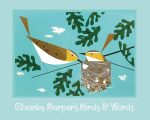
Charles Harper’s Birds & Words, 5/5
Charming bird portraits in Harper’s trademark “minimal realism” style combine with witty text to create a feast for both the eyes and the nature-loving mind.
Why I read it: A Christmas gift from my sister-in-law.
Old Possum’s Book of Practical Cats
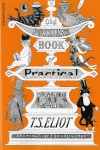
Old Possum’s Book of Practical Cats by T.S. Eliot, 5/5
These poems are utterly charming, sophisticatedly silly, and exquisitely illustrated by the inimitable Edward Gorey. I read the entire collection in one go and found myself practically tapping my toe to the flawless rhythms, which beg to be read aloud.
Why I read it: a thrift store find.
The New Oxford Annotated Apocrypha
The New Oxford Annotated Apocrypha (NRSV 5th ed.), edited by Michael D. Coogan, 5/5
The Apocrypha is one of those literary works that is impossible to approach without some pre-conceived expectation, since the very name is steeped in mystery. Raised Christian, I cannot remember ever being explicitly told to avoid these noncanonical ancient writings, however they were not included in my Bible and I had a vague conception of them as useless at best, and untrustworthy at worst. At some point in my spiritual meandering, I started to suspect that the Bible may have been compiled by a bunch of card-carrying HOA Karens and maybe the Apocrypha was simply too fun and awesome to be included. At any rate, I expected to encounter bizarre prophecies, entertaining stories about Jesus as a child, and lots of enticing, controversial ideas.
Not for the first time, my preconceptions turned out to be wildly inaccurate. I was surprised to find that most of these ancient writings fit pretty clearly and uncontroversially into the categories of history, storytelling, or praise, and, while I enjoyed reading these works, the Bible feels complete to me without them. My favorite book was Sirach, with its deeply relatable and often snarky proverbs. There were a couple quotes that I wished were in the Bible, but it was clear from context that Ben Sira had a lot of his own ideas and issues to work through. Overall, I found the Apocrypha to be a fascinating and occasionally inspiring collection of historical writings, regardless of any Biblical associations.
Why I read it: My husband was listening to the Book of Enoch and it sounded so wild that I wanted to check it out for myself. I just assumed it was in the Apocrypha and didn’t realize it wasn’t until I was about 80% done. Next stop–pseudepigrapha, I guess.
Stalking the Wild Pendulum
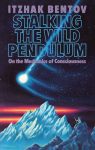
Stalking the Wild Pendulum: On the Mechanics of Consciousness by Itzhak Bentov, 3/5
It would be too easy to dismiss this book, with all its talk of holograms, vibrations, and altered states of consciousness, as mere LSD-fueled, new-age nonsense. I think it deserves a closer look, if only to appreciate the author’s admirable accomplishment of developing a comprehensive theory of life, the universe and everything.
Using clear language, helpful chapter summaries, and a reasonable progression of thought, Bentov exploits the mysterious and seemingly unnatural uncertainty that exists at the extreme ends of a pendulum-like or oscillating movement in quantum mechanics to formulate a conception of reality as “a void filled with pulsating fields” (167) that form an “interference pattern or hologram of knowledge information we can call the ‘universal mind'” (157). Into this framework neatly slot the implausible yet persistently-reported human phenomena of telepathy, clairvoyance, out-of-body experience, enlightenment, reincarnation, etc.
Based on my own summary above, this seems the exact type of book that I would mercilessly flay as worthless woo-woo garbage. So why do I think it is actually something special? For one thing, I admire the author’s humble curiosity and undeniable intellect. While acknowledging the deeply unconventional nature of his own ideas and that “few scientists will read this book to the end” (2), he is not defensively anti-science or anti-anything (which is more than can be said for many people). Adding to its appeal, for me, is the fact that this book is the product of living-room discussions with friends and published with their encouragement, not in an attempt to sell something or gain prestige. How many people do you know with whom you could discuss the shape of the universe and the meaning of existence? I, for one, am envious. Any lingering doubts I might have had about this book and its author were dispelled by reading his Wikipedia page, which I refrained from doing earlier to avoid bias. He seems to have been a truly remarkable mind and a contributor of practical value, as well as theoretical, to humanity.
Why I read it: the title caught my eye in a used bookstore, but I didn’t want to spend money without knowing if it was utter nonsense, so I got it from the library later. Now, I wish I had bought it.
2025 Stats
In 2025, I read seventeen books, eight of which were nonfiction, seven fiction, and two comic.
I read 2 books written in the 1800s.
3 books written between 1950-1999.
12 books written between 2000-2025.
Books that I rated 1 star: 2 (12%)
2 stars: 1 (6%)
3 stars: 5 (29%)
4 stars: 4 (24%)
5 stars: 5 (29%)
The King of Diamonds
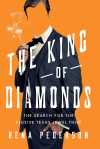
The King of Diamonds: The Search for the Elusive Texas Jewel Thief by Rena Pederson, 5/5
Pederson takes the reader on a ride-along as she investigates the most glamorous cold case imaginable: a brazen and idiosyncratic jewel thief who terrorized the fabulously wealthy of Dallas for a decade. Over seven years of research is condensed into a satisfying page-turner that weaves history, biography, and true crime together, while exploring the good, the bad and the ugly of 1950s and ’60s Dallas society, from the richest philanthropist to the shadiest gangster and everything in between.
Why I read it: I think I saw an author interview on social media and the story sounded fascinating.
Thames Mudlarking

Thames Mudlarking: Searching for London’s Lost Treasures by Jason Sandy and Nick Stevens, 3/5
I appreciated the abundant, high-quality photographs in this slim book, but the text was dry and uninspiring.
Why I read it: Amazon threw this gift for my mother-in-law into a box of other purchases, completely devoid of any wrapping, to be tumbled around like a river rock on its journey to my door. It arrived predictably battered around the edges, but the silver lining was that I was able to take advantage of the exchange window to read it for myself.
Norse Mythology
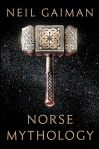
Norse Mythology by Neil Gaiman, 5/5
I am not a fan of Neil Gaiman’s work in general, but there is no denying the excellence of this retelling of tales from Norse mythology. The tone is fresh, without too much anachronism; sensitive and poetic, not melodramatic; and witty without flippancy.
Why I read it: my husband enjoyed the audiobook and I liked the bit that I overheard, so he bought a hard copy.
Bertram
Bertram; or, The Castle of St. Aldobrand by Charles Robert Maturin, 3/5
Drama is my least favorite literary genre and via ebook is my least favorite method of literary consumption, but my curiosity was adequately rewarded by this obscure, yet affectingly tragic and well-written play from the early 19th century, made available online by the University of Virginia Library.
Why I read it: A dramatic quote from this play, used as a chapter epigraph in The Hidden Hand, piqued my curiosity:
“By hell and all its host, he shall not live.
This is no transient flash of fugitive passion—
His death hath been my life for years of misery—
Which else I had not lived—
Upon that thought, and not on food, I fed,
Upon that thought, and not on sleep, I rested—
I come to do the deed that must be done—
Nor thou, nor sheltering angels, could prevent me.”
 OmniRambles