
Tagged: Nonfiction
Stonehenge Decoded
Stonehenge Decoded by Gerald S. Hawkins, 2/5
I give this only 2/5 because it takes Hawkins well over half the book to finally introduce his point – that Stonehenge aligns with many important positions of the sun and moon and can predict eclipses. This is the oldest example of a good magazine article making a bad book that I have come across. However, Hawkins does provide a nice technical description of Stonehenge and his astronomical findings are impressive, though difficult to understand.
You Could Look it Up
You Could Look it Up by William Safire, 3/5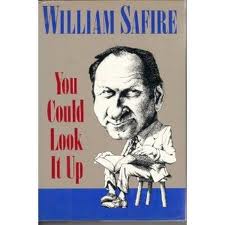
A fun collection of articles/reader responses to stimulate the inner, nitpicking grammar nazi.
Surprised by Joy
Surprised by Joy: The Shape of My Early Life by C.S. Lewis, 5/5
Finding out that a couple fellow altos in choir are atheists made me want to rerereread Lewis’ compelling description of his philosophical journey from childhood, through atheism to Christianity. So much of what he says resonates with me and I always find it incredibly encouraging that such an intellectually uncompromising, well-read person would eventually find all signs pointing to God. I don’t love the book just because it supports my own religious convictions, though; I admire Lewis’ frank, disarming writing style and analytical approach to life.
Sun Tzu Was a Sissy
Sun Tzu Was a Sissy: Conquer Your Enemies, Promote Your Friends, and Wage the Real Art of War by Stanley Bing, 2/5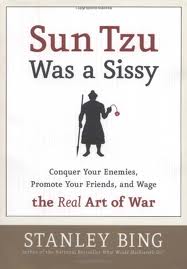
This is the kind of barely entertaining, slightly offensive rubbish that makes me marvel at the publishing standards of our age.
The Wit & Wisdom of the Founding Fathers
The Wit & Wisdom of the Founding Fathers edited by Paul M. Zall, 2/5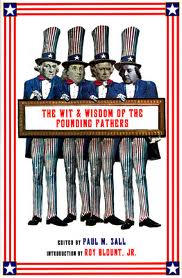
This unsubstantial book is mostly composed of selections from previously published works (some even by the same editor). A considerable number of the “quotes” are actually anecdotes about the founding fathers, not by them. Many other quotes are actually just the founding fathers rephrasing other people’s stories and sayings. This small book is a low-quality money-making enterprise of the gift shop variety.
Tutankhamun
Tutankhamun: The Untold Story by Thomas Hoving, 3/5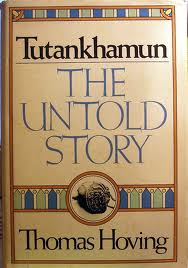
Hoving presents an entertaining, if sometimes tedious, expose of the conflict, drama, lies and secrecy surrounding the discovery and exploration of King Tut’s tomb.
The Ode Less Travelled
The Ode Less Travelled: Unlocking the Poet Within by Stephen Fry, 5/5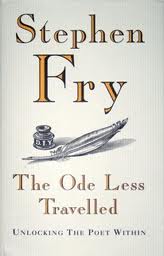
This book is delightfully informative – it is impossible to be unaffected by Fry’s passion for poetry and gentle, self-deprecating humour. Because I procrastinated on many of the 20 challenging poetry exercises Fry poses in this book, it took me about half a year to complete. As a result of this, I am still basking in the self-satisfaction of successful completion. NB: There are several rude/adult innuendos in the book, so I wouldn’t recommend it for young people in its entirety.
Black Hawk Down
Black Hawk Down by Mark Bowden, 5/5
I think this is a masterpiece of war journalism for several reasons. Firstly, Bowden treats his sources with respect and courtesy instead of manipulating and abusing them for the sake of furthering his own career. This is not as common an attitude as I would wish and expect. Secondly, it is clear that the accuracy of his portrayal is Bowden’s main concern. He wastes no time searching for a sensational “angle” and doesn’t create unnecessary drama. Thirdly, Bowden clearly recognizes the limits of his own expertise, refraining from sweeping allegations and extrapolations with regard to political and military strategy. He is intelligent enough to avoid turning an admittedly controversial story into a personal soapbox. Fourthly, the book is scrupulously well cited, with an annotated bibliography and detailed information provided on the sources.
How to Disappear
How to Disappear: Erase Your Digital Footprint, Leave False Trails, and Vanish Without a Trace by Frank M. Ahearn with Eileen C. Horan, 2/5
Sometimes I get the strong feeling that I would hate a particular person if I ever met them. Frank Ahearn is one of those people. Just do a Google Image Search for his name and you’ll see what I mean from the pictures. He comes across as a low-class, egocentric, sleazy scumball, bent on glamorizing a career that seemed to consist mostly of lying to people over the telephone in order to obtain personal info to be sold to whatever shady employer happened to have the cash. It is no credit to him that he finally got out of the skip-tracer career because his morally reprehensible methods became illegal (or at least, more punishable). The book provides some good info and entertaining stories, but lots of the info is commonsense and repetitive and it is all couched in an unbearably bullshit style.
50 big ideas you really need to know
50 big ideas you really need to know by Ben Dupre, 2/5
These short essays on a variety of topics, ranging from philosophy to physics, were too surfacey and simplistic for me. I did not like the format of the book; it was very disjointed, with distracting quotations and random boxes of text floating around. I appreciate that Dupre manages to write from a relatively impartial viewpoint on controversial topics, though he did come across as pro-Communism, which is repellant to me. I was a little confused by his essays on conservatism and liberalism until I realised that he’s English and this book is only published in the UK. That explains many of the slight differences in perspective throughout.

