
Tagged: Nonfiction
The Winding Road
The Winding Road by W. Edmund Hood and Ung Ho Chang, 2/5
I read this tiny, self-published book in one sitting. It was more compelling than the atrocious cover led me to expect (how are there still people who think cheesy, colored fonts, huge blocks of text and poorly Photoshopped images are ok?). The book tells the story of Ung Ho Chang, a South-Korean who survived war-torn post-WWII Korea and the Korean war to end up a U.S. citizen. The idea I found most thought-provoking was the fact that this man, a war refugee, army officer, spy, POW, and fireman got a job as a maintenance worker in a Top Food store in Seattle when he arrived in the U.S. It just goes to show that one can never know what someone else has gone through and even the most ordinary and unadmirable-appearing people might have a fascinating and impressive history.
How to Raise a Puppy You Can Live With
How to Raise a Puppy You Can Live With by Clarice Rutherford & David H. Neil, 3/5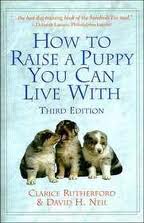
There are many similarities between this book and Cesar Millan’s, but this one is shorter and more efficient at communication. I like Rutherford’s common-sense, straightforward approach to puppy training.
How to Raise the Perfect Dog
How to Raise the Perfect Dog: Through Puppyhood and Beyond by Cesar Millan, 3/5
This is an entertaining and easy read, but not nearly as informative as watching Millan’s TV show.
Stage Fighting
Stage Fighting: A Practical Guide by Jonathan Howell, 4/5
This is an efficient, well-illustrated book. The most interesting thing I learned is the idea that, in order to create tension, the roles of victim and aggressor are reversed, as far as control of the action is concerned. For example, in a strangling scene, the aggressor is trying to pull his hands away from the victim’s throat, while the victim is trying to hold the aggressor’s hands in place.
Moneyball
Moneyball: The Art of Winning an Unfair Game by Michael Lewis, 3/5
This book left me more shocked at the overall inefficiency of the baseball industry than impressed by the Oakland A’s unorthodox success strategies. Lewis’s account felt lacking in focus and I couldn’t help wondering if the presence of a few logical entities in the baseball world was worth all the hoopla merely because they were surrounded by closed-minded morons.
Seven Pillars of Wisdom
Seven Pillars of Wisdom: A Triumph by T.E. Lawrence, 4/5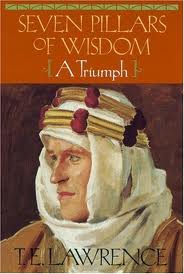
It’s a good thing I like being surprised, because this book first revealed, then blasted all the misconceptions of “Lawrence of Arabia” I’d somehow accumulated, picturing him as an England-hating, obnoxiously gay, stuck-up poser, whose main rebellious achievements were dressing in robes, getting impossibly tanned and prancing around on a camel. This impression was absolutely wrong and I finished the book with an opposite opinion, inspired by Lawrence’s toughness and unique mixture of confidence and self-deprecation. Somehow, he managed to live honorably while torn between loyalty to England and determination to keep her lightly-made promises to the Arab people. He valued intellectualism over all merely physical concerns, but a poetic nature, sense of humor and keen observational insights into humanity made him human and keep the book from being a dry military treatise. It reads more like an adventure story than anything and I was never bored, pretty amazing for a book about one of the few remaining topics that holds no interest for me – Middle Eastern culture and politics.
Reel Justice
Reel Justice: The Courtroom Goes to the Movies by Paul Bergman and Michael Asimow, 3/5
The authors spend more time recapping movies, making lame puns and giving spoilers than actually analyzing the legal aspects of the films.
Thirty Phone Booths to Boston
Thirty Phone Booths to Boston: Tales of a Wayward Runner by Don Kardong, 2/5
A book of mildly entertaining running anecdotes.
On the Pleasure of Hating
On the Pleasure of Hating by William Hazlitt, 1/5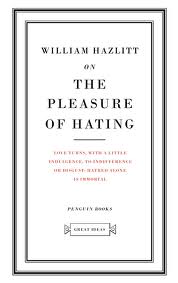
I started this book by accident, somehow confusing the author with the more frequently-quoted Walter Pater. Of the six essays it contains, the last (for which the collection is named) seemed to me most interesting and unique. It comments on the perceived propensity of humankind towards evil and the negative, but I was most interested by its cynical description of friendship. The rest of the essays come across as editorials written by a well-read man of medium intellect, something that would appear in magazines of the day (1820s), but has little lasting value to offer. Perhaps this explains the comment on Wikipedia that “his [Hazlitt’s] work is little read and mostly out of print,” somewhat at odds with the previous assertion that Hazlitt is “now considered one of the great critics and essayists of the English language.”
Now I Walk on Death Row
Now I Walk on Death Row by Dale S. Recinella, 3/5
This is the slightly depressing true story of a top-class Wall Street finance lawyer who gives up his career in order to minister to prisoners on death row. What I found sad about the book was how guilty he felt about being rich (I don’t understand that, maybe it’s a rich person thing) and how his Catholic church seemed to challenge a vibrant relationship with God by its strict religious hierarchy and position between God and man. The whole affair seemed more motivated by guilt, fear and shame than by peace, thankfulness and love for God. That said, Recinella is a good storyteller and I devoured the book in one evening.

