
Tagged: Nonfiction
The Quotable Runner
The Quotable Runner: Great Moments of Wisdom, Inspiration, Wrongheadedness, and Humor, edited by Mark Will-Weber, 3/5
I like the format of this book – each section is prefaced by a well-written and interesting/inspirational running anecdote. To me, most of the value of this book comes from the fact that Weber did his own primary source research, instead of just gathering quotes from other compilations.
A People’s History of the United States
A People’s History of the United States: 1492 – Present by Howard Zinn, 3/5
A People’s History looks at the U.S.A.’s track record of human rights and the less-than-admirable motivations behind many important government and corporate policies. This is the most admittedly biased and aggressively depressing book I have ever enjoyed. While I would prefer to read a logical, unbiased, rigourously truthful history book, I suspect that no such thing exists, in which case, I appreciate Zinn’s efforts to provide a counterweight to the highly sanitized, equally biased, and deceptively simplistic versions of history that are so prevalent.
I appreciated Zinn’s copious primary source quotations, however, the general lack of citation left me feeling unsettled, helpless and manipulated. In my opinion, the scholarly quality of the book dropped off noticeably in the last quarter of the book (starting at the 19th chapter), where the author started to make laughably illogical and inconsistent statements of political bias, taking a tone that is not apparent earlier in the book and creates a particularly depressing air. For example, he first calls traditional family structure “that most subtle and complex of prisons” (514), but later decries “family disarray” (563). While outspokenly anti-Capitalist, he fails to point out a single country that does socialism right, by his standards. Similarly, he is anti-Republican, but disapproves of all the major Democratic politicians he mentions (explaining their failures in a rather weasley way – by blaming their actions on them trying to please the Republicans). Despite these annoyances, I found much to agree with in the book and hopefully was able to use it to gain a more realistic and unbiased view of our history.
A Place for Truth
A Place for Truth: Leading Thinkers Explore Life’s Hardest Questions, edited by Dallas Willard, 4/5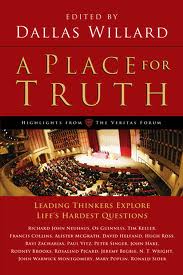
This book contains selected lectures from the Veritas Forum, a discussion platform set up in 1992 by a group of Christians at Harvard. I particularly enjoyed the first half of the book – the lectures addressing truth, faith and science. It is encouraging to be reminded that live Christianity not only withstands intellectualism, but welcomes it, and that a Christian scientist is not a contradiction of terms. It was also see comforting to see that, despite the largely media-driven polarisation of our world on the topic of religion and the active antagonism of a few haters on both sides, civil discussions between Christians and non-Christians are possible.
The Ancient Guide to Modern Life
The Ancient Guide to Modern Life by Natalie Haynes, 3/5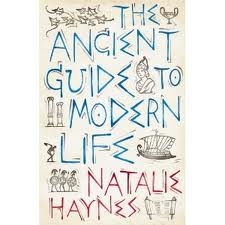
Perhaps I developed too-high expectations of this book when I learned that the author is a stand-up comedian who read classics at Cambridge. At any rate, I was not very impressed with the book. Haynes doesn’t bother citing sources for many of her claims, which is an unconvincing way to go about dispelling myths about the ancient Greeks and Romans, as she claims to do. The humor throughout the book is inconsistent – some parts are deadly serious and preachy, others are silly. There were some things of interest, though, and Haynes is obviously passionate about the classics, which is somewhat contagious. I guess I’m not disappointed that I read the book, but I’m disappointed in the book itself.
An interesting side note: Haynes thanks her friend Joss Whedon in the acknowledgments, which is pretty awesome.
The Courage to Be
The Courage to Be by Paul Tillich, 2/5
This dense and esoteric analysis of the ontological aspects of courage, specifically as it relates to existentialism didn’t really hit its stride until the last chapter. The language barrier (Tillich’s native language was German) caused awkward sentence structure, rendering a difficult topic even more inaccessible. Tillich made a few interesting points, cushioned in too much guesswork and psychobabble for my taste. I especially disagreed with his viewpoint on modern art. The introduction is noteworthy in that it is the worst I have ever encountered. In it, its author, Peter Gomes, quoted the last sentence of Tillich’s book not once but twice! To me, this is the pinnacle of inept disrespect. The last sentence of a book is something you earn and fully understand through reading the entire work. It is not meant to be excerpted in order to ennoble a pathetically written intro. Besides this travesty, the introduction was also disgustingly slavish in its reverence for Tillich. Gomes admits that he remembered nothing about the book but its title from reading it the first time, yet he is so inflated with self-importance at getting to write the intro that he makes a total bollocks of it.
The Hippocratic Myth
The Hippocratic Myth: Why Doctors are Under Pressure to Ration Care, Practice Politics, and Compromise Their Promise to Heal by M. Gregg Bloche, 2/5
Bloche’s writing style is so dense and awkward that I quickly lost interest. I ended up skimming through most of the book, unwilling to put in the effort to decipher each sentence. Some parts were thought-provoking, but I did not consider it to be the controversial, ground-breaking expose that Bloche seemed to hope it would be.
How to Read Literature Like a Professor
How to Read Literature Like a Professor by Thomas C. Foster, 2/5
Author E.B. White once said: “Humor can be dissected, as a frog can, but the thing dies in the process and the innards are discouraging to any but the pure scientific mind.” Substitute “literature” for “humor” in that quote and you will understand the reason why I disliked this book. I felt that Foster’s strained analytical style efficiently robbed the mystery, joy and suspension of disbelief from almost every literary example he gave. If he was a theater or film critic, he would probably spend a lot of time analyzing the wallpaper on the fourth wall. Knowing that “there’s only one story…every story you’ve ever read or heard or watched is part of it” (32) and then searching for traces from the “canon of literature” in every other work does not enrich my reading experience, but dampens it. Yes, damp as if it was rained on and if you read page 75, you’ll learn that “It’s never just rain” and you’ll be able to read deeply into why I supposedly chose that particular word. A lot of the book was spent in defining symbols and themes as “whatever you think they mean,” which is frustratingly unhelpful. Also, from his comments, Foster seems to view Freud favorably, which I find revolting.
Update: I Stumbled on this perfect illustration of the book.
101 Quantum Questions
101 Quantum Questions: What You Need to Know About the World You Can’t See by Kenneth W. Ford, 3/5
I’m not going to lie – this book lost me a few times (most notably, at “quantum numbers”). However, there were still a few “AHA!” moments, where staggering truths about quantum physics created little explosions in my brain. Overall, the book was moderately accessible, but not as entertaining or beginner friendly as other books about quantum physics, such as Marcus Chown’s “The Matchbox that Ate a Forty-Ton Truck.”
Stan Lee’s How to Draw Comics
Stan Lee’s How to Draw Comics by Stan Lee, 2/5
This is a good book for looking at pictures, but is not practically helpful at all. The prose is written in an annoying style (lots of unfunny jokes and rabbit trails) and instruction is along the lines of “look, human bodies are made of cylinders and squares…now draw some of your own.”
The Parents’ Guide to Psychological First Aid
The Parents’ Guide to Psychological First Aid, eds. Gerald P. Koocher and Annette M. La Greca, 3/5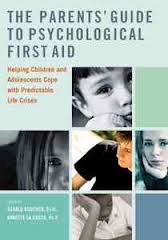
This book does a good job of appealing to a wide spectrum of parenting/life styles without alienating anyone. Most of its contents are commonsense, but I guess commonsense isn’t that common, to judge from my observations of modern parenting.
 OmniRambles