
Tagged: Nonfiction
Thirty Phone Booths to Boston
Thirty Phone Booths to Boston: Tales of a Wayward Runner by Don Kardong, 2/5
A book of mildly entertaining running anecdotes.
On the Pleasure of Hating
On the Pleasure of Hating by William Hazlitt, 1/5
I started this book by accident, somehow confusing the author with the more frequently-quoted Walter Pater. Of the six essays it contains, the last (for which the collection is named) seemed to me most interesting and unique. It comments on the perceived propensity of humankind towards evil and the negative, but I was most interested by its cynical description of friendship. The rest of the essays come across as editorials written by a well-read man of medium intellect, something that would appear in magazines of the day (1820s), but has little lasting value to offer. Perhaps this explains the comment on Wikipedia that “his [Hazlitt’s] work is little read and mostly out of print,” somewhat at odds with the previous assertion that Hazlitt is “now considered one of the great critics and essayists of the English language.”
Now I Walk on Death Row
Now I Walk on Death Row by Dale S. Recinella, 3/5
This is the slightly depressing true story of a top-class Wall Street finance lawyer who gives up his career in order to minister to prisoners on death row. What I found sad about the book was how guilty he felt about being rich (I don’t understand that, maybe it’s a rich person thing) and how his Catholic church seemed to challenge a vibrant relationship with God by its strict religious hierarchy and position between God and man. The whole affair seemed more motivated by guilt, fear and shame than by peace, thankfulness and love for God. That said, Recinella is a good storyteller and I devoured the book in one evening.
Stonehenge Decoded
Stonehenge Decoded by Gerald S. Hawkins, 2/5
I give this only 2/5 because it takes Hawkins well over half the book to finally introduce his point – that Stonehenge aligns with many important positions of the sun and moon and can predict eclipses. This is the oldest example of a good magazine article making a bad book that I have come across. However, Hawkins does provide a nice technical description of Stonehenge and his astronomical findings are impressive, though difficult to understand.
You Could Look it Up
You Could Look it Up by William Safire, 3/5
A fun collection of articles/reader responses to stimulate the inner, nitpicking grammar nazi.
Surprised by Joy
Surprised by Joy: The Shape of My Early Life by C.S. Lewis, 5/5
Finding out that a couple fellow altos in choir are atheists made me want to rerereread Lewis’ compelling description of his philosophical journey from childhood, through atheism to Christianity. So much of what he says resonates with me and I always find it incredibly encouraging that such an intellectually uncompromising, well-read person would eventually find all signs pointing to God. I don’t love the book just because it supports my own religious convictions, though; I admire Lewis’ frank, disarming writing style and analytical approach to life.
Sun Tzu Was a Sissy
Sun Tzu Was a Sissy: Conquer Your Enemies, Promote Your Friends, and Wage the Real Art of War by Stanley Bing, 2/5
This is the kind of barely entertaining, slightly offensive rubbish that makes me marvel at the publishing standards of our age.
The Wit & Wisdom of the Founding Fathers
The Wit & Wisdom of the Founding Fathers edited by Paul M. Zall, 2/5
This unsubstantial book is mostly composed of selections from previously published works (some even by the same editor). A considerable number of the “quotes” are actually anecdotes about the founding fathers, not by them. Many other quotes are actually just the founding fathers rephrasing other people’s stories and sayings. This small book is a low-quality money-making enterprise of the gift shop variety.
Tutankhamun
Tutankhamun: The Untold Story by Thomas Hoving, 3/5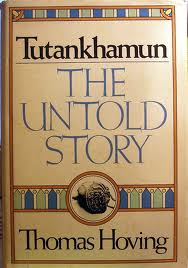
Hoving presents an entertaining, if sometimes tedious, expose of the conflict, drama, lies and secrecy surrounding the discovery and exploration of King Tut’s tomb.
The Ode Less Travelled
The Ode Less Travelled: Unlocking the Poet Within by Stephen Fry, 5/5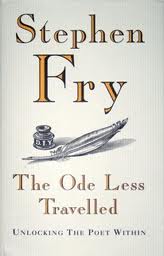
This book is delightfully informative – it is impossible to be unaffected by Fry’s passion for poetry and gentle, self-deprecating humour. Because I procrastinated on many of the 20 challenging poetry exercises Fry poses in this book, it took me about half a year to complete. As a result of this, I am still basking in the self-satisfaction of successful completion. NB: There are several rude/adult innuendos in the book, so I wouldn’t recommend it for young people in its entirety.
 OmniRambles