
Tagged: japan
The Perfect Guide to Sumo
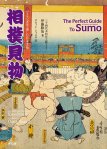
The Perfect Guide to Sumo in Japanese and English by Katsuharu Ito, translated by David Shapiro, 4/5
This small book on a large topic is packed with minuscule text and beautiful, historic artwork. I wish it were available in a larger, better edited format that would do justice to the informative dual-language text and generous illustrations.
Why I read it: my husband and I are fans of sumo.
Shogun
Shogun by James Clavell, 3/5
This 1300-page monster of a hardback novel weighs almost 4lbs, and anyone who thinks it’s weird to dwell on a book’s physical dimensions in a book review has clearly not been been physically traumatized, as I have, by attempting to read it in bed every night! I am only partially joking; the book’s unwieldiness gives a palpable presence to the author’s leisurely writing style, which often makes it seem as if scenes were occurring in real time and not in the pages of a novel. As far as plot, well it’s got a lot. A lot of politics, religion, drama, and unacknowledged historical inspiration. There were a few chapters that dragged, but overall, I felt surprisingly engaged by the story, despite its obscene length and last-minute reliance on a deus ex machina of sorts. The detailed portrayal of 17th-century Japanese culture, written by a European making no claims to historical accuracy, seems problematic to me (I doubt something like this could be written nowadays without causing controversy), but surprisingly, there seem to be no complaints. While I am impressed by the author’s confidence and stamina, I found the length of the book to be a bit self-indulgent and would prefer to read a true account of the historical events portrayed in this novel.
Why I read it: When the first season of the 2024 TV show based on this book ended, I was left wanting more.
Anthology of Japanese Literature
Anthology of Japanese Literature from the Earliest Era to the Mid-Nineteenth Century, compiled and edited by Donald Keene, 5/5
This collection is pleasingly varied and conveniently oriented towards a lay audience; the annotations are minimal and linguistic subtleties are simply acknowledged without being dissected. Most of the short poems are presented in side-by-side rōmaji (romanized Japanese) and English, allowing the reader to absorb a little more of the syllabic patterns, alliteration, and overall flavor of the original writings. Though the imagery, values, and cultural references felt refreshingly unfamiliar, there was an undeniable undercurrent of universal human appeal in the timeless themes of love, loss, death, and spiritual life.
Why I read it: an interesting-looking thrift store find.
The Book of Five Rings
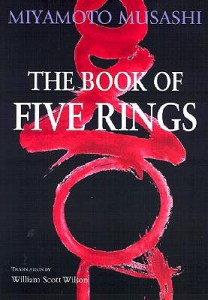 The Book of Five Rings by Miyamoto Musashi, translated by William Scott Wilson, 5/5
It is absolutely stunning how relevant this book remains to today’s students of combat sports, though it was written almost 400 years ago for Japanese swordsmen. I recognize so many of the techniques and concepts that Musashi describes from my own kickboxing, Brazilian jiu-jitsu and MMA sparring experiences. In fact, I believe such review and recognition is likely where this work’s main interest and value lies–I certainly don’t feel able to learn subtle martial arts concepts from a book (certainly not from a picture-less book!), but it is fascinating to see what I have learned from my coaches and through experience reflected on the page. Perhaps this is why the ever-practical Musashi ends each lesson with a comment like “You should make efforts in this,” or “You should practice this well.”
Why I read it: I came across Musashi’s “21 Rules of Life” online, read a bit about him and remembered that though I had given my brother a beautifully illustrated copy of The Book of Five Rings many years ago, I had never actually gotten around to reading it myself.
 OmniRambles