
Tagged: government
The Federalist Papers

The Federalist Papers by Alexander Hamilton, James Madison, and John Jay, 5/5
In these 85 essays, originally published in 1787-88 by New York newspapers, three Founding Fathers use the pseudonym “Publius” to argue passionately for the ratification of the newly-proposed Constitution of the United States. Blow by blow, the authors address and dismantle the most popular criticisms of the day, occasionally stooping to empty rhetoric and snide remarks, but more often establishing logical and convincing rebuttals, based on common sense, the events of history, the practices of other nations, and a clear-eyed appraisal of human nature (recognizing both its positive and negative tendencies). It was a strange and refreshing experience to encounter in-depth and nuanced arguments, presented with respect for the everyday reader’s intelligence and belief in their sincere desire to form an educated and fair-minded opinion. Almost two hundred and forty years later, it is easy to be cynical and pessimistic about the future of our country, but it is no exaggeration to say that reading this book, in combination with the actual Constitution, re-kindled my love, pride and admiration for the grand experiment that is the United States of America.
Why I read it: A free copy showed up in my mailbox, completely unsolicited. Unfortunately, I peeled the mailing label off to read the back cover and now can’t recall what organization sent it.
The Real Anthony Fauci
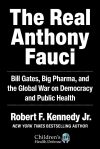
The Real Anthony Fauci: Bill Gates, Big Pharma, and the Global War on Democracy and Public Health by Robert F. Kennedy Jr., 5/5
There is no denying that this is a controversial book on controversial topics, written by a controversial author, and it wasn’t particularly difficult to spot some inadequately substantiated claims, outlandish hypotheses, less-than-impressive sources, and questionable interpretations of data. That said, one would have to be willfully naive and ignorant of human nature to ignore the preponderance of inarguable, factual evidence the author provides that some of our most respected institutions, scientists, politicians, businessmen/women, and philanthropists have sold their souls and woven a pervasive web of deceit, corruption, avarice, censorship and moral bankruptcy. Even with its failings, this book is a necessary and fearless testament to the enduring wisdom of 1 Timothy 6:10: “For the love of money is a root of all kinds of evils” (ESV).
Additionally, The Real Anthony Fauci is a tour de force in terms of seamlessly and meticulously incorporating technology into a traditional reading experience; the chapter endnotes link via a QR code to RFK Jr.’s website, where one can easily click through to the actual sources for most of the 2,194 citations contained in this formidable exposé.
Why I read it: Originally, I had no intention of reading this because, judging solely from its cover, it appeared to be little more than a hit-piece full of conspiracies, written by a crackpot. However, RFK Jr.’s interview on The Joe Rogan Experience left me with a more favorable impression of the author, as well as many unanswered questions about his claims.
The Constitution of the United States of America
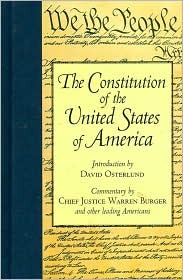 The Constitution of the United States of America, 5/5
It is tax season, so perhaps I can be forgiven for expecting “the supreme law of the land” to be as ludicrously bloated and unreadable as the Internal Revenue Code. Fortunately, it is not so–the fifty-five delegates to the 1787 Philadelphia Convention crafted a document of startling elegance, simplicity and practicality (probably marking the first and last time such adjectives could be used to describe a piece of legislation).
[Why I read it: I planned to send this copy to my brother after reading it myself, but it sat in the pile of books by my bed until it became assigned reading in my business law class.]
 OmniRambles